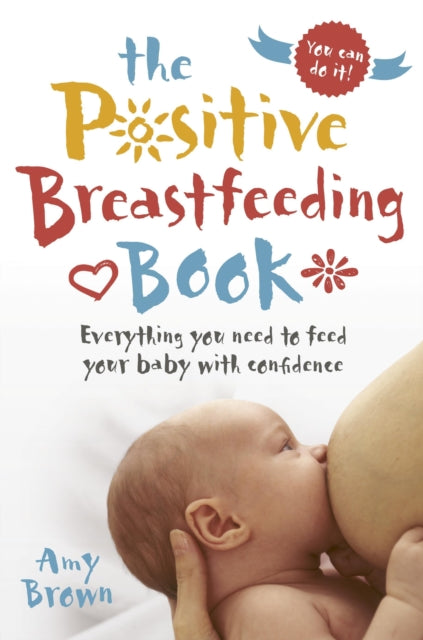
Amy Brown
Positive Breastfeeding Book: Everything you need to feed your baby with confidence
Positive Breastfeeding Book: Everything you need to feed your baby with confidence
YOU SAVE £4.74
- Condition: Brand new
- UK Delivery times: Usually arrives within 2 - 3 working days
- UK Shipping: Fee starts at £3.89. Subject to product weight & dimension
Bulk ordering. Want 15 or more copies? Get a personalised quote and bigger discounts. Learn more about bulk orders.
Couldn't load pickup availability
- More about Positive Breastfeeding Book: Everything you need to feed your baby with confidence
The Positive Breastfeeding Book provides clear, no-judgement, non-preachy, evidence-based information to help new parents make informed decisions about breastfeeding. It covers planning for the baby's arrival, coping with the early months, feeding in public, going back to work, and rediscovering a glass of wine. It also includes real stories and guidance from mothers and experts in supporting breastfeeding, as well as handy chapters on formula and mixed feeding. The book empowers parents with the knowledge and encouragement they need to feed their baby with confidence.
\n Format: Paperback / softback
\n Length: 416 pages
\n Publication date: 21 September 2018
\n Publisher: Pinter & Martin Ltd.
\n
Breastfeeding is a natural and beautiful way to nourish your baby, and it is important to understand how often your baby needs to feed. The frequency of feeding can vary depending on your baby's age, weight, and activity level. Here are some general guidelines to help you determine how often your baby needs to feed:
Newborns (0-2 weeks):
Newborns typically need to feed every 2-3 hours around the clock. They may eat small amounts frequently, such as every 1-2 hours.
Infants (2-4 months):
Infants usually need to feed every 3-4 hours during the day. They may eat larger amounts, such as 4-6 ounces, at each feeding.
Toddlers (4-12 months):
Toddlers typically need to feed every 3-4 hours during the day. They may eat larger amounts, such as 6-8 ounces, at each feeding.
Preschoolers (1-3 years):
Preschoolers usually need to feed every 3-4 hours during the day. They may eat larger amounts, such as 8-10 ounces, at each feeding.
Children (3-5 years):
Children usually need to feed every 3-4 hours during the day. They may eat larger amounts, such as 10-12 ounces, at each feeding.
It is important to note that these are general guidelines and that your baby may need to feed more or less frequently depending on their individual needs. If your baby is hungry, cries, or seems fussy, it is best to offer them a feeding. If you are unsure about how often your baby needs to feed or have any concerns about their feeding, it is best to consult with a healthcare provider or a lactation consultant.
In addition to determining how often your baby needs to feed, it is also important to ensure that they are getting enough food. Here are some signs that your baby may be getting enough food:
They have a healthy weight gain.
They have at least six wet diapers per day.
They are content and satisfied after a feeding.
They have a regular bowel movement.
They are active and playful.
If your baby is not meeting these signs or if you have any concerns about their weight gain or feeding, it is best to consult with a healthcare provider.
Another common question that new parents have is whether it is normal for their baby to wake at night. While it is normal for babies to wake up occasionally during the night, it is important to determine if there is a pattern or reason for the frequent waking. Here are some common reasons why babies may wake at night:
Hunger: Babies may wake at night if they are hungry. If your baby is formula-fed, they may need to eat more frequently during the day to meet their nutritional needs.
Gas or Reflux: Babies may experience gas or reflux, which can cause discomfort and wake them up. You can try to help relieve these symptoms by burping your baby after a feeding or by using a pacifier.
Separation Anxiety: As your baby grows and becomes more independent, they may experience separation anxiety. This can cause them to wake up at night or cry for extended periods of time.
Night Terrors: Night terrors are a type of sleep disorder that can cause sudden and intense fear or panic in babies. Night terrors can cause babies to wake up abruptly and cry or scream.
If your baby is waking at night due to any of these reasons, it is important to work with a healthcare provider to develop a plan to address the issue. This may include adjusting your baby's feeding schedule, implementing soothing techniques, or seeking medical treatment if necessary.
In conclusion, determining how often your baby needs to feed and ensuring that they are getting enough food is essential for their health and development. It is important to seek guidance from a healthcare provider or a lactation consultant if you have any concerns about your baby's feeding or weight gain. Additionally, it is normal for babies to wake at night for various reasons, and it is important to work with a healthcare provider to develop a plan to address the issue if necessary.
\n Weight: 674g\n
Dimension: 230 x 175 x 24 (mm)\n
ISBN-13: 9781780664606\n \n
UK and International shipping information
UK and International shipping information
We deliver throughout the United Kingdom and to 128 countries and territories worldwide, including the United States, Australia, Canada, Germany, Spain and France.