Shulph Ink
Post-Everything: An Intellectual History of Post-Concepts
Post-Everything: An Intellectual History of Post-Concepts
💎 Earn 132 Points (£1.32) on this item.
YOU SAVE £3.45
- Condition: Brand new
- UK Delivery times: Usually arrives within 2 - 3 working days
- UK Shipping: Fee starts at £2.39. Subject to product weight & dimension
Bulk ordering. Want 15 or more copies? Get a personalised quote and bigger discounts. Learn more about bulk orders.
Couldn't load pickup availability
- More about Post-Everything: An Intellectual History of Post-Concepts
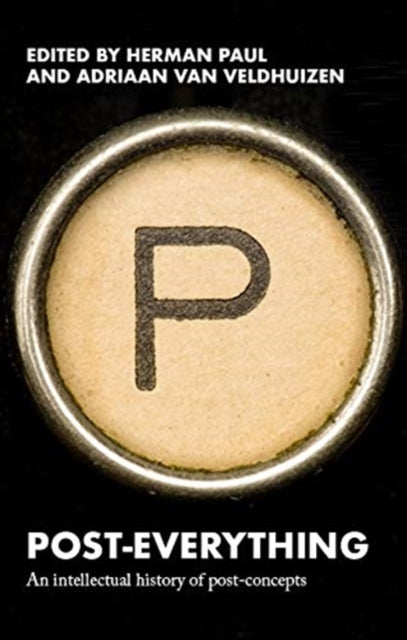
Post-everything explores the origins of post-modern, post-colonial, and post-truth terms, their emergence in the late 20th century, and the scholars and thinkers responsible for their development.
\n Format: Hardback
\n Length: 272 pages
\n Publication date: 06 July 2021
\n Publisher: Manchester University Press
\n
Postmodern, postcolonial, and post-truth are widely used terms that have gained significant attention in recent years. However, their origins and the reasons behind their emergence remain somewhat enigmatic. This essay aims to explore the historical roots and evolution of these terms, as well as the individuals or groups responsible for their proliferation.
Post-everything examines the reasons why post-Christian, post-industrial, and post-bourgeois became terms that resonated not only among academics but also in the popular press. It delves into the historical roots of postmodern and poststructuralist ideologies, while also critically examining more recent post-constructions such as posthumanism and postfeminism.
This study is groundbreaking in its comprehensive exploration of post-concepts. By tracing the ways in which these concepts have permeated various genres and disciplines, post-everything contributes to a reconciliation between the histories of the humanities and the social sciences.
Post-Christianity refers to the period after the decline of Christian influence in Western society, marked by a shift towards secularism, individualism, and scientific rationalism. The term emerged in the late 20th century as a way to describe the cultural and social changes that followed the collapse of the Roman Catholic Church and the rise of Protestantism.
Post-industrialism is a term that describes the economic and social transformations that occurred in the late 20th century as a result of the shift from manual labor to automated production. It was coined by the American sociologist Karl Marx to describe the transition from a manufacturing-based economy to a service-based economy.
Post-bourgeoisie is a term that refers to the social class that emerged in the late 20th century as a result of the decline of traditional aristocratic and landed elites. It is characterized by a focus on individualism, consumerism, and social mobility.
Postmodernism is an intellectual movement that emerged in the mid-20th century as a response to the perceived failures of modernism, which was characterized by a belief in progress, rationalism, and scientific certainty. Postmodernism rejected the idea of a universal truth and instead emphasized the diversity and complexity of human experiences.
Poststructuralism is an intellectual movement that emerged in the late 20th century as a response to the dominance of structuralism, which was characterized by a focus on the analysis of structures and systems. Poststructuralism rejected the idea of a fixed and universal reality and instead emphasized the power of language, discourse, and power relations.
Posthumanism is a philosophical and literary movement that emerged in the late 20th century as a response to the perceived limitations of humanism, which was characterized by a focus on human exceptionalism and the pursuit of human ideals. Posthumanism emphasizes the importance of non-human entities, such as machines and animals, in shaping human experiences and the natural world.
Postfeminism is a philosophical and literary movement that emerged in the late 20th century as a response to the perceived limitations of feminism, which was characterized by a focus on gender equality and the pursuit of women's rights. Postfeminism emphasizes the importance of gender diversity and the complexities of gender identity and representation.
The individuals or groups responsible for the proliferation of post-concepts are diverse and complex. On the one hand, postmodern and poststructuralist ideologies were developed by a group of intellectuals, including Jacques Derrida, Michel Foucault, and Jean-François Lyotard, who were influenced by the philosophical traditions of Kant, Hegel, and Marx. On the other hand, posthumanism and postfeminism were influenced by a range of scientific and technological advancements, including the rise of artificial intelligence, genetic engineering, and the internet.
In conclusion, post-everything provides a valuable insight into the historical roots and evolution of postmodern, postcolonial, and post-truth terms. By exploring the roots of these concepts and the individuals or groups responsible for their proliferation, post-everything contributes to a reconciliation between the histories of the humanities and the social sciences. As we navigate a rapidly changing world, it is essential to understand the historical context and implications of these terms to make informed decisions and create a more inclusive and equitable society.
\n Weight: 558g\n
Dimension: 163 x 242 x 23 (mm)\n
ISBN-13: 9781526148193\n \n
This item can be found in:
UK and International shipping information
UK and International shipping information
UK Delivery and returns information:
- Delivery within 2 - 3 days when ordering in the UK.
- Shipping fee for UK customers from £2.39. Fully tracked shipping service available.
- Returns policy: Return within 30 days of receipt for full refund.
International deliveries:
Shulph Ink now ships to Australia, Belgium, Canada, France, Germany, Ireland, Italy, India, Luxembourg Saudi Arabia, Singapore, Spain, Netherlands, New Zealand, United Arab Emirates, United States of America.
- Delivery times: within 5 - 10 days for international orders.
- Shipping fee: charges vary for overseas orders. Only tracked services are available for most international orders. Some countries have untracked shipping options.
- Customs charges: If ordering to addresses outside the United Kingdom, you may or may not incur additional customs and duties fees during local delivery.