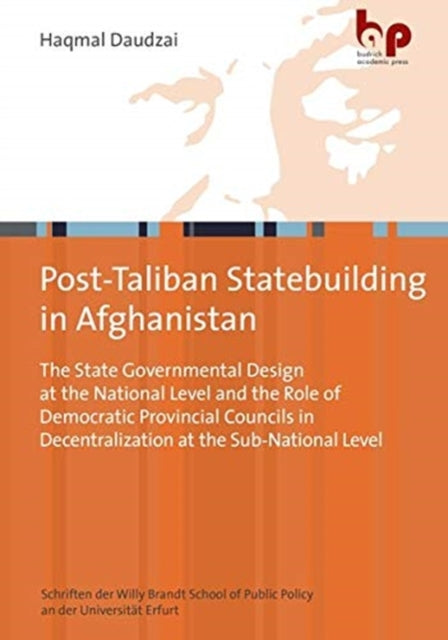
Haqmal Daudzai
Post-Taliban Statebuilding in Afghanistan - The State Governmental Design at the National Level and the Role of Democratic Provincial Councils in
Post-Taliban Statebuilding in Afghanistan - The State Governmental Design at the National Level and the Role of Democratic Provincial Councils in
💎 Earn 191 Points (£1.91) on this item.
YOU SAVE £11.65
- Condition: Brand new
- UK Delivery times: Usually arrives within 2 - 3 working days
- UK Shipping: Fee starts at £2.39. Subject to product weight & dimension
Bulk ordering. Want 15 or more copies? Get a personalised quote and bigger discounts. Learn more about bulk orders.
Couldn't load pickup availability
- More about Post-Taliban Statebuilding in Afghanistan - The State Governmental Design at the National Level and the Role of Democratic Provincial Councils in
The Trump administration signed a deal with the Taliban in 2020, allowing US and NATO troops to leave Afghanistan. This agreement paved the way for intra-Afghan talks between the US-backed Islamic Republic of Afghanistan and the Taliban. The book critically reviews the US/NATO military, peace-and-statebuilding intervention since 2001 and presents the Afghan perspective on democracy, Islam, women's rights, governance, ethnic divide, and state democratic governmental design.
Format: Paperback / softback
Length: 330 pages
Publication date: 02 December 2021
Publisher: Verlag Barbara Budrich
After nearly two decades of war, the Trump administration reached a historic agreement with the Taliban in February 2020. This agreement stipulated that the US and its NATO allies would withdraw their troops from Afghanistan within a specified timeframe. Notably, this agreement paved the way for intra-Afghan talks, bringing together the US-backed Islamic Republic of Afghanistan and the Taliban militant group. This book serves as a critical examination of the US/NATO military, peace-and-statebuilding intervention in Afghanistan since 2001. Drawing from extensive field interviews, it presents a comprehensive perspective on the Afghan perception and discourse on key issues such as democracy, Islam, women's rights, governance, ethnic divisions, and the democratic governmental design at both the national and subnational levels.
The war in Afghanistan has lasted for nearly two decades, resulting in significant loss of life and destruction. The Trump administration's decision to sign an agreement with the Taliban in February 2020 marked a significant turning point in the conflict. The agreement stipulated that the US and its NATO allies would withdraw their troops from Afghanistan within a specified timeframe. This decision was met with mixed reactions, with some critics arguing that it would embolden the Taliban and jeopardize the progress made in recent years toward establishing a stable and democratic country.
On the other hand, supporters of the agreement argue that it is necessary to end the war and bring an end to the suffering of the Afghan people. They believe that the agreement provides a pathway.
The intra-Afghan talks, facilitated by the US, are seen as an opportunity to bring the Taliban and the Afghan government together to find a peaceful resolution to the conflict. The talks aim to address key issues such as the role of women in society, the future of the country's constitution, and the disarmament of the Taliban. However, the process has been slow, and there are concerns that the Taliban may not be fully committed to the peace process.
This book provides a comprehensive analysis of the US/NATO military, peace-and-statebuilding intervention in Afghanistan since 2001. It includes field interviews with Afghan individuals and organizations, providing a unique perspective on the country's political, social, and economic landscape. The book explores the challenges faced by the Afghan government and the international community in rebuilding the country after decades of war and conflict. It also examines the role of the US and other foreign powers in shaping Afghanistan's history and future.
One of the key themes of the book is the impact of the war on the Afghan people. The war has caused widespread displacement, poverty, and human rights abuses. The book highlights the struggles of women and girls in particular, who have faced discrimination and violence throughout the conflict. It also examines the role of the international community in addressing these issues and promoting gender equality in Afghanistan.
Another theme of the book is the role of Islam in Afghan society. The book explores the complex relationship between Islam and politics, and how the Taliban's interpretation of Islam has contributed to the conflict. It also examines the role of religious leaders and scholars in promoting peace and stability in the country.
The book also discusses the challenges of governance in Afghanistan, particularly at the local level. It highlights the need for effective and accountable governance, as well as the importance of building strong institutions and promoting civic engagement. The book examines the role of the international community in supporting governance reform and promoting democracy in Afghanistan.
The book also explores the ethnic divide in Afghanistan and the role of the government in promoting reconciliation and unity. It highlights the importance of addressing the historical grievances and tensions between different ethnic groups, and promoting a sense of belonging and identity among all Afghans.
Finally, the book examines the democratic governmental design at the national and subnational levels in Afghanistan. It explores the challenges faced by the government in establishing a stable and democratic system, and the role of the international community in supporting these efforts. The book also examines the potential for political and social transformation in Afghanistan and the role of the international community in promoting these goals.
In conclusion, this book provides a critical examination of the US/NATO military, peace-and-statebuilding intervention in Afghanistan since 2001. It presents a comprehensive perspective on the Afghan perception and discourse on key issues such as democracy, Islam, women's rights, governance, ethnic divide, and the state democratic governmental design at the national and subnational levels. The book highlights the challenges faced by the Afghan people and the international community in rebuilding the country after decades of war and conflict. It also examines the role of the US and other foreign powers in shaping Afghanistan's history and future. By providing a comprehensive analysis of the situation in Afghanistan, this book contributes to our understanding of the complex and multifaceted challenges facing the country and the broader region.
Weight: 372g
Dimension: 148 x 210 x 21 (mm)
ISBN-13: 9783966650304
This item can be found in:
UK and International shipping information
UK and International shipping information
UK Delivery and returns information:
- Delivery within 2 - 3 days when ordering in the UK.
- Shipping fee for UK customers from £2.39. Fully tracked shipping service available.
- Returns policy: Return within 30 days of receipt for full refund.
International deliveries:
Shulph Ink now ships to Australia, Belgium, Canada, France, Germany, Ireland, Italy, India, Luxembourg Saudi Arabia, Singapore, Spain, Netherlands, New Zealand, United Arab Emirates, United States of America.
- Delivery times: within 5 - 10 days for international orders.
- Shipping fee: charges vary for overseas orders. Only tracked services are available for most international orders. Some countries have untracked shipping options.
- Customs charges: If ordering to addresses outside the United Kingdom, you may or may not incur additional customs and duties fees during local delivery.