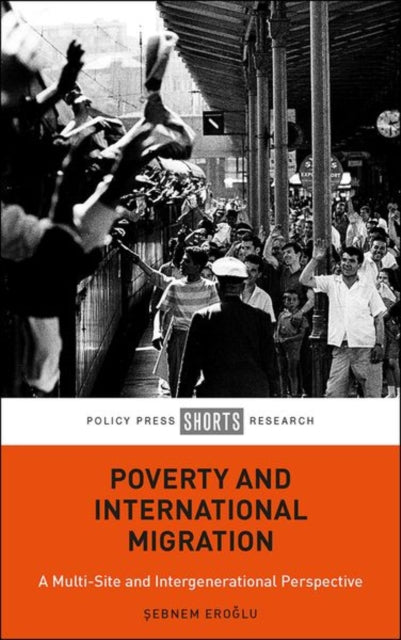
SebnemEroglu
Poverty and International Migration: A Multi-Site and Intergenerational Perspective
Poverty and International Migration: A Multi-Site and Intergenerational Perspective
💎 Earn 198 Points (£1.98) on this item.
We can order this item for you. Delivery usually takes about 4 to 6 weeks.
This item is not held in our immediate stock. We will order it for you after checkout.
Estimated delivery: About 4 to 6 weeks
YOU SAVE £8.35
- Condition: Brand new
- UK Delivery times: Usually arrives within 2 - 3 working days
- UK Shipping: Fee starts at £2.39. Subject to product weight & dimension
Bulk ordering. Want 15 or more copies? Get a personalised quote and bigger discounts. Learn more about bulk orders.
Couldn't load pickup availability
- More about Poverty and International Migration: A Multi-Site and Intergenerational Perspective
International migration can improve economic outcomes for migrants and their families, but there are also challenges associated with poverty transmission. This book explores these issues through a multi-site and intergenerational perspective, providing valuable insights into the economic consequences of migration.
Format: Hardback
Length: 126 pages
Publication date: 03 October 2022
Publisher: Bristol University Press
International migration is a significant life-changing event that can have both positive and negative economic consequences for migrants and their families. While some migrants may experience economic improvement through better job opportunities and higher wages, others may face challenges such as discrimination, exploitation, and social exclusion. The impact of migration on poverty outcomes can vary depending on various factors, including the destination country, the type of migration, and the individual characteristics of the migrants.
One way to examine the economic consequences of migration is to compare the poverty outcomes of migrants and their families with those of non-migrants. This can be done using data from various sources, such as surveys, censuses, and administrative records. However, collecting accurate data on migration and poverty can be challenging, particularly in developing countries where data collection systems may be weak or non-existent.
One study that has attempted to address this issue is the European Migration Network's (EMN) Poverty and Migration Database (PIMD). The PIMD is a comprehensive database that contains information on over 100,000 migrants who have moved to Europe since 2000. The database includes data on the migrants' characteristics, such as age, gender, education, and employment status, as well as their poverty outcomes.
The PIMD has found that migrants and their families tend to have higher poverty rates than non-migrants in many European countries. However, the extent of poverty varies depending on the destination country and the type of migration. For example, migrants from Eastern Europe and Central Asia tend to have higher poverty rates than migrants from Western Europe, while migrants from Africa and Asia tend to have lower poverty rates.
One reason for these differences is that migrants may face barriers to accessing employment and social services in their new destination countries. For example, migrants may not have the necessary skills or qualifications to find work, or they may face discrimination in the workplace. Additionally, migrants may be unable to access social services such as healthcare, education, and housing, which can contribute to their poverty.
Another factor that can affect poverty outcomes for migrants is the length of their stay in the destination country. Migrants who stay in the destination country for a longer period of time may have more opportunities to improve their economic situation, but they may also face challenges such as language barriers, cultural differences, and social exclusion.
To address these challenges, governments and organizations can implement policies that promote the integration of migrants into the labor market and provide them with access to social services. For example, governments can provide language training programs, job placement services, and social welfare programs. Organizations can also provide support to migrants through community-based organizations and social networks.
However, implementing these policies can be challenging, particularly in countries that are experiencing economic downturns or political instability. Additionally, some migrants may not be willing to participate in these programs, particularly if they are afraid of discrimination or social exclusion.
In addition to the economic consequences of migration, migration can also have social and cultural consequences. Migrants may experience cultural shock, discrimination, and social exclusion, which can have negative impacts on their mental and physical health. Additionally, migrants may be unable to maintain their cultural traditions and practices, which can lead to a loss of identity and a sense of belonging.
To address these social and cultural consequences, governments and organizations can implement policies that promote cultural diversity and inclusion. For example, governments can provide funding for cultural institutions and programs, and organizations can provide support to migrants through community-based organizations and social networks.
However, implementing these policies can be challenging, particularly in countries that are experiencing economic downturns or political instability. Additionally, some migrants may not be willing to participate in these programs, particularly if they are afraid of discrimination or social exclusion.
In conclusion, international migration is a complex process that can have both positive and negative economic consequences for migrants and their families. While some migrants may experience economic improvement through better job opportunities and higher wages, others may face challenges such as discrimination, exploitation, and social exclusion. The impact of migration on poverty outcomes can vary depending on various factors, including the destination country, the type of migration, and the individual characteristics of the migrants. To address these challenges, governments and organizations can implement policies that promote the integration of migrants into the labor market and provide them with access to social services. Additionally, governments and organizations can implement policies that promote cultural diversity and inclusion to address the social and cultural consequences of migration.
Weight: 248g
Dimension: 133 x 210 x 15 (mm)
ISBN-13: 9781447365730
This item can be found in:
UK and International shipping information
UK and International shipping information
UK Delivery and returns information:
- Delivery within 2 - 3 days when ordering in the UK.
- Shipping fee for UK customers from £2.39. Fully tracked shipping service available.
- Returns policy: Return within 30 days of receipt for full refund.
International deliveries:
Shulph Ink now ships to Australia, Belgium, Canada, France, Germany, Ireland, Italy, India, Luxembourg Saudi Arabia, Singapore, Spain, Netherlands, New Zealand, United Arab Emirates, United States of America.
- Delivery times: within 5 - 10 days for international orders.
- Shipping fee: charges vary for overseas orders. Only tracked services are available for most international orders. Some countries have untracked shipping options.
- Customs charges: If ordering to addresses outside the United Kingdom, you may or may not incur additional customs and duties fees during local delivery.