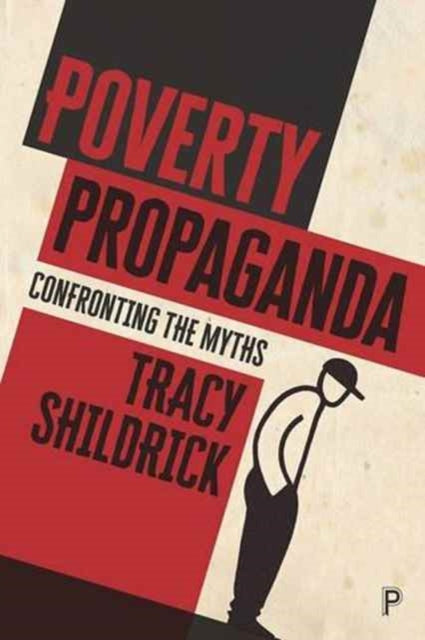
TracyShildrick
Poverty Propaganda: Exploring the Myths
Poverty Propaganda: Exploring the Myths
💎 Earn 107 Points (£1.07) on this item.
YOU SAVE £5.59
- Condition: Brand new
- UK Delivery times: Usually arrives within 2 - 3 working days
- UK Shipping: Fee starts at £2.39. Subject to product weight & dimension
Bulk ordering. Want 15 or more copies? Get a personalised quote and bigger discounts. Learn more about bulk orders.
Couldn't load pickup availability
- More about Poverty Propaganda: Exploring the Myths
Poverty Propaganda debunks many popular myths and misconceptions about poverty and its prevalence, causes and consequences. In particular, it highlights the role of ‘poverty propaganda’ in sustaining class divides in perpetuating poverty and disadvantage in contemporary Britain.
Format: Paperback / softback
Length: 192 pages
Publication date: 11 April 2018
Publisher: Policy Press
Poverty is a complex and multifaceted issue that affects millions of people worldwide. In Britain, it has been a persistent problem throughout history, with many individuals and families struggling to make ends meet. While there have been significant efforts to reduce poverty in recent decades, it remains a significant challenge for the country.
One of the most common myths about poverty is that it is solely a result of individual failings or lack of effort. This myth is often perpetuated by those who argue that poverty is a choice and that those who are poor simply need to work harder to improve their situation. However, the reality is much more complex. Poverty is often the result of a combination of factors, including low income, lack of education and skills, discrimination, and social exclusion.
Another myth about poverty is that it is only a problem for certain groups of people, such as immigrants or ethnic minorities. While these groups may face additional barriers to employment and economic opportunities, poverty is a universal issue that affects people from all backgrounds and walks of life.
Poverty also has significant consequences for individuals and society as a whole. It can lead to poor health, social isolation, and reduced social mobility. It can also contribute to crime and social unrest, as people who are struggling to make ends meet may turn to illegal activities or become marginalized and excluded from mainstream society.
In recent years, there has been a growing recognition of the role of poverty propaganda in sustaining class divides and perpetuating poverty and disadvantage in contemporary Britain. Poverty propaganda refers to the ways in which dominant narratives and stereotypes about poverty are used to justify social and economic policies that perpetuate inequality and disadvantage.
For example, some politicians and media outlets have portrayed immigrants as a burden on the economy and have argued that they should be restricted from accessing benefits or employment opportunities. This type of poverty propaganda can create a sense of fear and resentment towards immigrants and can lead to policies that discriminate against them.
Similarly, some media outlets have portrayed working-class people as lazy and workshy, and have argued that they are responsible for their own poverty. This type of poverty propaganda can create a sense of shame and blame among working-class people and can lead to policies that undermine their economic and social rights.
Poverty propaganda can also be used to justify policies that promote inequality and disadvantage, such as cuts to social welfare programs or tax cuts for the wealthy. These policies can have a significant impact on the most vulnerable members of society, such as children, the elderly, and people with disabilities.
To address poverty in Britain, it is important to challenge these myths and misconceptions and to work towards policies that promote equality and social justice. This includes increasing investment in education and training, reducing discrimination and social exclusion, and providing adequate support for those who are most vulnerable.
It is also important to recognize the role that poverty propaganda plays in perpetuating inequality and disadvantage. By challenging these narratives and promoting a more nuanced and accurate understanding of poverty, we can work towards a more just and equitable society.
In conclusion, poverty is a complex and multifaceted issue that affects millions of people worldwide. In Britain, it has been a persistent problem throughout history, with many individuals and families struggling to make ends meet. While there have been significant efforts to reduce poverty in recent decades, it remains a significant challenge for the country.
One of the most common myths about poverty is that it is solely a result of individual failings or lack of effort. This myth is often perpetuated by those who argue that poverty is a choice and that those who are poor simply need to work harder to improve their situation. However, the reality is much more complex. Poverty is often the result of a combination of factors, including low income, lack of education and skills, discrimination, and social exclusion.
Another myth about poverty is that it is only a problem for certain groups of people, such as immigrants or ethnic minorities. While these groups may face additional barriers to employment and economic opportunities, poverty is a universal issue that affects people from all backgrounds and walks of life.
Poverty also has significant consequences for individuals and society as a whole. It can lead to poor health, social isolation, and reduced social mobility. It can also contribute to crime and social unrest, as people who are struggling to make ends meet may turn to illegal activities or become marginalized and excluded from mainstream society.
In recent years, there has been a growing recognition of the role of poverty propaganda in sustaining class divides and perpetuating poverty and disadvantage in contemporary Britain. Poverty propaganda refers to the ways in which dominant narratives and stereotypes about poverty are used to justify social and economic policies that perpetuate inequality and disadvantage.
For example, some politicians and media outlets have portrayed immigrants as a burden on the economy and have argued that they should be restricted from accessing benefits or employment opportunities. This type of poverty propaganda can create a sense of fear and resentment towards immigrants and can lead to policies that discriminate against them.
Similarly, some media outlets have portrayed working-class people as lazy and workshy, and have argued that they are responsible for their own poverty. This type of poverty propaganda can create a sense of shame and blame among working-class people and can lead to policies that undermine their economic and social rights.
Poverty propaganda can also be used to justify policies that promote inequality and disadvantage, such as cuts to social welfare programs or tax cuts for the wealthy. These policies can have a significant impact on the most vulnerable members of society, such as children, the elderly, and people with disabilities.
To address poverty in Britain, it is important to challenge these myths and misconceptions and to work towards policies that promote equality and social justice. This includes increasing investment in education and training, reducing discrimination and social exclusion, and providing adequate support for those who are most vulnerable.
It is also important to recognize the role that poverty propaganda plays in perpetuating inequality and disadvantage. By challenging these narratives and promoting a more nuanced and accurate understanding of poverty, we can work towards a more just and equitable society.
Weight: 298g
Dimension: 159 x 233 x 14 (mm)
ISBN-13: 9781447323983
This item can be found in:
UK and International shipping information
UK and International shipping information
UK Delivery and returns information:
- Delivery within 2 - 3 days when ordering in the UK.
- Shipping fee for UK customers from £2.39. Fully tracked shipping service available.
- Returns policy: Return within 30 days of receipt for full refund.
International deliveries:
Shulph Ink now ships to Australia, Belgium, Canada, France, Germany, Ireland, Italy, India, Luxembourg Saudi Arabia, Singapore, Spain, Netherlands, New Zealand, United Arab Emirates, United States of America.
- Delivery times: within 5 - 10 days for international orders.
- Shipping fee: charges vary for overseas orders. Only tracked services are available for most international orders. Some countries have untracked shipping options.
- Customs charges: If ordering to addresses outside the United Kingdom, you may or may not incur additional customs and duties fees during local delivery.