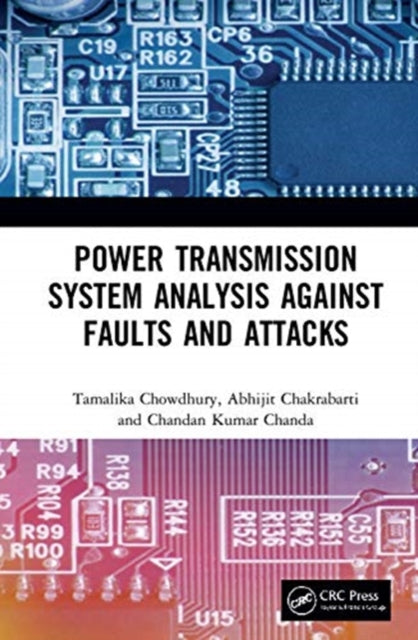
TamalikaChowdhury,AbhijitChakrabarti,Chandan KumarChanda
Power Transmission System Analysis Against Faults and Attacks
Power Transmission System Analysis Against Faults and Attacks
We can order this item for you. Delivery usually takes about 4 to 6 weeks.
This item is not held in our immediate stock. We will order it for you after checkout.
Estimated delivery: About 4 to 6 weeks
YOU SAVE £12.84
- Condition: Brand new
- UK Delivery times: Usually arrives within 2 - 3 working days
- UK Shipping: Fee starts at £3.89. Subject to product weight & dimension
Bulk ordering. Want 15 or more copies? Get a personalised quote and bigger discounts. Learn more about bulk orders.
Couldn't load pickup availability
- More about Power Transmission System Analysis Against Faults and Attacks
The book discusses the methods of assessing the vulnerability of the power grid network and addresses the grid collapse problem due to cascaded failures of the transmission network following an attack or unplanned contingency. It also explores basic mitigation aspects for the network and describes the immunity of the power transmission network against vulnerable collapse using mathematical models.
Format: Hardback
Length: 220 pages
Publication date: 26 March 2021
Publisher: Taylor & Francis Ltd
The modern power grid is a highly intricate network designed to transmit electricity, but it faces significant risks of failure due to unplanned attacks and contingencies. Consequently, assessing the vulnerability of the transmission network is crucial to ensure its stability and resilience. This book delves into the methods employed to evaluate the vulnerability of the grid network and addresses the issue of grid collapse caused by cascaded failures in the transmission network following an attack or unplanned contingency. It explores essential mitigation strategies to safeguard the network and provides insights into the immunity of such power transmission networks against vulnerable collapse through the use of mathematical models.
The Importance of Assessing Grid Network Vulnerability
In the modern world, the power grid plays a pivotal role in our daily lives, providing the energy necessary for various industries, homes, and transportation systems. However, with the increasing sophistication of cyber threats and the potential for natural disasters, the vulnerability of the grid network has become a major concern.
Unplanned attacks and contingencies, such as cyberattacks, natural disasters, or equipment failures, can cause disruptions in the power supply, leading to widespread blackouts, economic losses, and even public safety risks. Therefore, it is essential to assess the vulnerability of the grid network to identify potential weaknesses and take necessary measures to mitigate the risks.
Contingency Approach to Vulnerability Assessment
The assessment of grid network vulnerability follows a contingency approach. This approach involves analyzing the potential risks and vulnerabilities of the grid network and developing strategies to mitigate those risks. It involves a comprehensive analysis of the grid's physical infrastructure, control systems, and communication networks.
The contingency approach is based on the assumption that the grid network is susceptible to a wide range of threats and that any single failure can have cascading effects on the entire network. Therefore, it is important to identify the critical components of the grid network and assess their vulnerability to potential threats.
Methods of Assessment of Grid Network Vulnerability
There are several methods of assessing the grid network vulnerability. One of the most commonly used methods is the Fault Tree Analysis (FTA). FTA is a graphical representation of the potential failures and their consequences in the grid network. It helps identify the critical components of the grid and their interdependencies, which can help in developing mitigation strategies.
Another method of assessing grid network vulnerability is the Security Assessment and Risk Management (SARAM) framework. SARAM is a comprehensive approach that includes risk assessment, threat analysis, and vulnerability assessment. It helps identify the potential risks and vulnerabilities of the grid network and develop strategies to mitigate those risks.
In addition to these methods, there are also other tools and techniques used to assess the grid network vulnerability, such as scenario analysis, simulation, and modeling. These tools help in simulating the behavior of the grid network under different scenarios and identifying potential vulnerabilities.
Addressing the Grid Collapse Problem
One of the most significant challenges facing the power grid is the issue of grid collapse caused by cascaded failures of the transmission network following an attack or unplanned contingency. Grid collapse can have devastating consequences, including widespread blackouts, economic losses, and even public safety risks.
To address the grid collapse problem, it is essential to develop effective mitigation strategies. One of the most effective strategies is to improve the resilience of the grid network. This can be achieved through the implementation of measures such as redundant power sources, backup communication systems, and automated control systems.
In addition to resilience measures, it is also important to develop effective response plans and procedures for dealing with incidents and emergencies. This includes training personnel on how to respond to incidents, developing communication protocols, and establishing coordination mechanisms between different stakeholders.
Mitigation Aspects for the Network
In addition to developing effective mitigation strategies, it is also important to explore basic mitigation aspects for the network. One of the key mitigation aspects is the use of cybersecurity measures to protect the grid network from cyberattacks. This includes the implementation of robust firewalls, intrusion detection systems, and encryption technologies to prevent unauthorized access to the grid network.
Another mitigation aspect is the use of physical security measures to protect the grid network from physical threats. This includes the installation of security cameras, access control systems, and security guards to prevent unauthorized access to critical infrastructure.
In addition to these mitigation aspects, it is also important to develop effective communication protocols and procedures to ensure that information is shared effectively in the event of an incident or emergency. This includes the establishment of emergency response teams, the development of communication channels, and the establishment of protocols for sharing information and coordinating responses.
Immunity of Power Transmission Network Against Vulnerable Collapse
Mathematical models can be used to describe the immunity of power transmission networks against vulnerable collapse. These models can help in understanding the behavior of the grid network under different scenarios and identifying potential vulnerabilities.
One of the most commonly used mathematical models is the Markov model. Markov models are used to describe the behavior of a system over time based on its current state and the probability of transitioning to different states. They can be used to model the behavior of the grid network under different scenarios, such as an attack or an unplanned contingency.
Another mathematical model used to describe the immunity of power transmission networks against vulnerable collapse is the Petri net model. Petri net models are used to model the behavior of complex systems, such as the grid network, in which multiple components interact with each other. They can be used to model the behavior of the grid network under different scenarios and identify potential vulnerabilities.
In conclusion, the assessment of grid network vulnerability is a critical aspect of ensuring the stability and resilience of the power grid. The contingency approach to vulnerability assessment involves analyzing the potential risks and vulnerabilities of the grid network and developing strategies to mitigate those risks. The use of Fault Tree Analysis, Security Assessment and Risk Management, scenario analysis, simulation, and modeling are some of the methods used to assess the grid network vulnerability. In addition to developing effective mitigation strategies, it is also important to explore basic mitigation aspects for the network, such as cybersecurity measures, physical security measures, and effective communication protocols and procedures. Mathematical models can be used to describe the immunity of power transmission networks against vulnerable collapse and help in understanding the behavior of the grid network under different scenarios.
Weight: 506g
Dimension: 162 x 240 x 22 (mm)
ISBN-13: 9780367497774
UK and International shipping information
UK and International shipping information
We deliver throughout the United Kingdom and to 128 countries and territories worldwide, including the United States, Australia, Canada, Germany, Spain and France.