Richard F. Hirsh
Powering American Farms: The Overlooked Origins of Rural Electrification
Powering American Farms: The Overlooked Origins of Rural Electrification
💎 Earn 209 Points (£2.09) on this item.
YOU SAVE £5.05
- Condition: Brand new
- UK Delivery times: Usually arrives within 2 - 3 working days
- UK Shipping: Fee starts at £2.39. Subject to product weight & dimension
Bulk ordering. Want 15 or more copies? Get a personalised quote and bigger discounts. Learn more about bulk orders.
Couldn't load pickup availability
- More about Powering American Farms: The Overlooked Origins of Rural Electrification
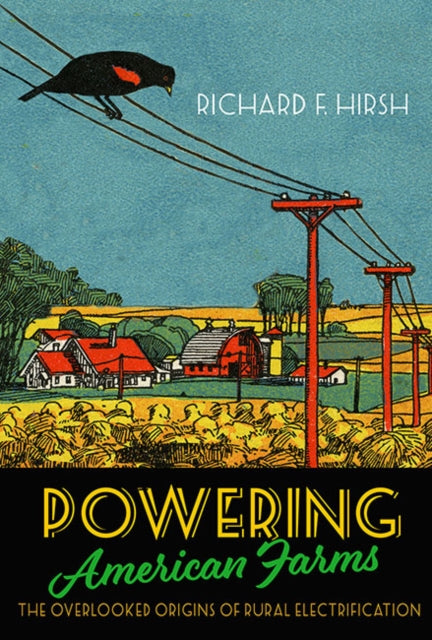
Before the development of Depression-era government initiatives, the power industry made considerable efforts to electrify increasing numbers of farms. Richard F. Hirsh's book Powering American Farms disputes the idea that electric utilities disregarded rural consumers and shows that power companies quadrupled the number of farms getting electricity between 1923 and 1933. It also implies that the traditional story of rural electrification is well-liked because it features a charismatic hero in President Franklin D. Roosevelt and evil utility tycoons.
Format: Hardback
Length: 400 pages
Publication date: 09 August 2022
Publisher: Johns Hopkins University Press
The untold story of the power industry's efforts to electrify growing numbers of farms in the years before the creation of Depression-era government programs is a captivating and significant chapter in American history. Despite decades of retelling, the story of rural electrification in the United States remains dramatic and profoundly affecting. As textbooks and popular histories inform us, farmers obtained electric service only because a compassionate federal government established the Tennessee Valley Authority and the Rural Electrification Administration (REA) during the Great Depression of the 1930s. The agencies' success in raising the standard of living for millions of Americans contrasted with the failure of the greedy big-city utility companies, which showed little interest in the seemingly unprofitable nonurban market. Traditional accounts often describe the nation's population as split in two, separated by access to a magical form of energy: just past cities' limits, a bleak, preindustrial class of citizens endured, literally in near darkness at night and envious of their urban cousins, who enjoyed electrically operated lights, refrigerators, radios, and labor-saving appliances.
In his book, "Powering American Farms," Richard F. Hirsh challenges the notion that electric utilities neglected rural customers in the years before government intervention. Drawing on previously unexamined resources, Hirsh demonstrates that power firms quadrupled the number of farms obtaining electricity in the years between 1923 and 1933, for example. Though not all corporate managers thought much of the farm business, a cadre of rural electrification advocates established the knowledge base and social infrastructure upon which New Deal organizations later capitalized. The book also suggests that the conventional storyline of rural electrification remains incomplete and overlooks important nuances and complexities.
One of the key findings of "Powering American Farms" is that power firms were not entirely indifferent to the farm business. While some corporate managers viewed it as a small and unprofitable market, others recognized the potential for growth and innovation. For example, utility companies such as the Tennessee Valley Authority (TVA) and the Rural Electrification Administration (REA) established programs to provide low-interest loans and technical assistance to farmers who wanted to electrify their farms. These programs helped to overcome the financial barriers that had prevented many farmers from obtaining electric service.
In addition to these government programs, private power companies also played a significant role in rural electrification. Many small, independent power companies were established in the 1920s and 1930s to serve rural communities that were not served by the larger utility companies. These companies often worked closely with local governments and community organizations to develop and implement electrification projects. They often provided more personalized service and were more responsive to the needs of rural customers.
Despite these efforts, rural electrification was not a smooth process. There were many challenges and obstacles to overcome, including the cost of installing electric infrastructure, the lack of reliable power sources, and the resistance of some farmers to change. However, the persistence and determination of rural electrification advocates, as well as the support of the federal government, helped to overcome these challenges and bring electricity to millions of farms.
In conclusion, the untold story of the power industry's efforts to electrify growing numbers of farms in the years before the creation of Depression-era government programs is a fascinating and important chapter in American history. While traditional accounts often portray the nation's population as split in two, separated by access to a magical form of energy, "Powering American Farms" demonstrates that power firms were not entirely indifferent to the farm business and that government intervention was necessary to overcome the financial and technical barriers that had prevented many farmers from obtaining electric service. The book also suggests that the conventional storyline of rural electrification remains incomplete and overlooks important nuances and complexities. By examining the history of rural electrification, we can better understand the role that power plays in shaping our society and the challenges that we face in providing access to clean and affordable energy for all.
Weight: 658g
Dimension: 229 x 152 x 31 (mm)
ISBN-13: 9781421443621
This item can be found in:
UK and International shipping information
UK and International shipping information
UK Delivery and returns information:
- Delivery within 2 - 3 days when ordering in the UK.
- Shipping fee for UK customers from £2.39. Fully tracked shipping service available.
- Returns policy: Return within 30 days of receipt for full refund.
International deliveries:
Shulph Ink now ships to Australia, Belgium, Canada, France, Germany, Ireland, Italy, India, Luxembourg Saudi Arabia, Singapore, Spain, Netherlands, New Zealand, United Arab Emirates, United States of America.
- Delivery times: within 5 - 10 days for international orders.
- Shipping fee: charges vary for overseas orders. Only tracked services are available for most international orders. Some countries have untracked shipping options.
- Customs charges: If ordering to addresses outside the United Kingdom, you may or may not incur additional customs and duties fees during local delivery.