SamiPihlstroem
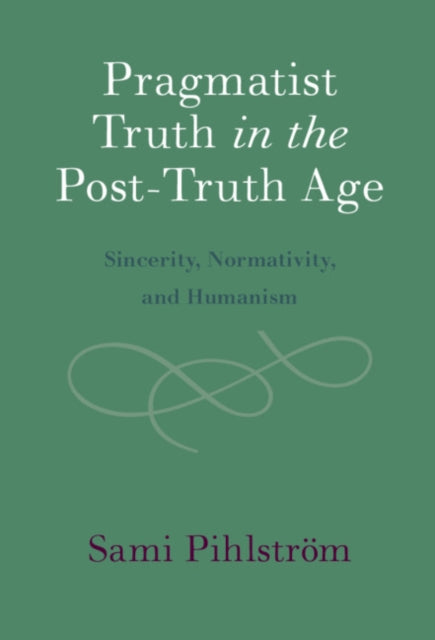
Pragmatist Truth in the Post-Truth Age: Sincerity, Normativity, and Humanism
Pragmatist Truth in the Post-Truth Age: Sincerity, Normativity, and Humanism
💎 Earn 387 Points (£3.87) on this item.
We can order this item for you. Delivery usually takes about 4 to 6 weeks.
This item is not held in our immediate stock. We will order it for you after checkout.
Estimated delivery: About 4 to 6 weeks
YOU SAVE £4.59
- Condition: Brand new
- UK Delivery times: Usually arrives within 2 - 3 working days
- UK Shipping: Fee starts at £2.39. Subject to product weight & dimension
Bulk ordering. Want 15 or more copies? Get a personalised quote and bigger discounts. Learn more about bulk orders.
Couldn't load pickup availability
- More about Pragmatist Truth in the Post-Truth Age: Sincerity, Normativity, and Humanism
Populist politics and social media threaten our concept of truth, but philosophical pragmatists such as William James provide a pragmatist account of truth and truth-seeking. Sami Pihlström develops a pragmatist view of humanism that recognizes irreducible normativity as a constitutive feature of our practices of pursuing the truth, making James a deeply Kantian thinker.
Format: Hardback
Length: 260 pages
Publication date: 23 September 2021
Publisher: Cambridge University Press
It is widely accepted that populist politics and social media pose a significant threat to our understanding of truth. Philosophical pragmatists, often perceived as holding that truth is merely what is useful for us to believe, are sometimes accused of providing the theoretical foundation for the phenomenon of post-truth. In his book, Sami Pihlström presents a pragmatist account of truth and truth-seeking, drawing inspiration from the ideas of William James. He advocates for a thoroughly pragmatist perspective of humanism, which allows for a sincere pursuit of truth. By further developing James's pragmatism and the will to believe strategy in the philosophy of religion, Pihlström argues for a Kantian-inspired transcendental articulation of pragmatism that recognizes irreducible normativity as a fundamental aspect of our practices of seeking truth. As a result, James emerges as a profound Kantian thinker.
Introduction:
The concept of truth has been a central concern in philosophical discourse for centuries. However, in recent years, the rise of populist politics and the proliferation of social media have brought about a shift in our perception of truth. It is commonly believed that these phenomena pose a serious threat to our understanding of what is true and false. In this essay, we will explore the relationship between populist politics and social media and their impact on our concept of truth.
Populist Politics:
Populist politics is a political ideology that emphasizes the importance of the common people and their interests over the interests of elites and institutions. It often appeals to emotions and nationalism and seeks to undermine the authority of established political parties and institutions. Populist politicians often use social media to connect with their supporters and spread their message.
One of the key features of populist politics is its rejection of traditional notions of truth. Populist politicians often claim that the mainstream media and academic institutions are biased and dishonest and that they are only interested in promoting their own agendas. They argue that the truth is subjective and that different people can have different perspectives on the same issue. This rejection of traditional notions of truth has led to a rise in the popularity of conspiracy theories and fake news.
Conspiracy theories and fake news are often spread on social media platforms, which can have a significant impact on public opinion. These theories and news stories can be false or misleading and can be used to manipulate public sentiment and influence political outcomes. This can have serious consequences for democracy and the rule of law, as it can undermine the ability of the public to make informed decisions.
Another feature of populist politics is its emphasis on personal identity and emotion. Populist politicians often appeal to the emotions of their supporters and use personal stories and anecdotes to connect with them. This can create a sense of belonging and identity among supporters, but it can also lead to a lack of critical thinking and a willingness to accept information without questioning it.
Social Media:
Social media is a powerful tool that has revolutionized the way we communicate and share information. It has enabled people to connect with others from all over the world and to share their ideas and opinions with a wider audience. However, social media has also been criticized for its role in promoting post-truth politics.
Social media platforms are designed to promote engagement and attention, which can lead to the spread of misinformation and false information. This is because social media algorithms prioritize content that is engaging and attention-grabbing, even if it is false or misleading. This can create a feedback loop where false information is spread more widely and quickly than accurate information.
Another feature of social media that contributes to the spread of post-truth politics is the lack of fact-checking and verification. Social media users are often able to share information without having to verify its accuracy or source. This can lead to the spread of false information and the reinforcement of conspiracy theories.
In addition to its impact on politics, social media has also had a significant impact on our personal lives. It has been linked to increased levels of anxiety, depression, and loneliness. Social media can create a sense of isolation and disconnection from others, as people spend more time engaging with their screens than with real-world connections.
Conclusion:
In conclusion, populist politics and social media pose a significant threat to our concept of truth. Populist politicians reject traditional notions of truth and use social media to spread conspiracy theories and fake news. This can have serious consequences for democracy and the rule of law, as it can undermine the ability of the public to make informed decisions. Social media platforms are designed to promote engagement and attention, which can lead to the spread of misinformation and false information. This can create a feedback loop where false information is spread more widely and quickly than accurate information. In addition to its impact on politics, social media has also had a significant impact on our personal lives, as it can create a sense of isolation and disconnection from others. It is important for individuals to be critical of the information they receive and to seek out reliable sources of information.
Weight: 508g
Dimension: 159 x 236 x 22 (mm)
ISBN-13: 9781316517703
Edition number: New ed
This item can be found in:
UK and International shipping information
UK and International shipping information
UK Delivery and returns information:
- Delivery within 2 - 3 days when ordering in the UK.
- Shipping fee for UK customers from £2.39. Fully tracked shipping service available.
- Returns policy: Return within 30 days of receipt for full refund.
International deliveries:
Shulph Ink now ships to Australia, Belgium, Canada, France, Germany, Ireland, Italy, India, Luxembourg Saudi Arabia, Singapore, Spain, Netherlands, New Zealand, United Arab Emirates, United States of America.
- Delivery times: within 5 - 10 days for international orders.
- Shipping fee: charges vary for overseas orders. Only tracked services are available for most international orders. Some countries have untracked shipping options.
- Customs charges: If ordering to addresses outside the United Kingdom, you may or may not incur additional customs and duties fees during local delivery.