1
/
of
1
Scott Memmel
Pressing the Police and Policing the Press: The History and Law of the U.S. Press-Police Relationship
Pressing the Police and Policing the Press: The History and Law of the U.S. Press-Police Relationship
💎 Earn 159 Points (£1.59) on this item.
Important: Dispatches within 2 to 4 weeks
Regular price
£31.86 GBP
Regular price
£36.00 GBP
Sale price
£31.86 GBP
Unit price
/
per
Taxes included.
Shipping calculated at checkout.
YOU SAVE £4.14
- Condition: Brand new
- UK Delivery times: Usually arrives within 2 - 3 working days
- UK Shipping: Fee starts at £2.39. Subject to product weight & dimension
Bulk ordering. Want 15 or more copies? Get a personalised quote and bigger discounts. Learn more about bulk orders.
Couldn't load pickup availability
- More about Pressing the Police and Policing the Press: The History and Law of the U.S. Press-Police Relationship
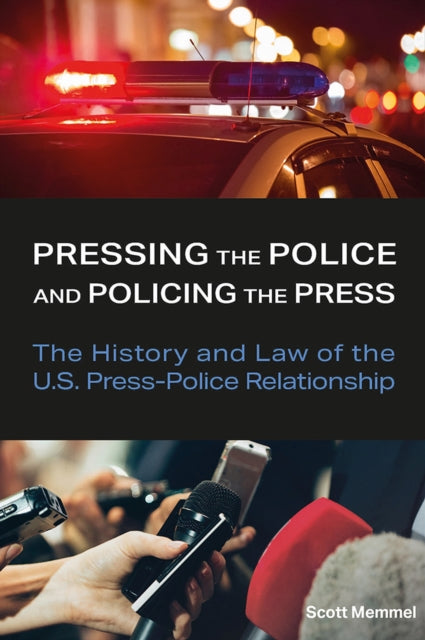
In the second half of 2020 and continuing into 2021, protests against racial injustice spread across the United States after the death of George Floyd while in the custody of Minneapolis Police Department officers. Members of the press covered these demonstrations, documenting what transpired and conveying the important messages involved. In so doing, the news media held law enforcement accountable through critical reporting on the actions of the police, with police officers responding in part by intimidating journalists in the field using force and arrest—this in the name of keeping the peace and protecting the public from further harm. What transpired during this troubled time cast a bright light on the contemporary relationship between the press and police in the United States. The relationship between these two fundamental institutions is, however, a long and complicated one, dating back to colonial British North America. In the mid-19th century, (1830s–1850s) both the press and the police began to take their modern forms, and since then have continued to develop, routinely interacting with each other as journalists and police officers often found themselves responding to the same crimes and events. At times, members of both institutions managed to co-exist or even cooperate and made efforts to help one another, while at other times they butted heads to the point of conflict, the professional boundaries between journalists and police officers seemingly blurred. As both the press and the police have fallen under deep scrutiny in more modern times, the present moment marks what is, perhaps, an opportune time to focus on the political, economic, social, and technological problems they face. In Pressing the Police and Policing the Press, Scott Memmel offers the first book-length study of the history and legal landscape of the press-police relationship. Each chapter focuses on interactions between the press and the police during a particular era, introducing relevant societal context and how both institutions evolved and responded to that context. Memmel concludes his study with recommendations on how, going forward, the press and the police might work together to tackle some of the similar issues they face and better serve the public.
- Publication date: 14 August 2026
- Page count: 348
- Dimensions: Height 229 mm; Width 152 mm; Thickness 38 mm
- Publisher: University of Missouri Press
- Format: Hardback
- ISBN-13: 9780826223067
UK and International shipping information
UK and International shipping information
UK Delivery and returns information:
- Delivery within 2 - 3 days when ordering in the UK.
- Shipping fee for UK customers from £2.39. Fully tracked shipping service available.
- Returns policy: Return within 30 days of receipt for full refund.
International deliveries:
Shulph Ink now ships to Australia, Belgium, Canada, France, Germany, Ireland, Italy, India, Luxembourg Saudi Arabia, Singapore, Spain, Netherlands, New Zealand, United Arab Emirates, United States of America.
- Delivery times: within 5 - 10 days for international orders.
- Shipping fee: charges vary for overseas orders. Only tracked services are available for most international orders. Some countries have untracked shipping options.
- Customs charges: If ordering to addresses outside the United Kingdom, you may or may not incur additional customs and duties fees during local delivery.