Eunbin Chung
Pride, Not Prejudice: National Identity as a Pacifying Force in East Asia
Pride, Not Prejudice: National Identity as a Pacifying Force in East Asia
💎 Earn 389 Points (£3.89) on this item.
- Condition: Brand new
- UK Delivery times: Usually arrives within 2 - 3 working days
- UK Shipping: Fee starts at £2.39. Subject to product weight & dimension
Bulk ordering. Want 15 or more copies? Get a personalised quote and bigger discounts. Learn more about bulk orders.
Couldn't load pickup availability
- More about Pride, Not Prejudice: National Identity as a Pacifying Force in East Asia
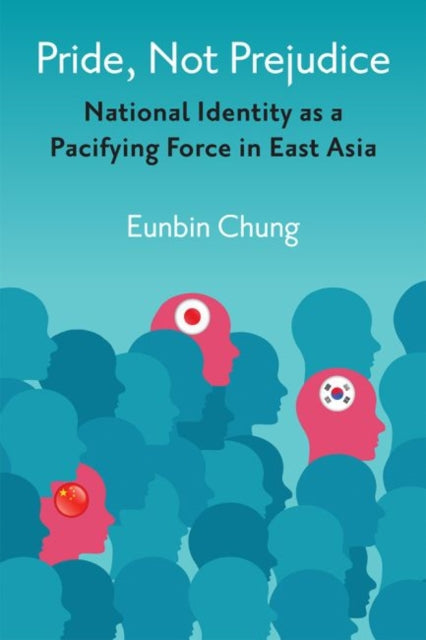
Growing economic interdependencies between countries are not enough to overcome bitter memories grounded in earlier wars, invasions, and periods of colonial domination. Studies have suggested that more peaceful relations are likely only if countries submerge or paper over existing national identities by promoting universalism. However, Pride, Not Prejudice argues that affirmation of national identities may be a more effective way to build international cooperation. Eunbin Chung borrows the social psychological theory of self-affirmation and applies it to an international context to argue that affirmation of a national identity, or reflecting on what it means to be part of one's country, can increase trust, guilt recognition, and positive perception between countries.
Format: Hardback
Length: 320 pages
Publication date: 28 February 2022
Publisher: The University of Michigan Press
Even with the emergence of stronger regional economic interdependencies, such as China's relationship with Japan and Japan's relationship with South Korea, bitter memories rooted in past wars, invasions, and periods of colonial domination persist. Despite efforts to alleviate historical animosity, few have been successful in Northeast Asia. Scholars in the past had anticipated that increased economic interdependence or societal contact would improve relations. However, in economic terms, Japan and China already trade heavily, with Japan emerging as China's largest trading partner and China as the second largest to Japan. Societal contact is already intense, with millions of Chinese, Koreans, and Japanese visiting each other's countries annually as students, tourists, and on business trips.
Despite these developments, international distrust and negative perceptions regarding the countries' painful history have not been resolved, nor has a consensus been reached on what constitutes "adequate reparation." Many studies have suggested that more peaceful relations are likely only if countries submerge or paper over existing national identities by promoting universalism. This idea posits that affirmation of national identities may be a more effective way to build international cooperation. By reflecting on the values of their national identity, individuals can increase trust and positive perceptions between countries. This approach aligns with the theoretical foundation that those with a clear, secure, and content sense of self can be more open, evenhanded, and less defensive toward others.
Furthermore, this reduced defensiveness can enhance international cooperation by promoting mutual understanding and respect. It is important to note that national identities are complex and multifaceted, and should not be reduced to simplistic narratives or stereotypes. Each country has its own unique history, culture, and values, and it is essential to recognize and respect these differences. By promoting a nuanced understanding of national identities, countries can build stronger relationships and work together to address global challenges.
In conclusion, while the emergence of stronger regional economic interdependencies provides opportunities for improved relations, bitter memories and historical animosity persist in Northeast Asia. Efforts to alleviate historical animosity through increased economic interdependence or societal contact have had limited success. Instead, promoting a nuanced understanding of national identities and affirmation of national identities may be a more effective way to build international cooperation and promote peace. This approach requires mutual respect, understanding, and a willingness to work together to address shared challenges and build a more peaceful and prosperous world.
Weight: 664g
Dimension: 157 x 236 x 28 (mm)
ISBN-13: 9780472132942
This item can be found in:
UK and International shipping information
UK and International shipping information
UK Delivery and returns information:
- Delivery within 2 - 3 days when ordering in the UK.
- Shipping fee for UK customers from £2.39. Fully tracked shipping service available.
- Returns policy: Return within 30 days of receipt for full refund.
International deliveries:
Shulph Ink now ships to Australia, Belgium, Canada, France, Germany, Ireland, Italy, India, Luxembourg Saudi Arabia, Singapore, Spain, Netherlands, New Zealand, United Arab Emirates, United States of America.
- Delivery times: within 5 - 10 days for international orders.
- Shipping fee: charges vary for overseas orders. Only tracked services are available for most international orders. Some countries have untracked shipping options.
- Customs charges: If ordering to addresses outside the United Kingdom, you may or may not incur additional customs and duties fees during local delivery.