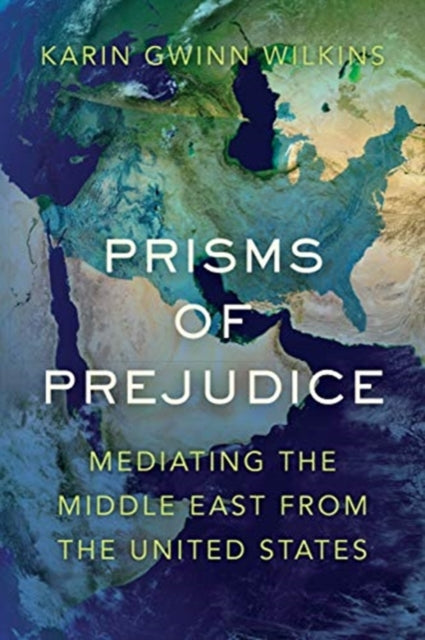
Karin Gwinn Wilkins
Prisms of Prejudice: Mediating the Middle East from the United States
Prisms of Prejudice: Mediating the Middle East from the United States
💎 Earn 66 Points (£0.66) on this item.
YOU SAVE £11.72
- Condition: Brand new
- UK Delivery times: Usually arrives within 2 - 3 working days
- UK Shipping: Fee starts at £2.39. Subject to product weight & dimension
Bulk ordering. Want 15 or more copies? Get a personalised quote and bigger discounts. Learn more about bulk orders.
Couldn't load pickup availability
- More about Prisms of Prejudice: Mediating the Middle East from the United States
Popular culture, broadcast news, government mission statements, and official maps in the US reflect and refract established and enduring prejudices about the projected "Middle East," asserting political boundaries and constructing the US as heroic against a villainous or victimized Middle East. This mediation has consequences, evidenced by the rise in discriminatory sentiments and experiences of harm in US Arab and Muslim communities. Karin Gwinn Wilkins explores these narratives and proposes ways to counter them through informed and engaged strategic intervention in critical communication literacy.
Format: Paperback / softback
Length: 186 pages
Publication date: 05 October 2021
Publisher: University of California Press
The media, rather than reflecting the reality of the Middle East, refracts and distorts it. In the United States, deeply ingrained and persistent prejudices about the region are mediated through various channels, including popular culture, broadcast news, government mission statements, and official maps. This mediation serves to reinforce political boundaries and portray the United States as a heroic force confronting a villainous or victimized Middle East. These problematic maps and narratives persist over time and permeate across different genres, with detrimental consequences evident in the rise of discriminatory sentiments within the US population and the experiences of harm faced by US Arab and Muslim communities.
To shed light on the shape and extent of these narratives, Karin Gwinn Wilkins delves into a comprehensive examination of a diverse range of media. Through her research, she highlights the ways in which these prisms of prejudice manifest and offers strategies for countering them through informed and engaged strategic intervention in critical communication literacy.
One of the key findings of Wilkins' work is the prevalence of problematic maps and narratives in popular culture. These representations often perpetuate stereotypes, distort facts, and promote a narrow understanding of the Middle East. For example, movies, TV shows, and video games often depict Middle Eastern characters as violent, religious extremists, or victims of Western imperialism. This portrayal contributes to the perpetuation of prejudices and reinforces the notion that the Middle East is a dangerous and unstable region.
Similarly, broadcast news outlets play a significant role in shaping public perceptions of the Middle East. News programs often present a one-sided narrative that favors Western interests and portrays Middle Eastern countries as unstable or authoritarian. This selective reporting can lead to a skewed understanding of the region and contribute to the formation of negative stereotypes.
Government mission statements and official maps also contribute to the perpetuation of prejudices about the Middle East. These documents often depict the region as a unified entity, ignoring the diverse cultural, political, and religious identities within it. This oversimplification can lead to misunderstandings and reinforce the notion that the Middle East is a monolithic entity that is hostile to the West.
To address these prisms of prejudice, Wilkins advocates for a more informed and engaged approach to critical communication literacy. She suggests that individuals should be encouraged to consume media critically, to seek out diverse sources of information, and to challenge the narratives they encounter. This requires a willingness to engage with complex issues, to listen to different perspectives, and to be open to the possibility of changing one's beliefs and attitudes.
Furthermore, Wilkins argues that strategic intervention in critical communication literacy can be an effective tool for countering prejudices about the Middle East. This intervention involves working with media outlets, educators, and policymakers to promote more accurate and balanced representations of the region. It also involves promoting dialogue and understanding between different communities, to break down barriers and promote mutual respect and understanding.
In conclusion, the media, rather than reflecting the reality of the Middle East, refracts and distorts it. In the United States, deeply ingrained and persistent prejudices about the region are mediated through various channels, including popular culture, broadcast news, government mission statements, and official maps. This mediation serves to reinforce political boundaries and portray the United States as a heroic force confronting a villainous or victimized Middle East. To address these prisms of prejudice, it is essential to promote a more informed and engaged approach to critical communication literacy. This involves consuming media critically, seeking out diverse sources of information, and challenging the narratives we encounter. Strategic intervention in critical communication literacy can also be an effective tool for countering prejudices, by working with media outlets, educators, and policymakers to promote more accurate and balanced representations of the region and promoting dialogue and understanding between different communities.
Weight: 224g
Dimension: 140 x 210 x 15 (mm)
ISBN-13: 9780520377028
This item can be found in:
UK and International shipping information
UK and International shipping information
UK Delivery and returns information:
- Delivery within 2 - 3 days when ordering in the UK.
- Shipping fee for UK customers from £2.39. Fully tracked shipping service available.
- Returns policy: Return within 30 days of receipt for full refund.
International deliveries:
Shulph Ink now ships to Australia, Belgium, Canada, France, Germany, Ireland, Italy, India, Luxembourg Saudi Arabia, Singapore, Spain, Netherlands, New Zealand, United Arab Emirates, United States of America.
- Delivery times: within 5 - 10 days for international orders.
- Shipping fee: charges vary for overseas orders. Only tracked services are available for most international orders. Some countries have untracked shipping options.
- Customs charges: If ordering to addresses outside the United Kingdom, you may or may not incur additional customs and duties fees during local delivery.