Shulph Ink
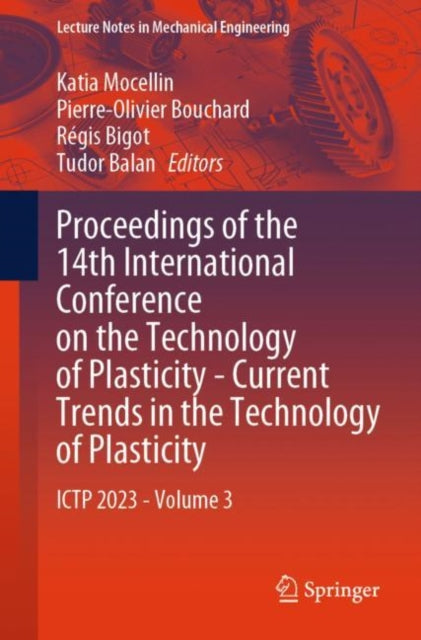
Proceedings of the 14th International Conference on the Technology of Plasticity - Current Trends in the Technology of Plasticity: ICTP 2023 - Volume 3
Proceedings of the 14th International Conference on the Technology of Plasticity - Current Trends in the Technology of Plasticity: ICTP 2023 - Volume 3
💎 Earn 908 Points (£9.08) on this item.
We can order this item for you. Delivery usually takes about 4 to 6 weeks.
This item is not held in our immediate stock. We will order it for you after checkout.
Estimated delivery: About 4 to 6 weeks
YOU SAVE £38.28
- Condition: Brand new
- UK Delivery times: Usually arrives within 2 - 3 working days
- UK Shipping: Fee starts at £2.39. Subject to product weight & dimension
Bulk ordering. Want 15 or more copies? Get a personalised quote and bigger discounts. Learn more about bulk orders.
Couldn't load pickup availability
- More about Proceedings of the 14th International Conference on the Technology of Plasticity - Current Trends in the Technology of Plasticity: ICTP 2023 - Volume 3
The 14th International Conference on Technology of Plasticity (ICTP) showcased the latest advances, innovations, and applications in metal forming, covering various topics such as manufacturing processes, materials behavior, microstructure design, control, optimization, green technologies, digitalization, multi-material processing, agile processes, non-metallic materials, micro-forming, and luxury applications. The contributions, selected through a rigorous peer-review process, offer exciting ideas for future research and multidisciplinary collaboration.
Format: Paperback / softback
Length: 812 pages
Publication date: 29 August 2023
Publisher: Springer International Publishing AG
The 14th International Conference on Technology of Plasticity (ICTP) was held in Mandelieu-La Napoule, France, from September 24-29, 2023, and this volume highlights the latest advances, innovations, and applications in the field of metal forming. The conference covered a diverse range of topics, including manufacturing processes and equipment, materials behavior and characterization, microstructure design by forming, surfaces and interfaces, control and optimization, green/sustainable metal forming technologies, digitalization and AI in metal forming, multi-material processing, agile/flexible metal forming processes, forming of non-metallic materials, micro-forming, and luxury applications. The contributions, which were selected through a rigorous international peer-review process, present a wealth of exciting ideas that will open novel research directions and foster multidisciplinary collaboration among different specialists.
One of the key themes of the conference was the development of new manufacturing processes and equipment that can improve the efficiency, quality, and sustainability of metal forming. This included the use of advanced materials, such as composites, ceramics, and metals, as well as the development of new manufacturing techniques, such as additive manufacturing, 3D printing, and laser cutting. These techniques can enable the production of complex shapes and structures that were previously impossible to achieve, while also reducing the amount of waste and energy consumed in the manufacturing process.
Another important theme of the conference was the study of materials behavior and characterization. This included the study of the mechanical properties of materials, such as strength, ductility, and toughness, as well as the study of their microstructure and surface properties. This information can be used to design materials that are more suitable for specific applications, and to improve the performance of metal forming processes.
Microstructure design by forming was also a major focus of the conference. This involved the use of forming techniques to create specific microstructures in materials, such as grain refinement, texture modification, and phase transformation. These microstructures can improve the strength, ductility, and toughness of materials, as well as their resistance to corrosion and wear.
Surfaces and interfaces were also a major focus of the conference. This included the study of the surface properties of materials, such as friction, wear, and corrosion, as well as the development of new surface treatments and coatings that can improve their performance. This information can be used to improve the performance of metal forming processes, as well as to reduce the amount of waste and energy consumed in the manufacturing process.
Control and optimization were also major themes of the conference. This included the use of advanced control systems and optimization algorithms to improve the efficiency and quality of metal forming processes. This included the use of machine learning and artificial intelligence to predict the behavior of materials and to optimize the process parameters.
Green/sustainable metal forming technologies were also a major focus of the conference. This included the use of renewable energy sources, such as solar and wind power, to power metal forming processes, as well as the use of environmentally friendly materials and manufacturing techniques. This can help to reduce the environmental impact of metal forming and to improve the sustainability of the industry.
Digitalization and AI in metal forming were also major themes of the conference. This included the use of digital technologies to improve the design and manufacturing of metal forming products. This included the use of computer-aided design (CAD) and computer-aided manufacturing (CAM) software, as well as the use of machine learning and artificial intelligence to predict the behavior of materials and to optimize the process parameters.
Multi-material processing was also a major focus of the conference. This involved the use of multiple materials in a single metal forming process, such as the use of aluminum and steel in automotive manufacturing. This can help to reduce the weight and cost of metal forming products, as well as to improve their performance.
Agile/flexible metal forming processes were also a major focus of the conference. This involved the use of flexible manufacturing systems that can be quickly and easily reconfigured to produce different types of metal forming products. This can help to reduce the lead time and cost of metal forming products, as well as to improve their quality.
Forming of non-metallic materials was also a major focus of the conference. This included the use of materials such as plastics, composites, and ceramics in metal forming processes. This can help to reduce the weight and cost of metal forming products, as well as to improve their performance.
Micro-forming was also a major focus of the conference. This involved the use of small-scale manufacturing techniques to produce complex shapes and structures. This can help to reduce the cost and time of metal forming products, as well as to improve their quality.
Luxury applications were also a major focus of the conference. This included the use of metal forming techniques to produce high-end products, such as jewelry, watches, and luxury cars. This can help to improve the quality and value of these products, as well as to increase their market share.
In conclusion, the 14th International Conference on Technology of Plasticity was a successful event that highlighted the latest advances, innovations, and applications in the field of metal forming. The conference covered a diverse range of topics, and the contributions presented by international researchers and engineers were of high quality. The development of new manufacturing processes and equipment, the study of materials behavior and characterization, microstructure design by forming, surfaces and interfaces, control and optimization, green/sustainable metal forming technologies, digitalization and AI in metal forming, multi-material processing, agile/flexible metal forming processes, forming of non-metallic materials, micro-forming, and luxury applications are all important themes that will continue to drive the development of the industry in the future.
Dimension: 235 x 155 (mm)
ISBN-13: 9783031413407
Edition number: 1st ed. 2024
This item can be found in:
UK and International shipping information
UK and International shipping information
UK Delivery and returns information:
- Delivery within 2 - 3 days when ordering in the UK.
- Shipping fee for UK customers from £2.39. Fully tracked shipping service available.
- Returns policy: Return within 30 days of receipt for full refund.
International deliveries:
Shulph Ink now ships to Australia, Belgium, Canada, France, Germany, Ireland, Italy, India, Luxembourg Saudi Arabia, Singapore, Spain, Netherlands, New Zealand, United Arab Emirates, United States of America.
- Delivery times: within 5 - 10 days for international orders.
- Shipping fee: charges vary for overseas orders. Only tracked services are available for most international orders. Some countries have untracked shipping options.
- Customs charges: If ordering to addresses outside the United Kingdom, you may or may not incur additional customs and duties fees during local delivery.