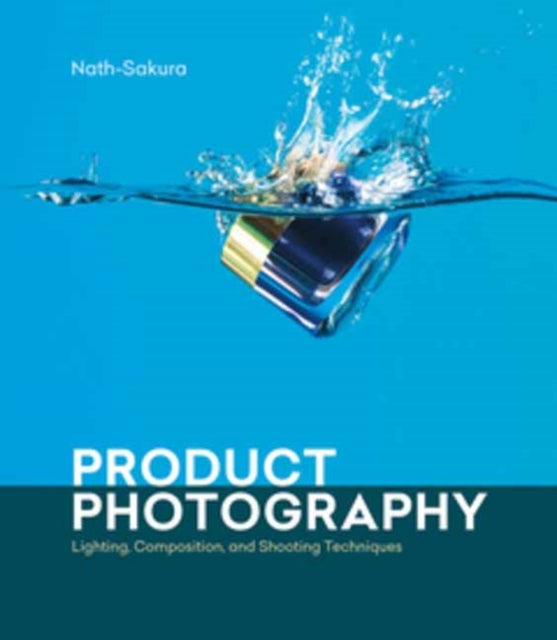
Nath-Sakura
Product Photography: Lighting, Composition, and Shooting Techniques
Product Photography: Lighting, Composition, and Shooting Techniques
💎 Earn 116 Points (£1.16) on this item.
YOU SAVE £9.64
- Condition: Brand new
- UK Delivery times: Usually arrives within 2 - 3 working days
- UK Shipping: Fee starts at £2.39. Subject to product weight & dimension
Bulk ordering. Want 15 or more copies? Get a personalised quote and bigger discounts. Learn more about bulk orders.
Couldn't load pickup availability
- More about Product Photography: Lighting, Composition, and Shooting Techniques
Product photography requires a thorough knowledge of light, angles, reflectance, quantity, quality, shadows, and interactions with materials, shapes, surfaces, and textures. Photographer Nath-Sakura's Product Photography: Lighting, Composition, and Shooting Techniques provides inspiring and beautiful imagery and a wide variety of products to help you learn to tackle any challenge. It also dives deep into the essential concepts you need to know to gain a strong technical background, and includes diagrams, behind-the-scenes shots, and lighting setups to help you create flawless product shots.
Format: Paperback / softback
Length: 264 pages
Publication date: 13 January 2023
Publisher: Rocky Nook
Mastering lighting and composition is essential for capturing stunning product shots that showcase your products in their best light. Whether you're photographing a bottle of wine, a painting, a pair of shoes, or a piece of jewelry, understanding how light works and how to manipulate it is crucial. In this article, we'll delve into the key principles of lighting and composition and provide you with tips and techniques to help you take your product photography to the next level.
Lighting:
Lighting is the key to creating beautiful product shots. It can make or break an image, so it's important to understand how different types of light affect your subject. Here are some of the key factors to consider when lighting your product:
Angle of the Light: The angle of the light can have a significant impact on the appearance of your product. Different angles can create different moods and effects, so experiment with different angles to see which works best for your product.
Intensity of the Light: The intensity of the light can also affect the appearance of your product. Too much light can create harsh shadows and highlights, while too little light can result in a flat and dull image. Experiment with different intensity levels to find the right balance for your product.
Quality of the Light: The quality of the light can also affect the appearance of your product. Natural light, such as sunlight or soft indoor light, is often the best choice for product photography. However, artificial light, such as studio lights or flash, can also be used to create specific effects.
Shadows: Shadows can add depth and dimension to your product shots. They can also create interesting patterns and textures. Experiment with different shadow levels to see which works best for your product.
Reflectance: Reflectance is the amount of light that is reflected off of a surface. Different materials have different reflectance levels, so it's important to consider this when lighting your product. For example, shiny materials such as metal or glass can reflect a lot of light, while matte materials such as fabric or wood can reflect less light.
Composition:
Composition is another critical aspect of product photography. It refers to the arrangement of your product and other elements in the frame. Here are some tips for creating effective compositions:
Rule of Thirds: The rule of thirds is a guideline that suggests dividing the frame into thirds vertically and horizontally. By placing your subject off-center, you can create more interest and balance in the frame.
Leading Lines: Leading lines are lines that guide the viewer's eye through the frame. They can be natural features such as roads, trees, or buildings, or they can be created by the placement of objects in the frame.
Balance: Balance is the visual weight of the elements in the frame. It's important to create a sense of balance to keep the viewer's attention focused on your product. You can achieve balance by placing your product in the center of the frame, or by offsetting it with other elements.
Depth: Depth is the distance between the foreground and background of the frame. By creating depth, you can add dimension and interest to your product shots. You can achieve depth by using a shallow depth of field or by creating a sense of distance by using perspective.
Background: The background is an important element in product photography. It can add context to your product and create a sense of atmosphere. Choose a background that complements your product and doesn't compete with it for attention.
Tips and Techniques:
Here are some tips and techniques for mastering lighting and composition in product photography:
Use Natural Light: Natural light is often the best choice for product photography. It's soft, warm, and flattering, and it can create beautiful, natural-looking images. If you're shooting outdoors, try to find a location with soft, indirect light. If you're shooting indoors, use soft, diffused light from a window or a softbox.
Use Artificial Light: Artificial light can be used to create specific effects or to fill in shadows. Experiment with different types of artificial light, such as studio lights, flash, or LED lights, to see which works best for your product.
Use a Tripod: A tripod is essential for product photography. It allows you to stabilize your camera and shoot at a slow shutter speed, which can help you capture sharp, detailed images.
Use a Macro Lens: A macro lens is a lens that allows you to shoot close-up images of small objects. It's perfect for product photography, as it allows you to capture intricate details and textures.
Experiment with Different Angles: Experiment with different angles to create unique and interesting compositions. Try shooting from above, below, or at different distances to see which works best for your product.
Use Props: Props can add interest and context to your product shots. They can be used to create a scene or to highlight specific features of your product.
Edit Your Images: Editing your images can help you enhance the overall quality and impact of your product shots. Use editing software to adjust exposure, contrast, and color balance, and to remove any unwanted elements.
Conclusion:
Mastering lighting and composition in product photography is essential for creating stunning images that showcase your products in their best light. By understanding how different types of light affect your subject, experimenting with different angles, intensity, and quality, and using effective composition techniques, you can create beautiful, eye-catching images that capture the attention of your audience. Whether you're a professional photographer or just starting out, with practice and dedication, you can become a master of product photography.
Weight: 760g
Dimension: 211 x 242 x 15 (mm)
ISBN-13: 9781681989297
This item can be found in:
UK and International shipping information
UK and International shipping information
UK Delivery and returns information:
- Delivery within 2 - 3 days when ordering in the UK.
- Shipping fee for UK customers from £2.39. Fully tracked shipping service available.
- Returns policy: Return within 30 days of receipt for full refund.
International deliveries:
Shulph Ink now ships to Australia, Belgium, Canada, France, Germany, Ireland, Italy, India, Luxembourg Saudi Arabia, Singapore, Spain, Netherlands, New Zealand, United Arab Emirates, United States of America.
- Delivery times: within 5 - 10 days for international orders.
- Shipping fee: charges vary for overseas orders. Only tracked services are available for most international orders. Some countries have untracked shipping options.
- Customs charges: If ordering to addresses outside the United Kingdom, you may or may not incur additional customs and duties fees during local delivery.