Alpesh Kantilal Patel
Productive Failure: Writing Queer Transnational South Asian Art Histories
Productive Failure: Writing Queer Transnational South Asian Art Histories
💎 Earn 110 Points (£1.10) on this item.
We can order this item for you. Delivery usually takes about 4 to 6 weeks.
This item is not held in our immediate stock. We will order it for you after checkout.
Estimated delivery: About 4 to 6 weeks
YOU SAVE £2.87
- Condition: Brand new
- UK Delivery times: Usually arrives within 2 - 3 working days
- UK Shipping: Fee starts at £2.39. Subject to product weight & dimension
Bulk ordering. Want 15 or more copies? Get a personalised quote and bigger discounts. Learn more about bulk orders.
Couldn't load pickup availability
- More about Productive Failure: Writing Queer Transnational South Asian Art Histories
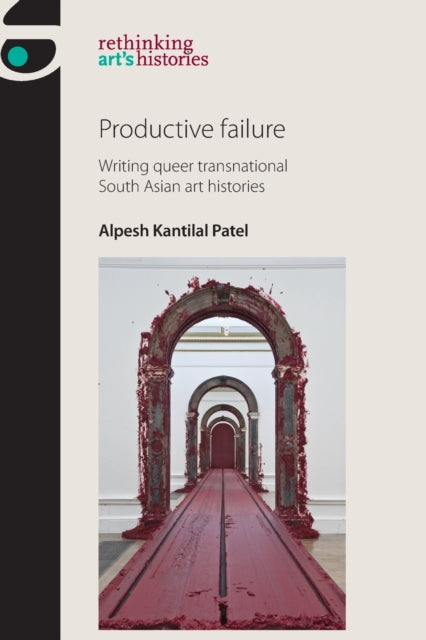
This title challenges traditional approaches to writing transnational South Asian art histories by exploring abstract work and queer theory. It aims to make visible marginalized artworks and provide new methods for generating art history that acknowledge the complex web of factors within which it is produced.
Format: Paperback / softback
Length: 272 pages
Publication date: 07 June 2018
Publisher: Manchester University Press
This title aims to rewrite new transnational South Asian art histories, making visible the histories of artworks that have been marginalized within the discipline of art history. However, this is achieved through a deliberate and productive failure, specifically by not adhering to the strictly genealogical approach that is commonly assumed for South Asian art histories. For instance, one chapter delves into the abstract work of Cy Twombly and Natvar Bhavsar. The author explores whiteness, the invisible ground upon which racialized art histories often pivot, as a fraught yet productive site for writing art history. This book also offers original commentary on how queer theory can deconstruct and provide new approaches for writing art history. Overall, this title provides methods for generating art history that acknowledge the complex web of factors within which art history is produced and the diverse forms of knowledge-production we might consider art history.
Introduction:
The field of art history has traditionally focused on the study of Western art, with a limited understanding of the rich and diverse artistic traditions of other regions. This has led to the marginalization of artworks from South Asia, which have been overlooked and underrepresented in academic discourse. This title sets out to challenge this dominant narrative and rewrite new transnational South Asian art histories that recognize the significance of artworks from this region.
Deliberate Failure:
To achieve this goal, the author employs a deliberate and productive failure. Rather than adhering to the strict genealogical approach that is commonly assumed for South Asian art histories, the author challenges this approach and explores alternative methods for writing art history. This includes examining the role of race, gender, and sexuality in the production and reception of art, as well as the impact of colonialism and globalization on artistic practices.
Abstract Work of Cy Twombly and Natvar Bhavsar:
One chapter of the book focuses on the abstract work of Cy Twombly and Natvar Bhavsar. The author examines how these artists challenged traditional notions of representation and abstraction and how their work contributed to the development of contemporary art. The author also explores the role of whiteness in the production and reception of their work, and how it has been used to marginalize and erase South Asian artists.
Queer Theory:
Another important aspect of the book is its exploration of queer theory. The author argues that queer theory can provide new approaches for writing art history that are more inclusive and diverse. Queer theory challenges traditional notions of gender and sexuality and provides a framework for analyzing the ways in which art has been used to express and explore these identities.
Conclusion:
In conclusion, this title provides a valuable contribution to the field of art history by challenging the dominant narrative and rewriting new transnational South Asian art histories. The author's deliberate and productive failure to adhere to the strict genealogical approach provides a fresh and innovative perspective on the study of art from this region. The book's exploration of race, gender, sexuality, colonialism, and globalization offers a rich and nuanced understanding of the complex web of factors that shape artistic practices. The use of queer theory provides a valuable framework for analyzing the ways in which art has been used to express and explore diverse identities. This title is a must-read for anyone interested in art history, South Asian studies, or gender and sexuality studies.
Weight: 624g
Dimension: 235 x 176 x 15 (mm)
ISBN-13: 9781526132529
UK and International shipping information
UK and International shipping information
UK Delivery and returns information:
- Delivery within 2 - 3 days when ordering in the UK.
- Shipping fee for UK customers from £2.39. Fully tracked shipping service available.
- Returns policy: Return within 30 days of receipt for full refund.
International deliveries:
Shulph Ink now ships to Australia, Belgium, Canada, France, Germany, Ireland, Italy, India, Luxembourg Saudi Arabia, Singapore, Spain, Netherlands, New Zealand, United Arab Emirates, United States of America.
- Delivery times: within 5 - 10 days for international orders.
- Shipping fee: charges vary for overseas orders. Only tracked services are available for most international orders. Some countries have untracked shipping options.
- Customs charges: If ordering to addresses outside the United Kingdom, you may or may not incur additional customs and duties fees during local delivery.