Elisabeth zdalga
Pulpit, Mosque and Nation: Turkish Friday Sermons as Text and Ritual
Pulpit, Mosque and Nation: Turkish Friday Sermons as Text and Ritual
💎 Earn 80 Points (£0.80) on this item.
We can order this item for you. Delivery usually takes about 4 to 6 weeks.
This item is not held in our immediate stock. We will order it for you after checkout.
Estimated delivery: About 4 to 6 weeks
YOU SAVE £4.89
- Condition: Brand new
- UK Delivery times: Usually arrives within 2 - 3 working days
- UK Shipping: Fee starts at £2.39. Subject to product weight & dimension
Bulk ordering. Want 15 or more copies? Get a personalised quote and bigger discounts. Learn more about bulk orders.
Couldn't load pickup availability
- More about Pulpit, Mosque and Nation: Turkish Friday Sermons as Text and Ritual
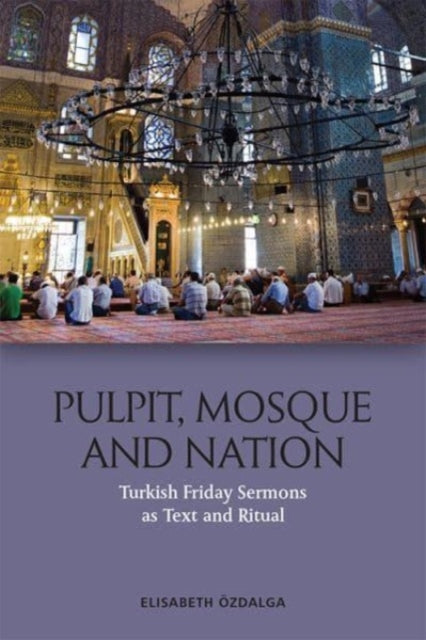
Elisabeth zdalga's book explores the historical and sociological roles of Friday sermons in the nation-building process in modern Turkey, focusing on their role in forming modern political loyalties and national identities.
Format: Paperback / softback
Length: 304 pages
Publication date: 16 August 2023
Publisher: Edinburgh University Press
The historical and sociological significance of Friday sermons in modern Turkey cannot be overstated. These sermons, known as hutbe, have played a pivotal role in shaping the nation's identity and fostering social, national, and political unity. Since the establishment of the Republic in 1923, Friday sermons have been an essential platform for the state to engage and communicate with the Turkish people. The topics covered in these sermons range from religious and ethical issues to family, women, health, education, business, and the environment. While politics has been banned from mosques and sermons, the importance of being a good citizen and honoring the Turkish nation has remained paramount.
In this essay, we will explore the historical and sociological roles of Friday sermons in the nation-building process in modern Turkey. We will analyze various forms and contents of these sermons, including a large number of translations from Turkish to English. We will also highlight how state patronage, conducted through a secular political order, has controlled religion, but also how an overpowering state has been challenged by various religious groups and institutions.
One of the key analytical dimensions of official Muslim oratory is the religious ritual. Friday sermons are deeply rooted in religious traditions and customs, and they are used to reinforce religious beliefs and values. These sermons often include recitations from the Quran, Hadith, and other religious texts, as well as prayers and blessings. The religious ritual aspect of Friday sermons serves to unite Muslims and promote a sense of community.
Another analytical dimension is political and ideological discourses. Friday sermons have been used as a platform for the state to convey its political messages and ideologies. The state has often used these sermons to promote secularism, nationalism, and Turkish identity. However, religious groups and institutions have also challenged the state's control over religion, and they have used these sermons to promote their own religious and ideological agendas.
The third analytical dimension is governmental supervision through the official religious institution, Diyanet. The state has heavily relied on Diyanet to oversee and control the content of Friday sermons. Diyanet has a strict code of conduct that governs the content and delivery of these sermons, and it has the power to punish those who violate these rules. However, there have been instances where religious groups and institutions have challenged Diyanet's control over religion, and they have used their sermons to promote their own agendas.
Despite the challenges faced by the state, Friday sermons have continued to play a significant role in shaping the nation's identity and fostering social, national, and political unity. These sermons have been used to promote religious beliefs and values, to convey political messages and ideologies, and to promote a sense of community. They have also been used to challenge the state's control over religion and to promote religious and ideological agendas.
In conclusion, Friday sermons have played a pivotal role in the nation-building process in modern Turkey. These sermons have been used as a platform for the state to engage and communicate with the Turkish people, to promote religious beliefs and values, to convey political messages and ideologies, and to promote a sense of community. While the state has attempted to control the content of these sermons, religious groups and institutions have also challenged this control. As Turkey continues to navigate its complex relationship between religion and state, Friday sermons will likely continue to play a significant role in shaping the nation's identity and fostering social, national, and political unity.
Dimension: 234 x 156 (mm)
ISBN-13: 9781474488211
UK and International shipping information
UK and International shipping information
UK Delivery and returns information:
- Delivery within 2 - 3 days when ordering in the UK.
- Shipping fee for UK customers from £2.39. Fully tracked shipping service available.
- Returns policy: Return within 30 days of receipt for full refund.
International deliveries:
Shulph Ink now ships to Australia, Belgium, Canada, France, Germany, Ireland, Italy, India, Luxembourg Saudi Arabia, Singapore, Spain, Netherlands, New Zealand, United Arab Emirates, United States of America.
- Delivery times: within 5 - 10 days for international orders.
- Shipping fee: charges vary for overseas orders. Only tracked services are available for most international orders. Some countries have untracked shipping options.
- Customs charges: If ordering to addresses outside the United Kingdom, you may or may not incur additional customs and duties fees during local delivery.