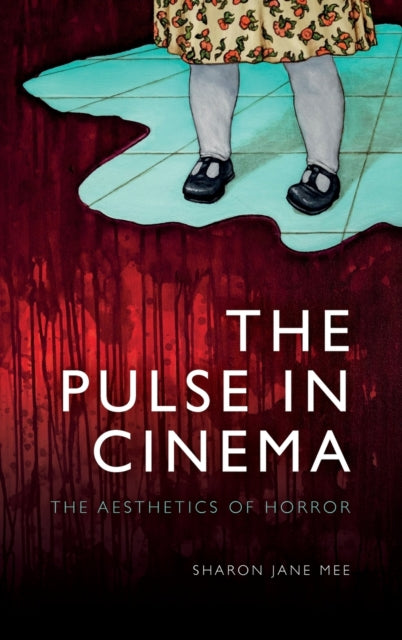
Sharon Mee
Pulse in Cinema: The Aesthetics of Horror
Pulse in Cinema: The Aesthetics of Horror
💎 Earn 383 Points (£3.83) on this item.
YOU SAVE £23.30
- Condition: Brand new
- UK Delivery times: Usually arrives within 2 - 3 working days
- UK Shipping: Fee starts at £2.39. Subject to product weight & dimension
Bulk ordering. Want 15 or more copies? Get a personalised quote and bigger discounts. Learn more about bulk orders.
Couldn't load pickup availability
- More about Pulse in Cinema: The Aesthetics of Horror
The Pulse in Cinema argues that cinema is an energetic arrangement of affective and intense forces, with the image and spectator as specific components, extending cinema spectatorship theory. It analyses body horror films to conceptualise a pulse in cinema, drawing on Lyotard, Deleuze, and Bataille.
Format: Hardback
Length: 216 pages
Publication date: 31 October 2020
Publisher: Edinburgh University Press
The Pulse in Cinema is a groundbreaking work that redefines our understanding of cinema spectatorship by exploring the energetic interplay between affective and intense forces in the cinematic experience. It challenges the traditional notion of cinema as a passive medium and proposes that cinema is an active and dynamic arrangement of affective and intense forces that shape the spectator's response.
One of the key concepts explored in The Pulse in Cinema is the concept of the pulse. The pulse is described as a rhythmic and dynamic force that permeates the cinematic experience, affecting the spectator's emotions, thoughts, and physical sensations. The authors argue that the pulse is essential to cinema spectatorship theory because it helps to explain how cinema can evoke strong emotional responses and create a sense of immersion and engagement.
The Pulse in Cinema analyses body horror films such as The Tingler (1959), Dawn of the Dead (1978), and The Beyond (1981) to illustrate the concept of the pulse. These films are characterized by their intense and visceral depictions of bodily horror, which can evoke a range of emotions, including fear, disgust, and anxiety. The authors argue that the pulse is particularly evident in these films because they use a combination of visual and auditory techniques to create a sense of tension and suspense.
The authors draw on a range of theoretical frameworks to conceptualise the pulse in cinema. They begin with the concept of the dispositif, which was developed by French philosopher Jean-François Lyotard. The dispositif is a system of rules and structures that govern the production and reception of art. The authors argue that the pulse in cinema is a manifestation of the dispositif, as it involves the manipulation of affective and intense forces to create a specific cinematic experience.
The authors also draw on the work of French philosopher Gilles Deleuze, who developed the concept of sensation. Sensation is the process by which the body experiences the world around it. The authors argue that the pulse in cinema is a manifestation of sensation, as it involves the stimulation of the body's senses and the creation of a sense of immersion and engagement.
Finally, the authors draw on the work of French philosopher Georges Bataille, who developed the economic theory of the gift. The gift is a social and economic exchange that involves the giving and receiving of goods and services. The authors argue that the pulse in cinema is a manifestation of the gift, as it involves the exchange of affective and intense forces between the spectator and the film.
One of the key arguments made in The Pulse in Cinema is that the pulse is essential to cinema spectatorship theory because it helps to explain how cinema can evoke strong emotional responses and create a sense of immersion and engagement. The authors argue that the pulse is particularly evident in body horror films because they use a combination of visual and auditory techniques to create a sense of tension and suspense.
The authors also argue that the pulse is important for cinema spectatorship theory because it helps to explain how cinema can challenge traditional notions of gender, race, and sexuality. For example, body horror films often depict women as vulnerable and helpless, which can challenge traditional notions of femininity. Similarly, body horror films often depict people of color as dangerous and threatening, which can challenge traditional notions of race.
In addition to its theoretical significance, The Pulse in Cinema has practical implications for the study of cinema. The authors argue that the pulse can be used as a tool for filmmakers to create more effective and engaging films. For example, filmmakers can use the pulse to create tension and suspense in their films, or to create a sense of immersion and engagement in their films.
However, the authors also acknowledge that the pulse can be problematic in cinema. For example, the pulse can be used to exploit the spectator's emotions, or to create a sense of fear and anxiety that is not healthy. The authors argue that filmmakers should be aware of the potential negative effects of the pulse and should work to create films that are ethical and responsible.
In conclusion, The Pulse in Cinema is a groundbreaking work that redefines our understanding of cinema spectatorship by exploring the energetic interplay between affective and intense forces in the cinematic experience. It challenges the traditional notion of cinema as a passive medium and proposes that cinema is an active and dynamic arrangement of affective and intense forces that shape the spectator's response. The Pulse in Cinema analyses body horror films such as The Tingler (1959), Dawn of the Dead (1978), and The Beyond (1981) to illustrate the concept of the pulse and to argue for its importance in cinema spectatorship theory. While the pulse can be problematic in cinema, filmmakers should be aware of the potential negative effects of the pulse and should work to create films that are ethical and responsible.
Weight: 498g
Dimension: 163 x 240 x 22 (mm)
ISBN-13: 9781474475846
UK and International shipping information
UK and International shipping information
UK Delivery and returns information:
- Delivery within 2 - 3 days when ordering in the UK.
- Shipping fee for UK customers from £2.39. Fully tracked shipping service available.
- Returns policy: Return within 30 days of receipt for full refund.
International deliveries:
Shulph Ink now ships to Australia, Belgium, Canada, France, Germany, Ireland, Italy, India, Luxembourg Saudi Arabia, Singapore, Spain, Netherlands, New Zealand, United Arab Emirates, United States of America.
- Delivery times: within 5 - 10 days for international orders.
- Shipping fee: charges vary for overseas orders. Only tracked services are available for most international orders. Some countries have untracked shipping options.
- Customs charges: If ordering to addresses outside the United Kingdom, you may or may not incur additional customs and duties fees during local delivery.