Shulph Ink
QSAR in Safety Evaluation and Risk Assessment
QSAR in Safety Evaluation and Risk Assessment
💎 Earn 628 Points (£6.28) on this item.
YOU SAVE £16.33
- Condition: Brand new
- UK Delivery times: Usually arrives within 2 - 3 working days
- UK Shipping: Fee starts at £2.39. Subject to product weight & dimension
Bulk ordering. Want 15 or more copies? Get a personalised quote and bigger discounts. Learn more about bulk orders.
Couldn't load pickup availability
- More about QSAR in Safety Evaluation and Risk Assessment
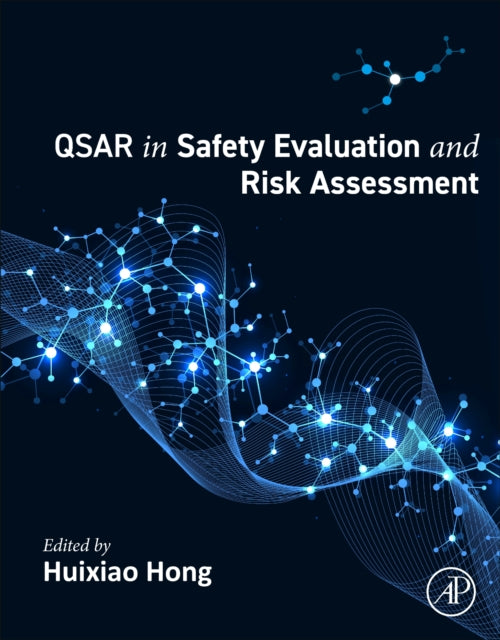
A book about QSAR in Safety Evaluation and Risk Assessment provides comprehensive coverage on QSAR methods, tools, data sources, and models, focusing on applications in products safety evaluation and chemicals risk assessment. It is organized into five parts and covers topics such as methods, data sources, software tools, and models developed for assisting safety evaluation and risk assessment. Chapter contributors are authored by active scientists in the field.
Format: Paperback / softback
Length: 564 pages
Publication date: 22 August 2023
Publisher: Elsevier Science Publishing Co Inc
QSAR in Safety Evaluation and Risk Assessment is a comprehensive resource that delves into the realm of quantitative structure-activity relationship (QSAR) methods, tools, data sources, and models, with a specific focus on their applications in product safety evaluation and chemicals risk assessment. This book is organized into five distinct parts, each covering various aspects of QSAR modeling and application.
Part 1: Introduction to QSAR
In this introductory chapter, the authors provide a comprehensive overview of QSAR, including its historical development, theoretical foundations, and practical applications. They discuss the importance of QSAR in predicting the toxicological properties of chemicals and its role in risk assessment. The chapter also highlights the challenges and limitations associated with QSAR modeling and provides an outlook on future developments in this field.
Part 2: Methods of QSAR
This part explores the various methods employed in QSAR modeling, from both scientific and regulatory perspectives. The authors discuss the principles behind these methods, such as molecular docking, structure-activity relationship (SAR) analysis, and machine learning algorithms. They also provide an in-depth explanation of the data used in QSAR models, including chemical structures, experimental data, and computational methods. The chapter also discusses the validation and uncertainty analysis of QSAR models, which are essential for their reliability and usefulness.
Part 3: Data Sources for Facilitating QSAR Models Development
In this chapter, the authors discuss the various data sources available for facilitating QSAR models development. They explore both internal and external data sources, such as chemical libraries, experimental data, and publicly available databases. The chapter also highlights the importance of selecting appropriate data sources and the challenges associated with data integration and preprocessing. The authors provide practical examples of how these data sources have been used in QSAR models development and discuss the potential applications of these models in various industries.
Part 4: Software Tools for QSAR Development
This part explores the various software tools available for QSAR modeling and application. The authors discuss the features and functionalities of these tools, including molecular modeling software, statistical analysis software, and machine learning algorithms. They also provide an overview of the computational methods used in QSAR modeling, such as grid computing and high-performance computing. The chapter also discusses the advantages and disadvantages of using these software tools and provides practical examples of how they have been used in QSAR models development.
Part 5: QSAR Models Developed for Assisting Safety Evaluation and Risk Assessment
In this final part, the authors present a collection of QSAR models developed for assisting safety evaluation and risk assessment. The chapters cover a wide range of chemical compounds and applications, including pharmaceuticals, pesticides, industrial chemicals, and environmental pollutants. The authors discuss the development and validation of these models, including the selection of appropriate descriptors, the training of machine learning algorithms, and the evaluation of model performance. The chapters also provide practical examples of how these models have been used in safety evaluation and risk assessment, such as predicting toxicological properties, identifying potential hazards, and developing risk management strategies.
Contributors to this book are drawn from a diverse range of active scientists in the field of QSAR. Each chapter is authored by a recognized expert in their respective area, ensuring that the content is both authoritative
comprehensive and up-to-date. The chapters not only provide professional-level technical summaries but also offer introductory descriptions for all aspects of QSAR for safety evaluation and risk assessment, making it an invaluable resource for both novice and experienced researchers in this field.
In conclusion, QSAR in Safety Evaluation and Risk Assessment is a comprehensive and authoritative resource that provides a thorough understanding of QSAR methods, tools, data sources, and models. It is an essential tool for researchers, scientists, and regulatory professionals involved in product safety evaluation and chemicals risk assessment. By covering almost all aspects of QSAR modeling and application, this book offers valuable insights into the development and application of QSAR models in various industries. The contributions of the chapter authors, drawn from a diverse range of active scientists, ensure that the content is both comprehensive and up-to-date, making it an invaluable resource for anyone seeking to advance their knowledge in this field.
Weight: 1530g
Dimension: 213 x 275 x 31 (mm)
ISBN-13: 9780443153396
This item can be found in:
UK and International shipping information
UK and International shipping information
UK Delivery and returns information:
- Delivery within 2 - 3 days when ordering in the UK.
- Shipping fee for UK customers from £2.39. Fully tracked shipping service available.
- Returns policy: Return within 30 days of receipt for full refund.
International deliveries:
Shulph Ink now ships to Australia, Belgium, Canada, France, Germany, Ireland, Italy, India, Luxembourg Saudi Arabia, Singapore, Spain, Netherlands, New Zealand, United Arab Emirates, United States of America.
- Delivery times: within 5 - 10 days for international orders.
- Shipping fee: charges vary for overseas orders. Only tracked services are available for most international orders. Some countries have untracked shipping options.
- Customs charges: If ordering to addresses outside the United Kingdom, you may or may not incur additional customs and duties fees during local delivery.