Shulph Ink
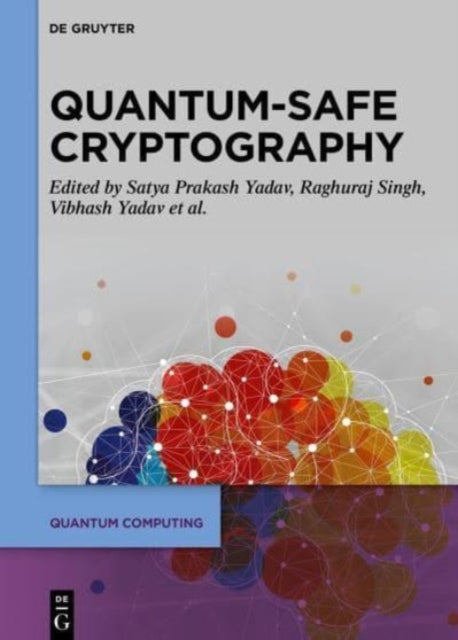
Quantum-Safe Cryptography Algorithms and Approaches: Impacts of Quantum Computing on Cybersecurity
Quantum-Safe Cryptography Algorithms and Approaches: Impacts of Quantum Computing on Cybersecurity
💎 Earn 726 Points (£7.26) on this item.
We can order this item for you. Delivery usually takes about 4 to 6 weeks.
This item is not held in our immediate stock. We will order it for you after checkout.
Estimated delivery: About 4 to 6 weeks
YOU SAVE £8.62
- Condition: Brand new
- UK Delivery times: Usually arrives within 2 - 3 working days
- UK Shipping: Fee starts at £3.89. Subject to product weight & dimension
Bulk ordering. Want 15 or more copies? Get a personalised quote and bigger discounts. Learn more about bulk orders.
Couldn't load pickup availability
- More about Quantum-Safe Cryptography Algorithms and Approaches: Impacts of Quantum Computing on Cybersecurity
Quantum computers have the potential to outperform classical computers, which could impact cryptography algorithms. This book provides an overview of cross-disciplinary developments in cybersecurity generated by quantum computing advancements.
Format: Hardback
Length: 344 pages
Publication date: 07 August 2023
Publisher: De Gruyter
Quantum computers have proven to possess an inherent advantage over classical computers in a wide range of applications. One of the significant consequences of this breakthrough is that the currently employed cryptography algorithms are likely to become obsolete once quantum computers reach their full computing power. This book provides a comprehensive overview of the cross-disciplinary advancements in cybersecurity that are emerging as a result of the rapid progress in quantum computing.
The development of quantum computers has the potential to revolutionize various fields, including cryptography, where traditional encryption methods are no longer secure. Quantum computers can perform complex calculations much faster than classical computers, making it possible to break encryption codes that were previously thought to be unbreakable. This poses a significant threat to the security of sensitive data, such as financial transactions, personal information, and government secrets.
To address this challenge, researchers and experts in the field of cybersecurity are actively developing new encryption algorithms and protocols that are resistant to quantum attacks. One of the most promising approaches is quantum key distribution (QKD), which uses quantum mechanics to distribute cryptographic keys between two parties in a secure and reliable manner. QKD is currently being tested in various scenarios and has shown promising results in terms of its security and reliability.
In addition to encryption, quantum computers can also be used to improve other aspects of cybersecurity, such as network security, data storage, and authentication. For example, quantum cryptography can be used to secure communication channels between devices, while quantum computing can be used to analyze large amounts of data and identify patterns that may indicate a security breach.
However, the development of quantum computers also brings with it new challenges and risks. One of the biggest concerns is the potential for quantum computers to be used for malicious purposes, such as cyberattacks, data theft, and identity theft. Quantum computers can also be used to crack existing encryption algorithms, which could have widespread implications for the security of sensitive data.
To mitigate these risks, it is important for governments, organizations, and individuals to take steps to protect their sensitive data and infrastructure from quantum attacks. This includes investing in research and development of new encryption algorithms and protocols, implementing robust security measures, and educating the public about the risks associated with quantum computing.
In conclusion, the development of quantum computers has the potential to transform the field of cybersecurity, but it also presents significant challenges and risks. By investing in research and development, implementing robust security measures, and educating the public, we can mitigate these risks and ensure that the benefits of quantum computing are realized while minimizing the potential for harm.
Weight: 716g
Dimension: 177 x 246 x 25 (mm)
ISBN-13: 9783110798005
UK and International shipping information
UK and International shipping information
We deliver throughout the United Kingdom and to 128 countries and territories worldwide, including the United States, Australia, Canada, Germany, Spain and France.