HowardMarkel
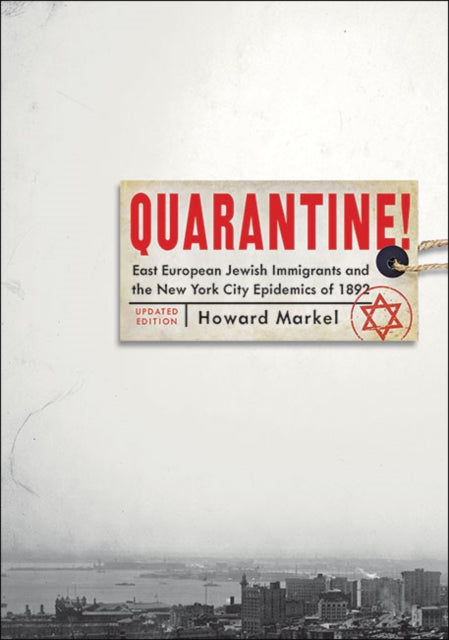
Quarantine!: East European Jewish Immigrants and the New York City Epidemics of 1892
Quarantine!: East European Jewish Immigrants and the New York City Epidemics of 1892
💎 Earn 107 Points (£1.07) on this item.
YOU SAVE £2.58
- Condition: Brand new
- UK Delivery times: Usually arrives within 2 - 3 working days
- UK Shipping: Fee starts at £2.39. Subject to product weight & dimension
Bulk ordering. Want 15 or more copies? Get a personalised quote and bigger discounts. Learn more about bulk orders.
Couldn't load pickup availability
- More about Quarantine!: East European Jewish Immigrants and the New York City Epidemics of 1892
In Quarantine! Howard Markel explores the 1892 typhus and cholera epidemics in New York City, telling the story from the perspective of those involved, including public health doctors, newspaper reporters, government officials, and immigrants. The updated edition includes a new preface reflecting on the book's themes in light of the COVID-19 pandemic.
Format: Paperback / softback
Length: 288 pages
Publication date: 26 April 2022
Publisher: Johns Hopkins University Press
In 1892, New York City was hit by a devastating typhus and cholera epidemic that left thousands of people dead and caused widespread panic. The outbreak was particularly severe in the city's immigrant communities, where overcrowding, poor sanitation, and lack of access to healthcare made it easy for the diseases to spread. The response to the epidemic was marked by a combination of public health measures and political maneuvering, with government officials trying to control the spread of the diseases while also dealing with the growing anti-immigrant sentiment in the city.
One of the most significant aspects of the epidemic was the role that public health doctors played in diagnosing and treating the victims. These doctors worked tirelessly to identify the cause of the diseases and develop effective treatments, often at great risk to their own health. They also worked to educate the public about the dangers of the diseases and how to prevent them.
The epidemic also had a significant impact on the city's immigrant communities. Many immigrants were forced to live in overcrowded and unsanitary conditions, which made them more susceptible to the diseases. They were also often subjected to discrimination and prejudice, which made it difficult for them to access healthcare and other services.
The response to the epidemic was marked by a combination of public health measures and political maneuvering. Government officials tried to control the spread of the diseases by establishing quarantine stations and other isolation facilities. They also worked to improve sanitation and housing conditions in the city's immigrant communities.
However, the response to the epidemic was also marked by a growing anti-immigrant sentiment in the city. Many people blamed immigrants for the spread of the diseases, and there were calls for stricter immigration laws and policies. This sentiment was particularly strong in the city's political establishment, which was dominated by nativists and other anti-immigrant groups.
Despite the challenges posed by the epidemic, public health doctors continued to work tirelessly to diagnose and treat the victims. They also continued to advocate for better healthcare and housing conditions for immigrants and other vulnerable populations. The epidemic ultimately had a significant impact on the city's public health and social policies, leading to the development of more comprehensive public health programs and the recognition of the importance of protecting the health of all citizens.
In conclusion, the typhus and cholera epidemic that swept through New York City in 1892 was a devastating event that had a profound impact on the city's immigrant communities and public health. The response to the epidemic was marked by a combination of public health measures and political maneuvering, with government officials trying to control the spread of the diseases while also dealing with the growing anti-immigrant sentiment in the city. Despite the challenges posed by the epidemic, public health doctors continued to work tirelessly to diagnose and treat the victims and advocate for better healthcare and housing conditions for immigrants and other vulnerable populations. The epidemic ultimately had a significant impact on the city's public health and social policies, leading to the development of more comprehensive public health programs and the recognition of the importance of protecting the health of all citizens.
Weight: 400g
Dimension: 152 x 228 x 23 (mm)
ISBN-13: 9781421443669
Edition number: updated edition
This item can be found in:
UK and International shipping information
UK and International shipping information
UK Delivery and returns information:
- Delivery within 2 - 3 days when ordering in the UK.
- Shipping fee for UK customers from £2.39. Fully tracked shipping service available.
- Returns policy: Return within 30 days of receipt for full refund.
International deliveries:
Shulph Ink now ships to Australia, Belgium, Canada, France, Germany, Ireland, Italy, India, Luxembourg Saudi Arabia, Singapore, Spain, Netherlands, New Zealand, United Arab Emirates, United States of America.
- Delivery times: within 5 - 10 days for international orders.
- Shipping fee: charges vary for overseas orders. Only tracked services are available for most international orders. Some countries have untracked shipping options.
- Customs charges: If ordering to addresses outside the United Kingdom, you may or may not incur additional customs and duties fees during local delivery.