Shulph Ink
Queer Contemporary Art of Southwest Asia North Africa
Queer Contemporary Art of Southwest Asia North Africa
💎 Earn 442 Points (£4.42) on this item.
YOU SAVE £11.50
- Condition: Brand new
- UK Delivery times: Usually arrives within 2 - 3 working days
- UK Shipping: Fee starts at £2.39. Subject to product weight & dimension
Bulk ordering. Want 15 or more copies? Get a personalised quote and bigger discounts. Learn more about bulk orders.
Couldn't load pickup availability
- More about Queer Contemporary Art of Southwest Asia North Africa
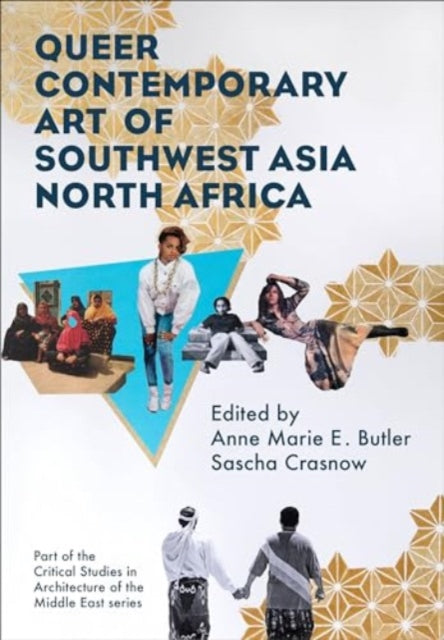
The book presents new perspectives on queer visual culture in the Southwest Asia North Africa region, demonstrating its versatility and consciousness. It focuses on contemporary artworks while recognizing historical and contextual connections to Islamic art and culture. The book challenges existing literature that includes some examples of queer studies or representation but does not use queer studies as a lens to engage with visual culture and the SWANA region. It explores the intersections of queer studies with other fields through four interrelated sections.
Format: Hardback
Length: 260 pages
Publication date: 25 October 2024
Publisher: Intellect
Queer Visual Culture in the Southwest Asia North Africa Region: New Perspectives from Queer Artists and Scholars
Queer visual culture in the Southwest Asia North Africa (SWANA) region is gaining increasing recognition and visibility, with contributions from both scholars and artists. This volume presents a diverse range of artworks produced in the contemporary era, while also acknowledging historical and contextual connections to Islamic art and culture within localities and regions from the pre-modern and modern eras. By framing this volume as unambiguously located within queer studies, the editors challenge existing literature that merely includes some examples of queer studies or queer representation, but does not necessarily use queer studies as a lens through which to engage with visual culture and/or with the SWANA region.
Through four interrelated sections - Gender and Normativity, Trans* Articulations, Intersectional Sexuality, and Queer SWANA - this volume probes several previously unexplored academic areas, namely the intersections of queer studies with other fields. Part of the Critical Studies in Architecture of the Middle East series, this volume offers a valuable contribution to the field of queer studies and visual culture, and will be of interest to scholars, artists, and anyone interested in the region's rich and diverse cultural heritage.
In the first section, "Gender and Normativity," the contributors explore the ways in which gender and sexuality are constructed and performed in the SWANA region. They examine the ways in which queer individuals and communities navigate these constructions and perform their identities, and the ways in which these performances are shaped by local cultural norms and values. The contributors also discuss the ways in which queer visual culture can challenge and subvert these norms and values, and the potential for queer art to promote social change and empowerment.
In the second section, "Trans* Articulations," the contributors explore the ways in which trans* individuals and communities navigate the intersections of gender, sexuality, and identity in the SWANA region. They examine the ways in which trans* individuals are represented in visual culture, and the ways in which their experiences and identities are shaped by local cultural norms and values. The contributors also discuss the ways in which trans* art can challenge and subvert these norms and values, and the potential for trans* art to promote social change and empowerment.
In the third section, "Intersectional Sexuality," the contributors explore the ways in which sexual orientation and gender identity intersect in the SWANA region. They examine the ways in which these intersections are shaped by local cultural norms and values, and the ways in which they impact the lives of individuals and communities. The contributors also discuss the ways in which intersectional queer art can challenge and subvert these norms and values, and the potential for intersectional queer art to promote social change and empowerment.
In the fourth section, "Queer SWANA," the contributors explore the ways in which queer individuals and communities in the SWANA region have responded to the challenges and opportunities presented by the region's cultural and political landscape. They examine the ways in which queer art has been used as a tool for social change and empowerment, and the ways in which queer individuals and communities have been marginalized and excluded from mainstream society. The contributors also discuss the ways in which queer art can be used to promote cultural exchange and understanding between different communities in the region.
One of the key themes that emerges from this volume is the importance of queer visual culture in challenging and subverting dominant narratives and power structures. Queer artists and scholars in the SWANA region have used their art to explore the complexities of gender, sexuality, and identity, and to challenge the ways in which these identities are represented and marginalized in visual culture. By doing so, they have contributed to the development of a more inclusive and diverse visual culture that reflects the rich and diverse cultural heritage of the region.
Another key theme that emerges from this volume is the importance of collaboration and community building in the SWANA region. Queer artists and scholars have worked together to create and promote their art, and to build a sense of community and solidarity among queer individuals and communities. This collaboration has been essential in challenging the dominant narratives and power structures that have marginalized and excluded queer individuals and communities, and in promoting social change and empowerment.
In addition to the contributions from scholars and artists, this volume also includes a number of essays that provide a critical analysis of the literature on queer visual culture in the SWANA region. These essays examine the ways in which queer studies have been used to engage with visual culture, and the ways in which queer studies can be used to challenge and subvert dominant narratives and power structures. They also discuss the ways in which queer studies can be used to promote cultural exchange and understanding between different communities in the region.
One of the challenges that the editors of this volume face is the lack of visibility and recognition of queer visual culture in the SWANA region. Despite the growing number of artworks produced in the contemporary era, many of these artworks are not widely accessible or visible to a broader audience. This lack of visibility and recognition can be attributed to a number of factors, including cultural conservatism, religious intolerance, and political repression.
To address this challenge, the editors of this volume have worked to promote queer visual culture through a variety of means. They have organized exhibitions and events that showcase the work of queer artists and scholars, and have worked to establish partnerships with local organizations and institutions. They have also worked to raise awareness of queer visual culture through social media and other online platforms.
Despite these challenges, queer visual culture in the SWANA region is entering an era of exciting growth in terms of its versatility and consciousness. Queer artists and scholars are using their art to explore new themes and perspectives, and to challenge and subvert dominant narratives and power structures. They are also working to build a sense of community and solidarity among queer individuals and communities, and to promote social change and empowerment.
In conclusion, Queer Visual Culture in the Southwest Asia North Africa Region: New Perspectives from Queer Artists and Scholars is a valuable contribution to the field of queer studies and visual culture. It presents a diverse range of artworks produced in the contemporary era, while also acknowledging historical and contextual connections to Islamic art and culture within localities and regions from the pre-modern and modern eras. By framing this volume as unambiguously located within queer studies, the editors challenge existing literature that merely includes some examples of queer studies or queer representation, but does not necessarily use queer studies as a lens through which to engage with visual culture and/or with the SWANA region. Through four interrelated sections - Gender and Normativity, Trans* Articulations, Intersectional Sexuality, and Queer SWANA - this volume probes several previously unexplored academic areas, namely the intersections of queer studies with other fields. Part of the Critical Studies in Architecture of the Middle East series, this volume offers a valuable contribution to the field of queer studies and visual culture, and will be of interest to scholars, artists, and anyone interested in the region's rich and diverse cultural heritage.
Weight: 752g
Dimension: 175 x 237 x 24 (mm)
ISBN-13: 9781835950265
UK and International shipping information
UK and International shipping information
UK Delivery and returns information:
- Delivery within 2 - 3 days when ordering in the UK.
- Shipping fee for UK customers from £2.39. Fully tracked shipping service available.
- Returns policy: Return within 30 days of receipt for full refund.
International deliveries:
Shulph Ink now ships to Australia, Belgium, Canada, France, Germany, Ireland, Italy, India, Luxembourg Saudi Arabia, Singapore, Spain, Netherlands, New Zealand, United Arab Emirates, United States of America.
- Delivery times: within 5 - 10 days for international orders.
- Shipping fee: charges vary for overseas orders. Only tracked services are available for most international orders. Some countries have untracked shipping options.
- Customs charges: If ordering to addresses outside the United Kingdom, you may or may not incur additional customs and duties fees during local delivery.