DR. Konstantinos Eleftheriadis
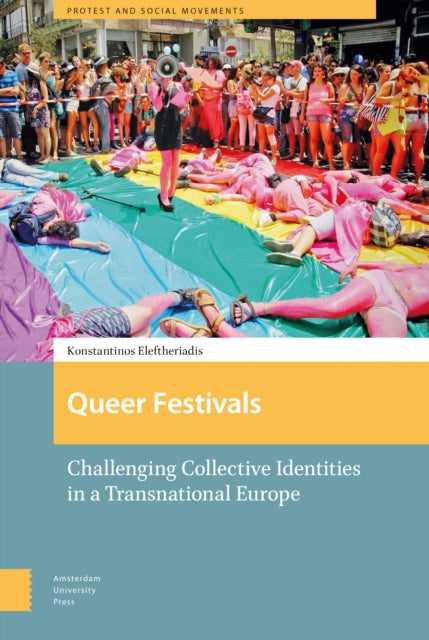
Queer Festivals: Challenging Collective Identities in a Transnational Europe
Queer Festivals: Challenging Collective Identities in a Transnational Europe
💎 Earn 689 Points (£6.89) on this item.
YOU SAVE £8.18
- Condition: Brand new
- UK Delivery times: Usually arrives within 2 - 3 working days
- UK Shipping: Fee starts at £2.39. Subject to product weight & dimension
Bulk ordering. Want 15 or more copies? Get a personalised quote and bigger discounts. Learn more about bulk orders.
Couldn't load pickup availability
- More about Queer Festivals: Challenging Collective Identities in a Transnational Europe
Queer anti-identitarianism is a movement that challenges traditional notions of gender and sexuality and seeks to create new forms of sociability and collective identity. This is experienced by activists at the European level through queer festivals, which provide a platform for building new forms of sociability and practicing anti-binary and inclusive idioms of gender and sexuality.
Format: Hardback
Length: 218 pages
Publication date: 09 March 2018
Publisher: Amsterdam University Press
Queer anti-identitarianism is a multifaceted phenomenon that encompasses a range of perspectives and experiences within the LGBTQ+ community. It challenges the traditional notion of fixed and singular identities and promotes the idea of fluid and diverse identities that are not limited to heterosexual or cisgender norms. Queer anti-identitarianism is experienced by activists at the European level in various ways.
Firstly, it manifests in the creation of new forms of sociability and the practice of anti-binary and inclusive idioms of gender and sexuality. At queer festivals, activists, artists, and participants come together to build a sense of community and solidarity among LGBTQ+ individuals. These festivals provide a space for people to express their identities, share experiences, and explore their desires and aspirations.
Secondly, queer anti-identitarianism is expressed through a series of organisational and cultural practices that aim at the emergence of queer as a collective identity. These practices include the use of intersectional approaches, the promotion of diversity and inclusivity, and the creation of safe spaces for LGBTQ+ individuals to express themselves. Festivals are particularly important in this regard as they provide a platform for activists to showcase their work, connect with other activists, and raise awareness about LGBTQ+ issues.
Through the study of festivals in Amsterdam, Berlin, Rome, Copenhagen, and Oslo, Queer Festivals: Challenging Collective Identities in a Transnational Europe provides a thoughtful analysis of the role of activist practices in the building of collective identities for social movement studies. The book explores how festivals serve as significant repertoires of collective action and sites of identitarian explorations in contemporary Europe.
The authors argue that queer anti-identitarianism is not a monolithic phenomenon but rather a complex and diverse movement that encompasses a range of perspectives and experiences. They highlight the importance of recognising the diversity within the LGBTQ+ community and the need to create spaces that are inclusive and accessible to all individuals.
Queer anti-identitarianism is experienced by activists at the European level in various ways. Firstly, it provides a sense of community and solidarity among LGBTQ+ individuals who may feel isolated or marginalised in their daily lives. Festivals offer a platform for people to connect with others who share their experiences and values, and to build a sense of belonging and identity.
Secondly, queer anti-identitarianism is expressed through the creation of new forms of activism and advocacy. Activists use festivals as a space to raise awareness about LGBTQ+ issues, promote equality and rights, and challenge oppressive systems and practices. Festivals provide a platform for activists to showcase their work, connect with other activists, and build alliances and networks that can help them achieve their goals.
Thirdly, queer anti-identitarianism is experienced through the promotion of diversity and inclusivity. Festivals strive to create spaces that are welcoming and accessible to all individuals, regardless of their gender identity, sexual orientation, race, ethnicity, or ability. This includes the provision of gender-neutral bathrooms and changing facilities, the inclusion of diverse programming, and the promotion of intersectional approaches to activism.
Finally, queer anti-identitarianism is experienced through the exploration of new identities and desires. Festivals provide a space for people to experiment with their identities and explore their desires and aspirations. This can include the exploration of alternative forms of gender and sexuality, the use of drag and performance art, and the celebration of non-binary and trans identities.
In conclusion, queer anti-identitarianism is a multifaceted phenomenon that encompasses a range of perspectives and experiences within the LGBTQ+ community. It challenges the traditional notion of fixed and singular identities and promotes the idea of fluid and diverse identities that are not limited to heterosexual or cisgender norms. Queer anti-identitarianism is experienced by activists at the European level in various ways, including the creation of new forms of sociability, the practice of anti-binary and inclusive idioms of gender and sexuality, the promotion of diversity and inclusivity, and the exploration of new identities and desires. Through the study of festivals in Amsterdam, Berlin, Rome, Copenhagen, and Oslo, Queer Festivals: Challenging Collective Identities in a Transnational Europe provides a thoughtful analysis of the role of activist practices in the building of collective identities for social movement studies and the role of festivals as significant repertoires of collective action and sites of identitarian explorations in contemporary Europe.
Weight: 476g
Dimension: 162 x 239 x 21 (mm)
ISBN-13: 9789462982741
Edition number: 0
UK and International shipping information
UK and International shipping information
UK Delivery and returns information:
- Delivery within 2 - 3 days when ordering in the UK.
- Shipping fee for UK customers from £2.39. Fully tracked shipping service available.
- Returns policy: Return within 30 days of receipt for full refund.
International deliveries:
Shulph Ink now ships to Australia, Belgium, Canada, France, Germany, Ireland, Italy, India, Luxembourg Saudi Arabia, Singapore, Spain, Netherlands, New Zealand, United Arab Emirates, United States of America.
- Delivery times: within 5 - 10 days for international orders.
- Shipping fee: charges vary for overseas orders. Only tracked services are available for most international orders. Some countries have untracked shipping options.
- Customs charges: If ordering to addresses outside the United Kingdom, you may or may not incur additional customs and duties fees during local delivery.