Andrew Benko
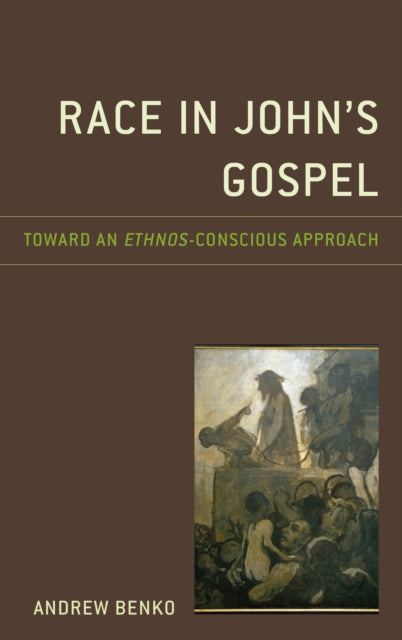
Race in John's Gospel: Toward an Ethnos-Conscious Approach
Race in John's Gospel: Toward an Ethnos-Conscious Approach
💎 Earn 477 Points (£4.77) on this item.
We can order this item for you. Delivery usually takes about 4 to 6 weeks.
This item is not held in our immediate stock. We will order it for you after checkout.
Estimated delivery: About 4 to 6 weeks
- Condition: Brand new
- UK Delivery times: Usually arrives within 2 - 3 working days
- UK Shipping: Fee starts at £2.39. Subject to product weight & dimension
Bulk ordering. Want 15 or more copies? Get a personalised quote and bigger discounts. Learn more about bulk orders.
Couldn't load pickup availability
- More about Race in John's Gospel: Toward an Ethnos-Conscious Approach
The Fourth Gospel emphasizes race, challenging and adapting racialized ideas, ultimately dismissing it as invalid grounds for prejudice or discrimination. However, John's anthropology goes beyond earthly race, constructing a heavenly level of racial identity based on one's descent from God or the devil.
Format: Hardback
Length: 280 pages
Publication date: 08 April 2019
Publisher: Rowman & Littlefield
The Fourth Gospel makes numerous references to race, which raises the question of its significance. In his Gospel, John explores how he incorporates and adapts racialized notions prevalent in his time, challenging some and modifying others. Ultimately, John rejects race as a legitimate basis for prejudice or discrimination, diminishing the very foundations upon which race is established. The cumulative impact of this rhetoric is to undermine the very concept of race, rendering it irrelevant and illusory. Nevertheless, John's anthropology is multifaceted, extending beyond this earthly realm. Above it, John constructs a heavenly level of racial identity, based on one's lineage from either God or the devil.
Introduction:
The Fourth Gospel, attributed to John the Evangelist, is a pivotal text in Christian theology and spirituality. Within its pages, race emerges as a recurring theme, drawing attention to its significance in the narrative. This essay aims to explore the meaning of race in John's Gospel, examining how it is portrayed, interpreted, and ultimately dismissed as a basis for prejudice or discrimination.
Race as a Theme in John's Gospel:
Race appears in various forms and contexts throughout the Gospel. John employs racial labels to describe individuals and groups, often using them to convey certain qualities or characteristics. For example, he refers to Jesus as the "Son of Man" (John 1:49), a title that carries implications of humanity and divinity. Similarly, he describes the Samaritans as "dogs" (John 4:9) and the Jews as "children of the devil" (John 8:44). These labels serve to establish boundaries and differentiate between different groups of people.
Interpretation of Race in John's Gospel:
John's portrayal of race is complex and multifaceted. On the one hand, he challenges some of the prevailing racialized notions of his time. For instance, he emphasizes the unity and equality of all people before God, regardless of their race or ethnicity. He highlights the Samaritan woman's encounter with Jesus, which challenges the notion that Jews are superior to Samaritans. John also portrays Jesus as transcending racial boundaries, reaching out to people from all backgrounds and cultures.
On the other hand, John adapts and incorporates certain racialized notions into his narrative. For example, he uses the term "Son of Man" to convey Jesus's divine nature and humanity, drawing on Jewish messianic expectations. He also portrays the Jews as the chosen people, with a special relationship with God, and the Samaritans as outsiders and enemies. These adaptations serve to reinforce existing social and religious hierarchies and power dynamics.
Dismissal of Race as a Basis for Prejudice or Discrimination:
Despite John's nuanced portrayal of race, he ultimately rejects race as a valid basis for prejudice or discrimination. In his Gospel, he emphasizes the importance of love, compassion, and forgiveness rather than racial differences. He condemns the practice of judging others based on their race or ethnicity, highlighting the inherent sinfulness of such behavior. John's message is clear: race should not be used as a means to divide people or to justify discrimination.
Undermining the Concept of Race:
John's rhetoric of dismissing race as a basis for prejudice or discrimination has a significant impact on the concept of race itself. By devaluing the very criteria upon which race is based, he undermines the legitimacy and significance of the category. He exposes earthly race as irrelevant and illusory, emphasizing that true identity and value are found in one's character, actions, and relationship with God.
Layered Anthropology in John's Gospel:
While John rejects race as a basis for prejudice or discrimination, his anthropology is not limited to this earthly level. Above it, he constructs a heavenly level of racial identity, based on one's descent from either God or the devil. This heavenly level of identity is not defined by earthly race but by one's relationship with God and their adherence to his teachings. John's Gospel encourages individuals to transcend earthly boundaries and to seek a deeper, spiritual level of identity that transcends racial differences.
Conclusion:
In conclusion, the Fourth Gospel makes numerous references to race, which raises the question of its significance. John explores how he incorporates and adapts racialized notions prevalent in his time, challenging some and modifying others. Ultimately, John rejects race as a legitimate basis for prejudice or discrimination, diminishing the very foundations upon which race is established. While John's anthropology is layered, extending beyond this earthly realm, his message of love, compassion, and forgiveness ultimately undermines the concept of race itself. By transcending earthly boundaries and seeking a deeper, spiritual level of identity, individuals can find true fulfillment and significance in their relationships with God and one another.
Weight: 530g
Dimension: 159 x 236 x 25 (mm)
ISBN-13: 9781978706187
UK and International shipping information
UK and International shipping information
UK Delivery and returns information:
- Delivery within 2 - 3 days when ordering in the UK.
- Shipping fee for UK customers from £2.39. Fully tracked shipping service available.
- Returns policy: Return within 30 days of receipt for full refund.
International deliveries:
Shulph Ink now ships to Australia, Belgium, Canada, France, Germany, Ireland, Italy, India, Luxembourg Saudi Arabia, Singapore, Spain, Netherlands, New Zealand, United Arab Emirates, United States of America.
- Delivery times: within 5 - 10 days for international orders.
- Shipping fee: charges vary for overseas orders. Only tracked services are available for most international orders. Some countries have untracked shipping options.
- Customs charges: If ordering to addresses outside the United Kingdom, you may or may not incur additional customs and duties fees during local delivery.