Fintan O'Regan
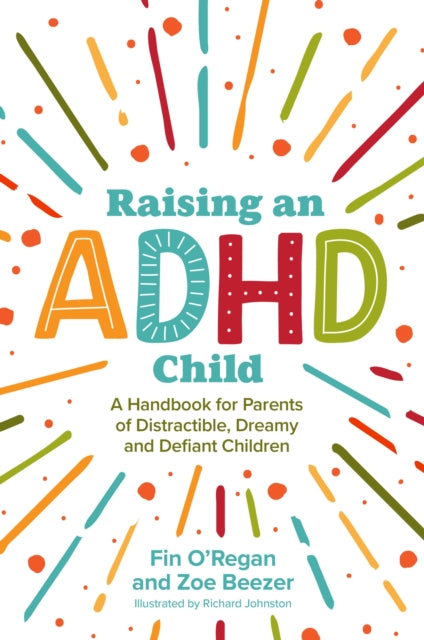
Raising an ADHD Child: A Handbook for Parents of Distractible, Dreamy and Defiant Children
Raising an ADHD Child: A Handbook for Parents of Distractible, Dreamy and Defiant Children
💎 Earn 78 Points (£0.78) on this item.
YOU SAVE £1.25
- Condition: Brand new
- UK Delivery times: Usually arrives within 2 - 3 working days
- UK Shipping: Fee starts at £2.39. Subject to product weight & dimension
Bulk ordering. Want 15 or more copies? Get a personalised quote and bigger discounts. Learn more about bulk orders.
Couldn't load pickup availability
- More about Raising an ADHD Child: A Handbook for Parents of Distractible, Dreamy and Defiant Children
This guide provides practical information for parenting children with ADHD, covering topics such as terminology, communication, collaboration with schools and medical professionals, and strategies for supporting executive functions. It is a valuable resource for parents looking to understand and effectively support their children with ADHD.
Format: Paperback / softback
Length: 192 pages
Publication date: 21 September 2023
Publisher: Jessica Kingsley Publishers
How can I support my child's executive functions?
Where do I start with medication?
What can I do to start planning my child's future?
This guide is a comprehensive and practical look at everything you need to know when parenting a child with ADHD. Beginning with the basics, you'll get to grips with terminology, have popular myths debunked, and learn how to effectively communicate with your child, as well as understand how to work in tandem with schools, medical professionals, partners, and your extended family.
Exploring everything from how to harness hyperfocus to supporting and nourishing your child's executive functions, this is the ADHD parenting guide to always keep in your back pocket.
Understanding ADHD
ADHD, or attention-deficit/hyperactivity disorder, is a common neurodevelopmental condition that affects millions of children and adults worldwide. It is characterized by difficulty with attention, hyperactivity, and impulsivity, which can have a significant impact on a person's daily life.
ADHD is often diagnosed in childhood, but it can also persist into adulthood. The symptoms of ADHD can vary from person to person, and they can range from mild to severe. Some common symptoms of ADHD include:
Difficulty paying attention
Hyperactivity and restlessness
Impulsivity
Poor organization and time management
Forgetfulness
Challenges with concentration
Issues with emotional regulation
ADHD can affect a person's academic, social, and emotional development. It can lead to difficulties in school, work, and relationships, and can also increase the risk of mental health issues such as anxiety and depression.
If you suspect that your child may have ADHD, it is important to seek professional help. A healthcare provider can conduct a thorough evaluation, including psychological testing and physical examination, to determine if your child has ADHD and to develop a treatment plan.
Treatment for ADHD
Treatment for ADHD typically involves a combination of medication, behavioral therapy, and lifestyle changes. Medication is often the first line of treatment for ADHD, and it can help to improve symptoms such as attention, hyperactivity, and impulsivity.
There are several different types of ADHD medications, including stimulants, non-stimulants, and antidepressants. Stimulants, such as methylphenidate (Ritalin, Concerta) and amphetamines (Adderall, Dexedrine), are commonly used to treat ADHD. They work by increasing the levels of dopamine and norepinephrine in the brain, which can help to improve focus and concentration.
Non-stimulants, such as atomoxetine (Strattera) and guanfacine (Intuniv), are also used to treat ADHD. They work by affecting the neurotransmitters in the brain that are involved in attention and behavior.
Antidepressants, such as fluoxetine (Prozac) and sertraline (Zoloft), are sometimes used in conjunction with ADHD medication to treat symptoms of depression and anxiety.
Behavioral therapy is also an important part of treatment for ADHD. It can help to teach children and adults with ADHD how to manage their symptoms and develop coping strategies for challenging situations. Behavioral therapy can include techniques such as cognitive-behavioral therapy, mindfulness-based therapy, and social skills training.
Lifestyle changes can also help to manage ADHD symptoms. These include:
Establishing a regular sleep schedule
Creating a structured and predictable daily routine
Implementing organizational and time management strategies
Developing healthy eating habits
Engaging in regular physical activity
Managing stress and anxiety
Supporting Your Child's Executive Functions
Executive functions are a set of cognitive skills that are essential for managing daily tasks and responsibilities. They include skills such as planning, organizing, prioritizing, and problem-solving. Children with ADHD may struggle with executive functions, which can make it difficult for them to complete schoolwork, manage their time, and follow instructions.
There are several ways that you can support your child's executive functions. Here are some tips:
Create a structured and predictable daily routine.
Use visual aids such as charts, calendars, and schedules to help your child understand what is expected of them and when tasks need to be completed.
Break down tasks into smaller, more manageable steps.
Provide clear and concise instructions.
Use positive reinforcement and praise to encourage your child's positive behavior.
Encourage your child to develop self-monitoring and self-regulation skills.
Use organizational tools such as folders, binders, and storage containers to help your child keep track of their belongings.
Encourage your child to develop problem-solving skills by providing opportunities for them to solve problems independently.
Supporting Your Child's Emotional Well-being
Emotional well-being is an important aspect of a child's overall development. Children with ADHD may struggle with emotional regulation, which can lead to emotional outbursts and difficulties in managing their emotions.
There are several ways that you can support your child's emotional well-being. Here are some tips:
Encourage your child to express their emotions verbally and nonverbally.
Provide opportunities for your child to engage in physical activity and other forms of exercise.
Teach your child healthy coping strategies for managing stress and anxiety.
Encourage your child to develop positive self-talk and self-esteem.
Provide opportunities for your child to connect with others and build positive relationships.
Planning for Your Child's Future
Planning for your child's future is an important aspect of parenting. It can help to ensure that your child has the resources and support they need to succeed in school, work, and life.
There are several ways that you can plan for your child's future. Here are some tips:
Talk to your child about their goals and aspirations.
Help your child develop a plan for achieving their goals.
Encourage your child to develop healthy habits and routines.
Provide opportunities for your child to explore their interests and passions.
Encourage your child to develop strong problem-solving and decision-making skills.
Conclusion
Parenting a child with ADHD can be challenging, but it is not impossible. By understanding ADHD, seeking professional help, and implementing effective treatment and support strategies, you can help your child to thrive and reach their full potential.
Remember that every child with ADHD is unique, and what works for one child may not work for another. It is important to be patient, flexible, and supportive of your child's needs, and to seek out resources and support as needed.
In conclusion, parenting a child with ADHD is a complex and challenging task, but it is not impossible. By understanding ADHD, seeking professional help, and implementing effective treatment and support strategies, you can help your child to thrive and reach their full potential. Remember that every child with ADHD is unique, and what works for one child may not work for another. It is important to be patient, flexible, and supportive of your child's needs, and to seek out resources and support as needed.
Weight: 258g
Dimension: 227 x 152 x 15 (mm)
ISBN-13: 9781839970214
UK and International shipping information
UK and International shipping information
UK Delivery and returns information:
- Delivery within 2 - 3 days when ordering in the UK.
- Shipping fee for UK customers from £2.39. Fully tracked shipping service available.
- Returns policy: Return within 30 days of receipt for full refund.
International deliveries:
Shulph Ink now ships to Australia, Belgium, Canada, France, Germany, Ireland, Italy, India, Luxembourg Saudi Arabia, Singapore, Spain, Netherlands, New Zealand, United Arab Emirates, United States of America.
- Delivery times: within 5 - 10 days for international orders.
- Shipping fee: charges vary for overseas orders. Only tracked services are available for most international orders. Some countries have untracked shipping options.
- Customs charges: If ordering to addresses outside the United Kingdom, you may or may not incur additional customs and duties fees during local delivery.