Nadia Ali
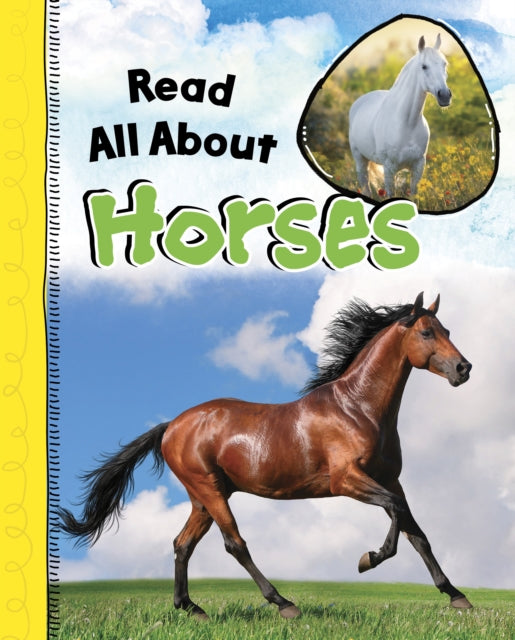
Read All About Horses
Read All About Horses
💎 Earn 62 Points (£0.62) on this item.
YOU SAVE £0.52
- Condition: Brand new
- UK Delivery times: Usually arrives within 2 - 3 working days
- UK Shipping: Fee starts at £2.39. Subject to product weight & dimension
Bulk ordering. Want 15 or more copies? Get a personalised quote and bigger discounts. Learn more about bulk orders.
Couldn't load pickup availability
- More about Read All About Horses
Horses can sleep standing up, have the largest eyes of any land mammal, and have been living and working alongside people for thousands of years. Read All About Horses is part of the Read All About It series, designed to introduce young children to the wonders of non-fiction.
Format: Hardback
Length: 32 pages
Publication date: 17 August 2023
Publisher: Capstone Global Library Ltd
Did you know that horses can sleep standing up? Or that horses have the largest eyes of any land mammal? Discover all about horses' senses, life cycle, behavior, and more in this fact-filled book. Stunning photos give readers an up-close look at these loyal, majestic companions that have been living and working alongside people for thousands of years.
Read All About Horses is part of the Read All About It series, a series of beautiful books designed to introduce young children to the wonders of non-fiction. Full of fun and easy-to-find facts, the content is presented at a depth that young children will be able to understand and relate to. With information on a wide variety of topics, kids will be reaching for these books over and over again!
Horses are incredible creatures with a rich history and diverse range of abilities. From their impressive size and strength to their keen senses and remarkable intelligence, horses have evolved over millions of years to become the versatile animals they are today.
One of the most fascinating aspects of horses is their ability to sleep standing up. This unique adaptation allows them to rest while keeping a watchful eye out for predators. While most animals sleep lying down, horses can sleep for short periods of time while standing, with their legs locked in a position that allows them to balance and remain alert.
Horses also have the largest eyes of any land mammal, which gives them excellent vision. Their eyes are able to see a wide range of colors and shades, making it easier for them to detect predators and navigate their environment. In addition, horses have a keen sense of smell, which they use to communicate with other horses and find food.
Horses have a complex social structure, with herds consisting of a dominant stallion, several mares, and their offspring. These herds are led by the stallion, who is responsible for protecting the group and finding food. Mares are also important in the herd, as they give birth to foals and help care for them.
Horses are herbivores, which means they eat primarily plants. Their diet includes a variety of grasses, hay, and other forage plants, as well as fruits and vegetables. Horses have a unique digestive system that allows them to extract nutrients from these plants efficiently.
Horses have a life cycle that is similar to that of other mammals. Mares give birth to foals, which are born alive but are still dependent on their mothers for milk. Foals grow rapidly in the first few months of life, gaining weight and developing their muscles. Once they are old enough, foals are weaned from their mothers and begin to live independently.
Horses are also known for their behavior and personality. They are intelligent and social animals, and they have a strong sense of loyalty to their owners and their herds. Horses are also capable of learning and performing complex tasks, such as jumping, running, and riding.
In addition to their natural abilities, horses have been trained for a variety of purposes throughout history. They have been used for transportation, agriculture, warfare, and entertainment. Today, horses are still used for these purposes, as well as for therapeutic riding and other recreational activities.
Horses are also important to the environment. They help maintain the health of grasslands and forests by grazing on plants and promoting the growth of new vegetation. Horses also play a role in the carbon cycle, as they absorb carbon dioxide from the atmosphere and release it through their respiration.
Despite their many benefits, horses also face challenges. One of the biggest challenges is the impact of human activity on their habitat. Overgrazing, pollution, and development can all harm horses and their environment. Additionally, the demand for horses for recreational activities can put pressure on their populations and lead to overbreeding and other health problems.
To protect and conserve horses, it is important to raise awareness about their needs and the importance of their conservation. This can include measures such as habitat protection, sustainable management of horse populations, and education about responsible horse ownership.
In conclusion, horses are incredible creatures with a rich history and diverse range of abilities. From their unique ability to sleep standing up to their large eyes and keen sense of smell, horses have evolved over millions of years to become the versatile animals they are today.
Horses have a complex social structure, with herds consisting of a dominant stallion, several mares, and their offspring. These herds are led by the stallion, who is responsible for protecting the group and finding food. Mares are also important in the herd, as they give birth to foals and help care for them.
Horses are herbivores, which means they eat primarily plants. Their diet includes a variety of grasses, hay, and other forage plants, as well as fruits and vegetables. Horses have a unique digestive system that allows them to extract nutrients from these plants efficiently.
Horses have a life cycle that is similar to that of other mammals. Mares give birth to foals, which are born alive but are still dependent on their mothers for milk. Foals grow rapidly in the first few months of life, gaining weight and developing their muscles. Once they are old enough, foals are weaned from their mothers and begin to live independently.
Horses are also known for their behavior and personality. They are intelligent and social animals, and they have a strong sense of loyalty to their owners and their herds. Horses are also capable of learning and performing complex tasks, such as jumping, running, and riding.
In addition to their natural abilities, horses have been trained for a variety of purposes throughout history. They have been used for transportation, agriculture, warfare, and entertainment. Today, horses are still used for these purposes, as well as for therapeutic riding and other recreational activities.
Horses are also important to the environment. They help maintain the health of grasslands and forests by grazing on plants and promoting the growth of new vegetation. Horses also play a role in the carbon cycle, as they absorb carbon dioxide from the atmosphere and release it through their respiration.
Despite their many benefits, horses also face challenges. One of the biggest challenges is the impact of human activity on their habitat. Overgrazing, pollution, and development can all harm horses and their environment. Additionally, the demand for horses for recreational activities can put pressure on their populations and lead to overbreeding and other health problems.
To protect and conserve horses, it is important to raise awareness about their needs and the importance of their conservation. This can include measures such as habitat protection, sustainable management of horse populations, and education about responsible horse ownership.
In conclusion, horses are incredible creatures with a rich history and diverse range of abilities. From their unique ability to sleep standing up to their large eyes and keen sense of smell, horses have evolved over millions of years to become the versatile animals they are today.
Horses have a complex social structure, with herds consisting of a dominant stallion, several mares, and their offspring. These herds are led by the stallion, who is responsible for protecting the group and finding food. Mares are also important in the herd, as they give birth to foals and help care for them.
Horses are herbivores, which means they eat primarily plants. Their diet includes a variety of grasses, hay, and other forage plants, as well as fruits and vegetables. Horses have a unique digestive system that allows them to extract nutrients from these plants efficiently.
Horses have a life cycle that is similar to that of other mammals. Mares give birth to foals, which are born alive but are still dependent on their mothers for milk. Foals grow rapidly in the first few months of life, gaining weight and developing their muscles. Once they are old enough, foals are weaned from their mothers and begin to live independently.
Horses are also known for their behavior and personality. They are intelligent and social animals, and they have a strong sense of loyalty to their owners and their herds. Horses are also capable of learning and performing complex tasks, such as jumping, running, and riding.
In addition to their natural abilities, horses have been trained for a variety of purposes throughout history. They have been used for transportation, agriculture, warfare, and entertainment. Today, horses are still used for these purposes, as well as for therapeutic riding and other recreational activities.
Horses are also important to the environment. They help maintain the health of grasslands and forests by grazing on plants and promoting the growth of new vegetation. Horses also play a role in the carbon cycle, as they absorb carbon dioxide from the atmosphere and release it through their respiration.
Despite their many benefits, horses also face challenges. One of the biggest challenges is the impact of human activity on their habitat. Overgrazing, pollution, and development can all harm horses and their environment. Additionally, the demand for horses for recreational activities can put pressure on their populations and lead to overbreeding and other health problems.
To protect and conserve horses, it is important to raise awareness about their needs and the importance of their conservation. This can include measures such as habitat protection, sustainable management of horse populations, and education about responsible horse ownership.
In conclusion, horses are incredible creatures with a rich history and diverse range of abilities. From their unique ability to sleep standing up to their large eyes and keen sense of smell, horses have evolved over millions of years to become the versatile animals they are today.
Weight: 378g
Dimension: 204 x 262 x 10 (mm)
ISBN-13: 9781398251298
This item can be found in:
UK and International shipping information
UK and International shipping information
UK Delivery and returns information:
- Delivery within 2 - 3 days when ordering in the UK.
- Shipping fee for UK customers from £2.39. Fully tracked shipping service available.
- Returns policy: Return within 30 days of receipt for full refund.
International deliveries:
Shulph Ink now ships to Australia, Belgium, Canada, France, Germany, Ireland, Italy, India, Luxembourg Saudi Arabia, Singapore, Spain, Netherlands, New Zealand, United Arab Emirates, United States of America.
- Delivery times: within 5 - 10 days for international orders.
- Shipping fee: charges vary for overseas orders. Only tracked services are available for most international orders. Some countries have untracked shipping options.
- Customs charges: If ordering to addresses outside the United Kingdom, you may or may not incur additional customs and duties fees during local delivery.