Joanna Tucker
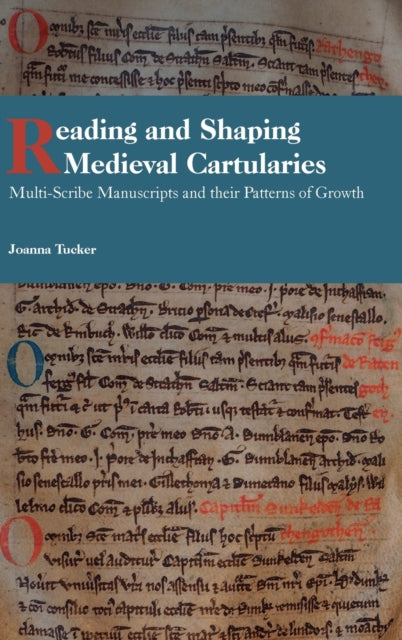
Reading and Shaping Medieval Cartularies: Multi-Scribe Manuscripts and their Patterns of Growth. A Study of the Earliest Cartularies of Glasgow Cathedral and Lindores Abbey
Reading and Shaping Medieval Cartularies: Multi-Scribe Manuscripts and their Patterns of Growth. A Study of the Earliest Cartularies of Glasgow Cathedral and Lindores Abbey
💎 Earn 480 Points (£4.80) on this item.
- Condition: Brand new
- UK Delivery times: Usually arrives within 2 - 3 working days
- UK Shipping: Fee starts at £2.39. Subject to product weight & dimension
Bulk ordering. Want 15 or more copies? Get a personalised quote and bigger discounts. Learn more about bulk orders.
Couldn't load pickup availability
- More about Reading and Shaping Medieval Cartularies: Multi-Scribe Manuscripts and their Patterns of Growth. A Study of the Earliest Cartularies of Glasgow Cathedral and Lindores Abbey
Medieval cartularies are manuscripts that reflect the immediate concerns and archival environment of the communities that created them. This book offers a new methodology that engages with multi-scribe contributions in two cartulary manuscripts, revealing two communities that took an active approach to reading and shaping their cartularies. It raises fundamental questions about the definition of cartularies and how they functioned, their relationship to archives of single-sheet documents, and as sources for institutional identity.
Format: Hardback
Length: 332 pages
Publication date: 24 January 2020
Publisher: Boydell & Brewer Ltd
Medieval cartularies, once considered mere repositories of charters, have emerged as invaluable sources for historians studying the Middle Ages. These meticulously curated collections of texts, meticulously arranged to reflect the immediate concerns and archival environments of the communities that created them, have now been recognized as multi-scribe manuscripts that underwent significant physical and textual growth over time. This book presents a groundbreaking methodology that explores the contributions of multiple scribes in two cartulary manuscripts: the oldest cartularies of Glasgow Cathedral and Lindores Abbey. By integrating the physical and textual aspects of these manuscripts, the book aims to analyze how and why these cartularies evolved in stages across centuries. This approach reveals two communities that actively engaged with their cartularies, treating them as shared spaces. This raises fundamental questions about the definition and function of cartularies, their relationship to archives of single-sheet documents, and their significance as sources of institutional identity. By examining these manuscripts through the lens of their materiality, the book offers a fresh perspective on the genre of medieval cartularies, shedding light on the medieval scribes and readers who created and utilized them.
Medieval cartularies, once perceived as mere archives of charters, have undergone a remarkable transformation in scholarly understanding. These meticulously curated collections of texts, meticulously arranged to reflect the immediate concerns and archival environments of the communities that produced them, have now emerged as multi-scribe manuscripts that underwent significant physical and textual growth over time. This book presents a groundbreaking methodology that delves into the contributions of multiple scribes in two cartulary manuscripts: the oldest cartularies of Glasgow Cathedral and Lindores Abbey. By integrating the physical and textual aspects of these manuscripts, the book aims to analyze how and why these cartularies evolved in stages across centuries. This approach reveals two communities that actively engaged with their cartularies, treating them as shared spaces. This raises fundamental questions about the definition and function of cartularies, their relationship to archives of single-sheet documents, and their significance as sources of institutional identity. By examining these manuscripts through the lens of their materiality, the book offers a fresh perspective on the genre of medieval cartularies, shedding light on the medieval scribes and readers who created and utilized them.
Weight: 658g
Dimension: 162 x 242 x 25 (mm)
ISBN-13: 9781783274789
This item can be found in:
UK and International shipping information
UK and International shipping information
UK Delivery and returns information:
- Delivery within 2 - 3 days when ordering in the UK.
- Shipping fee for UK customers from £2.39. Fully tracked shipping service available.
- Returns policy: Return within 30 days of receipt for full refund.
International deliveries:
Shulph Ink now ships to Australia, Belgium, Canada, France, Germany, Ireland, Italy, India, Luxembourg Saudi Arabia, Singapore, Spain, Netherlands, New Zealand, United Arab Emirates, United States of America.
- Delivery times: within 5 - 10 days for international orders.
- Shipping fee: charges vary for overseas orders. Only tracked services are available for most international orders. Some countries have untracked shipping options.
- Customs charges: If ordering to addresses outside the United Kingdom, you may or may not incur additional customs and duties fees during local delivery.