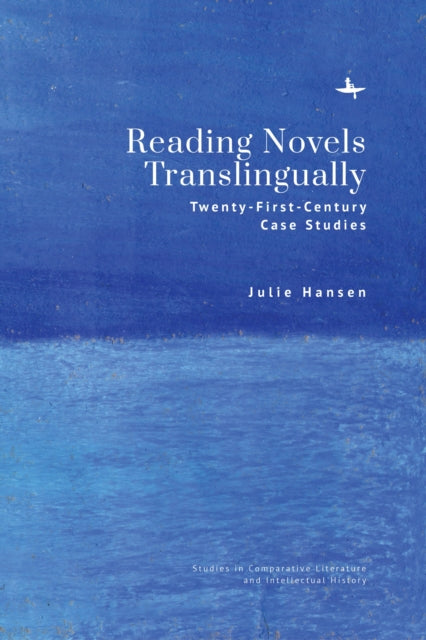
Julie Hansen
Reading Novels Translingually: Twenty-First-Century Case Studies
Reading Novels Translingually: Twenty-First-Century Case Studies
💎 Earn 379 Points (£3.79) on this item.
YOU SAVE £16.01
- Condition: Brand new
- UK Delivery times: Usually arrives within 2 - 3 working days
- UK Shipping: Fee starts at £2.39. Subject to product weight & dimension
Bulk ordering. Want 15 or more copies? Get a personalised quote and bigger discounts. Learn more about bulk orders.
Couldn't load pickup availability
- More about Reading Novels Translingually: Twenty-First-Century Case Studies
This book explores how literary fiction depicts multilingual practices and incorporates them into the text, highlighting a new fascination with literary multilingualism and translation in the early twenty-first century. It provides case studies of contemporary novels and a reevaluation of Leo Tolstoy's War and Peace.
Format: Hardback
Length: 200 pages
Publication date: 25 January 2024
Publisher: Academic Studies Press
This captivating book delves into the intricate portrayal of multilingual practices in literary fiction and seamlessly incorporates them into the very fabric of the text. In our increasingly digital and globalized world, the presence of multiple languages is more prominent than ever before. Similarly, in the realm of literature, languages intertwine, creating a rich tapestry of literary multilingualism. The early twenty-first century has witnessed a renewed fascination with the age-old phenomena of literary multilingualism and translation among writers and readers alike. Through in-depth case studies of contemporary novels by renowned authors such as Rabih Alameddine, Olga Grushin, Olga Grjasnowa, Michael Idov, Zinaida Lindén, Andreï Makine, and Eugene Vodolazkin, as well as a fresh perspective on Leo Tolstoy's nineteenth-century masterpiece War and Peace, this book showcases how reading can transcend linguistic boundaries and become a truly translingual experience.
The exploration of multilingualism in literature is a captivating journey that spans centuries. From the ancient epics of Homer to the modern novels of Salman Rushdie, writers have embraced the diverse languages of their time to convey profound messages and evoke powerful emotions. In the digital age, where communication is instantaneous and borders are blurred, the importance of multilingualism has become even more apparent.
In this book, we delve into the rich tapestry of literary multilingualism, examining how writers use multiple languages to create complex narratives, explore cultural identities, and challenge societal norms. We explore the techniques and strategies employed by authors to convey meaning across linguistic barriers, such as translation, intertextuality, and code-switching.
One of the key themes of this book is the role of translation in shaping literary multilingualism. Translators play a vital role in bringing works of literature from different languages to a broader audience, and their choices can significantly impact the interpretation and reception of the text. We examine the challenges and rewards of translation, as well as the impact it has on the preservation and dissemination of cultural heritage.
Another important aspect of literary multilingualism is the exploration of cultural identities. Through the use of multiple languages, authors can create complex and nuanced portraits of individuals and communities, challenging stereotypes and promoting understanding. We examine how language can be used to convey cultural values, traditions, and beliefs, and how it can shape the way individuals perceive themselves and their world.
In addition to case studies of contemporary novels, this book also takes a fresh look at the nineteenth-century classic War and Peace by Leo Tolstoy. Tolstoy's use of multiple languages, including Russian, French, and German, is a testament to his commitment to exploring the complexities of human nature and society. We examine how Tolstoy's use of language contributes to the themes of war, peace, and the human condition, and how it resonates with readers across different linguistic and cultural backgrounds.
Literary multilingualism is not just a matter of linguistic proficiency; it is also a matter of cultural exchange and dialogue. By embracing multiple languages, writers can create a bridge between different cultures and promote understanding and appreciation. We examine how literary multilingualism can contribute to the development of a global literary community, and how it can foster cross-cultural dialogue and collaboration.
In conclusion, this book offers a comprehensive exploration of literary multilingualism, showcasing how writers use multiple languages to create rich and complex narratives, explore cultural identities. identities, and challenge societal norms. Through in-depth case studies and a fresh perspective on classic texts, we demonstrate how reading can become a translingual process, transcending linguistic boundaries and fostering a deeper understanding of the world.
Weight: 485g
Dimension: 233 x 155 (mm)
ISBN-13: 9781644698778
UK and International shipping information
UK and International shipping information
UK Delivery and returns information:
- Delivery within 2 - 3 days when ordering in the UK.
- Shipping fee for UK customers from £2.39. Fully tracked shipping service available.
- Returns policy: Return within 30 days of receipt for full refund.
International deliveries:
Shulph Ink now ships to Australia, Belgium, Canada, France, Germany, Ireland, Italy, India, Luxembourg Saudi Arabia, Singapore, Spain, Netherlands, New Zealand, United Arab Emirates, United States of America.
- Delivery times: within 5 - 10 days for international orders.
- Shipping fee: charges vary for overseas orders. Only tracked services are available for most international orders. Some countries have untracked shipping options.
- Customs charges: If ordering to addresses outside the United Kingdom, you may or may not incur additional customs and duties fees during local delivery.