Abigail Steel
Reading Planet - In the Desert - Green: Rocket Phonics
Reading Planet - In the Desert - Green: Rocket Phonics
💎 Earn 28 Points (£0.28) on this item.
YOU SAVE £0.34
- Condition: Brand new
- UK Delivery times: Usually arrives within 2 - 3 working days
- UK Shipping: Fee starts at £2.39. Subject to product weight & dimension
Bulk ordering. Want 15 or more copies? Get a personalised quote and bigger discounts. Learn more about bulk orders.
Couldn't load pickup availability
- More about Reading Planet - In the Desert - Green: Rocket Phonics
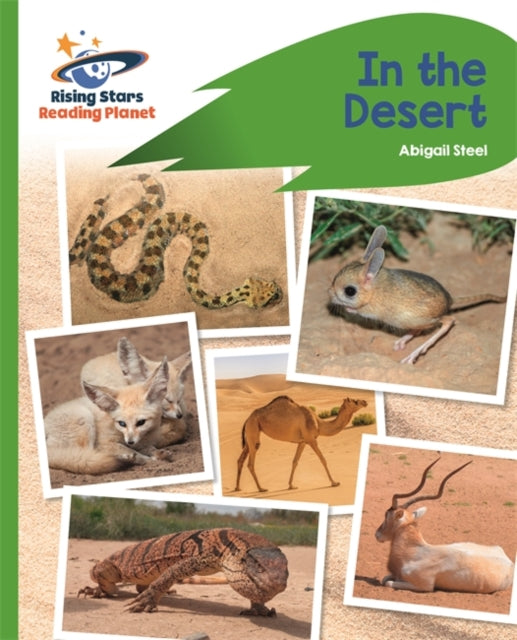
This non-fiction text explores the animals that live in the Sahara Desert and how they survive in the harsh environment. It is part of the Rocket Phonics range from Rising Stars Reading Planet and is designed for children aged 5-6 years.
Format: Paperback / softback
Length: 20 pages
Publication date: 22 February 2019
Publisher: Rising Stars UK Ltd
The Sahara Desert is a harsh and unforgiving environment, home to a variety of animals that have adapted to survive in these extreme conditions. Among these animals are the dromedary camel, addax antelope, jerboa, fennec fox, and monitor lizard.
The dromedary camel is perhaps the most iconic animal of the Sahara Desert. It is a large, sturdy creature with a long, flexible neck that allows it to reach high into the branches of desert trees to forage for food. Camels are also well-adapted to hot and dry conditions, with thick, woolly fur that helps them retain body heat and a hump on their backs that stores water.
The addax antelope is another animal that thrives in the Sahara Desert. It is a small, agile creature that can run quickly across the sand and has a long, pointed nose that it uses to sniff out food. Addaxes are also well-adapted to the desert's harsh conditions, with thick, leathery skin that helps them protect themselves from the sun and sand.
The jerboa is a small, rodent-like animal that is found in the Sahara Desert. It has long, thin legs and a long, snout that it uses to forage for food in the desert's sand. Jerboas are also well-adapted to hot and dry conditions, with small ears that help them regulate their body temperature and a thick, furred coat that helps them retain body heat.
The fennec fox is a small, carnivorous animal that is found in the Sahara Desert. It has large, ears that help it hear its prey, and a long, bushy tail that it uses to balance in the desert's sand. Fennec foxes are also well-adapted to hot and dry conditions, with small, sharp teeth that they use to hunt for small animals and insects.
The monitor lizard is a large, lizard-like animal that is found in the Sahara Desert. It has a long, snake-like body and a wide, flat head that it uses to hunt for prey. Monitor lizards are also well-adapted to hot and dry conditions, with thick, leathery skin that helps them protect themselves from the sun and sand.
Despite the harsh and unforgiving conditions of the Sahara Desert, these animals have adapted to survive in these extreme conditions. They have developed a variety of physical and behavioral adaptations that allow them to thrive in the desert, including the ability to store water and food, regulate their body temperature, and find food in the desert's sand.
However, the Sahara Desert is a changing environment, and these animals are facing threats from human activities such as habitat destruction, climate change, and hunting. It is important that we take steps and protect these animals and their habitats to ensure that they can continue to survive in the Sahara Desert for generations to come.
The Sahara Desert is a vast and inhospitable environment, home to a diverse range of animals that have adapted to survive in its harsh and unforgiving conditions. Among these animals are the dromedary camel, addax antelope, jerboa, fennec fox, and monitor lizard.
The dromedary camel is perhaps the most iconic animal of the Sahara Desert. It is a large, sturdy creature with a long, flexible neck that allows it to reach high into the branches of desert trees to forage for food. Camels are also well-adapted to hot and dry conditions, with thick, woolly fur that helps them retain body heat and a hump on their backs that stores water.
The addax antelope is another animal that thrives in the Sahara Desert. It is a small, agile creature that can run quickly across the sand and has a long, pointed nose that it uses to sniff out food. Addaxes are also well-adapted to the desert's harsh conditions, with thick, leathery skin that helps them protect themselves from the sun and sand.
The jerboa is a small, rodent-like animal that is found in the Sahara Desert. It has long, thin legs and a long, snout that it uses to forage for food in the desert's sand. Jerboas are also well-adapted to hot and dry conditions, with small ears that help them regulate their body temperature and a thick, furred coat that helps them retain body heat.
The fennec fox is a small, carnivorous animal that is found in the Sahara Desert. It has large, ears that help it hear its prey, and a long, bushy tail that it uses to balance in the desert's sand. Fennec foxes are also well-adapted to hot and dry conditions, with small, sharp teeth that they use to hunt for small animals and insects.
The monitor lizard is a large, lizard-like animal that is found in the Sahara Desert. It has a long, snake-like body and a wide, flat head that it uses to hunt for prey. Monitor lizards are also well-adapted to hot and dry conditions, with thick, leathery skin that helps them protect themselves from the sun and sand.
Despite the harsh and unforgiving conditions of the Sahara Desert, these animals have adapted to survive in these extreme conditions. They have developed a variety of physical and behavioral adaptations that allow them to thrive in the desert, including the ability to store water and food, regulate their body temperature, and find food in the desert's sand.
However, the Sahara Desert is a changing environment, and these animals are facing threats from human activities such as habitat destruction, climate change, and hunting. It is important that we take steps
and protect these animals and their habitats to ensure that they can continue to survive in the Sahara Desert for generations to come.
In conclusion, the Sahara Desert is a harsh and unforgiving environment, but it is also home to a diverse range of animals that have adapted to survive in its harsh and unforgiving conditions. These animals have developed a variety of physical and behavioral adaptations that allow them to thrive in the desert, including the ability to store water and food, regulate their body temperature, and find food in the desert's sand. However, the Sahara Desert is a changing environment, and these animals are facing threats from human activities such as habitat destruction, climate change, and hunting. It is important that we take steps and protect these animals and their habitats to ensure that they can continue to survive in the Sahara Desert for generations to come.
Weight: 66g
Dimension: 203 x 170 x 4 (mm)
ISBN-13: 9781510441859
UK and International shipping information
UK and International shipping information
UK Delivery and returns information:
- Delivery within 2 - 3 days when ordering in the UK.
- Shipping fee for UK customers from £2.39. Fully tracked shipping service available.
- Returns policy: Return within 30 days of receipt for full refund.
International deliveries:
Shulph Ink now ships to Australia, Belgium, Canada, France, Germany, Ireland, Italy, India, Luxembourg Saudi Arabia, Singapore, Spain, Netherlands, New Zealand, United Arab Emirates, United States of America.
- Delivery times: within 5 - 10 days for international orders.
- Shipping fee: charges vary for overseas orders. Only tracked services are available for most international orders. Some countries have untracked shipping options.
- Customs charges: If ordering to addresses outside the United Kingdom, you may or may not incur additional customs and duties fees during local delivery.