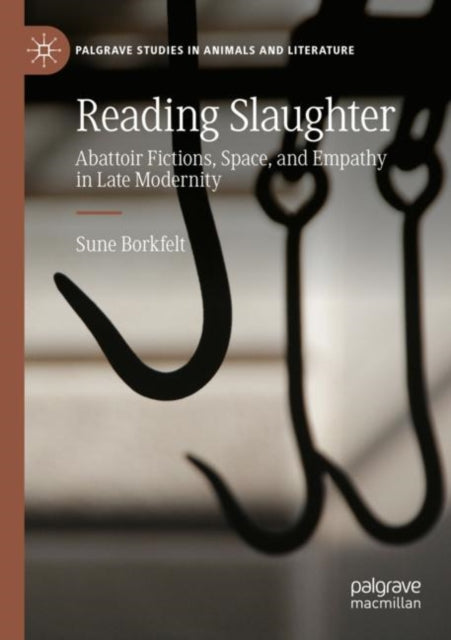
Sune Borkfelt
Reading Slaughter: Abattoir Fictions, Space, and Empathy in Late Modernity
Reading Slaughter: Abattoir Fictions, Space, and Empathy in Late Modernity
💎 Earn 454 Points (£4.54) on this item.
We can order this item for you. Delivery usually takes about 4 to 6 weeks.
This item is not held in our immediate stock. We will order it for you after checkout.
Estimated delivery: About 4 to 6 weeks
YOU SAVE £19.14
- Condition: Brand new
- UK Delivery times: Usually arrives within 2 - 3 working days
- UK Shipping: Fee starts at £2.39. Subject to product weight & dimension
Bulk ordering. Want 15 or more copies? Get a personalised quote and bigger discounts. Learn more about bulk orders.
Couldn't load pickup availability
- More about Reading Slaughter: Abattoir Fictions, Space, and Empathy in Late Modernity
Reading Slaughter explores literary depictions of slaughterhouses, examining isolation and concealment's impact on empathy and human-animal relations. It contributes to debates in literary animal studies, human-animal studies, and horror fiction.
Format: Paperback / softback
Length: 279 pages
Publication date: 08 May 2023
Publisher: Springer Nature Switzerland AG
Reading Slaughter: Abattoir Fictions, Space, and Empathy in Late Modernity explores literary representations of slaughterhouses from the late nineteenth century to the present day, examining how increasing isolation and concealment of slaughter from society affects readings and depictions of slaughter and abattoirs in literature and the extent to which depictions of animal slaughter create opportunities for empathic reactions or reflections on human-animal relations. The book delves into various aspects of slaughterhouse fictions, including narrative empathy, anthropomorphism, urban and rural spaces, human identities, and horror fiction, contributing to debates in literary animal studies, human-animal studies, and beyond.
Sune Borkfelt's book contributes to the ongoing discussion of the role of animals in literature and culture, challenging traditional notions of human-animal relationships and highlighting the ethical implications of our treatment of animals. By examining the ways in which slaughterhouses are depicted in literature, Borkfelt argues that these representations can shape our understanding of animals and our relationship with them.
One of the key themes of Reading Slaughter is the isolation and concealment of slaughter from society. Borkfelt argues that this isolation has led to a lack of empathy and understanding of animals, and has contributed to the dehumanization of slaughter. Slaughterhouses are often depicted as cold, impersonal, and mechanized, with animals treated as mere commodities. This depiction can create a sense of distance and disconnection between humans and animals, making it difficult for readers to empathize with the animals being slaughtered.
However, Borkfelt also argues that slaughterhouses can also be sites of empathy and reflection. By examining the ways in which animals are slaughtered, readers can gain a deeper understanding of the animal's experience and the ethical implications of our treatment of them. Slaughterhouses can be places of violence and suffering, but they can also be places of compassion and care.
One of the ways in which slaughterhouses are depicted in literature is through narrative empathy. Narrative empathy involves the reader's ability to connect with the characters and their experiences. Slaughterhouses can be used to create powerful and emotional narratives that explore the human-animal relationship. For example, in J.M. Coetzee's novel "Disgrace," the protagonist's relationship with his dog is used to explore the themes of guilt, shame, and redemption.
Anthropomorphism is another way in which slaughterhouses are depicted in literature. Anthropomorphism involves the attribution of human characteristics to animals. This can be used to create a sense of empathy and understanding between humans and animals. For example, in George Orwell's novel "Animal Farm," the pigs are depicted as intelligent and capable of human-like behavior.
Urban and rural spaces are also important in the depiction of slaughterhouses in literature. Slaughterhouses can be located in both urban and rural areas, and the environment can have a significant impact on the animals being slaughtered. In urban areas, slaughterhouses are often located in industrial zones, which can be noisy, polluted, and dangerous. In rural areas, slaughterhouses are often located in remote areas, which can be more peaceful and natural.
Human identities are also important in the depiction of slaughterhouses in literature. Slaughterhouses can be used to explore the human-animal relationship and the ways in which humans interact with animals. For example, in Toni Morrison's novel "Song of Solomon," the protagonist's relationship with his dog is used to explore the themes of identity, race, and gender.
Horror fiction is also a significant genre in the depiction of slaughterhouses in literature. Slaughterhouses can be used to create terrifying and disturbing narratives that explore the human-animal relationship and the ethical implications of our treatment of animals. For example, in Stephen King's novel "The Shining," the protagonist's relationship with his dog is used to explore the themes of madness and evil.
In conclusion, Reading Slaughter: Abattoir Fictions, Space, and Empathy in Late Modernity is a valuable contribution to the study of literature and culture. By examining the ways in which slaughterhouses are depicted in literature, Borkfelt challenges traditional notions of human-animal relationships and highlights the ethical implications of our treatment of animals. Slaughterhouses can be sites of empathy and reflection, but they can also be sites of violence and suffering. By exploring the human-animal relationship and the ethical implications of our treatment of animals, we can work towards a more compassionate and sustainable future.
Dimension: 210 x 148 (mm)
ISBN-13: 9783030989170
Edition number: 1st ed. 2022
This item can be found in:
UK and International shipping information
UK and International shipping information
UK Delivery and returns information:
- Delivery within 2 - 3 days when ordering in the UK.
- Shipping fee for UK customers from £2.39. Fully tracked shipping service available.
- Returns policy: Return within 30 days of receipt for full refund.
International deliveries:
Shulph Ink now ships to Australia, Belgium, Canada, France, Germany, Ireland, Italy, India, Luxembourg Saudi Arabia, Singapore, Spain, Netherlands, New Zealand, United Arab Emirates, United States of America.
- Delivery times: within 5 - 10 days for international orders.
- Shipping fee: charges vary for overseas orders. Only tracked services are available for most international orders. Some countries have untracked shipping options.
- Customs charges: If ordering to addresses outside the United Kingdom, you may or may not incur additional customs and duties fees during local delivery.