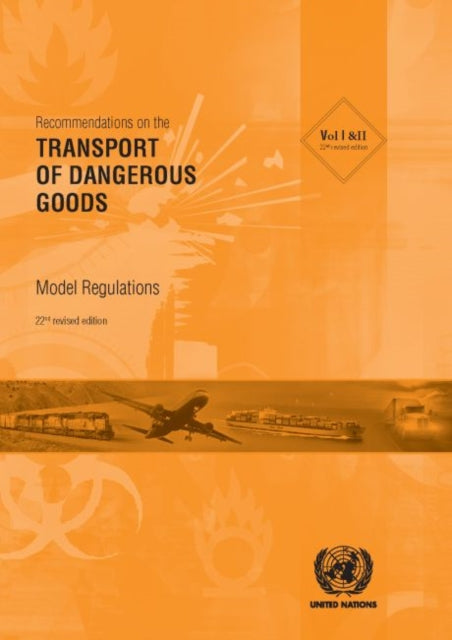
United Nations: Committee of Experts on the Transport of Dangerous Goods
Recommendations on the transport of dangerous goods: model regulations
Recommendations on the transport of dangerous goods: model regulations
💎 Earn 838 Points (£8.38) on this item.
YOU SAVE £20.21
- Condition: Brand new
- UK Delivery times: Usually arrives within 2 - 3 working days
- UK Shipping: Fee starts at £2.39. Subject to product weight & dimension
Bulk ordering. Want 15 or more copies? Get a personalised quote and bigger discounts. Learn more about bulk orders.
Couldn't load pickup availability
- More about Recommendations on the transport of dangerous goods: model regulations
The United Nations Economic and Social Council's Committee of Experts on the Transport of Dangerous Goods has developed recommendations to ensure the safety of people, property, and the environment during the transport of dangerous goods. These recommendations are addressed to governments and international organizations concerned with the regulation of the transport of dangerous goods and do not apply to the bulk transport of dangerous goods.
Format: Paperback / softback
Length: 906 pages
Publication date: 01 July 2021
Publisher: United Nations
The United Nations Economic and Social Council's Committee of Experts on the Transport of Dangerous Goods has developed these recommendations in response to significant technical advancements, the introduction of novel substances and materials, the demands of modern transport systems, and, most importantly, the imperative to prioritize the safety of individuals, property, and the environment. These recommendations are directed towards governments and international organizations involved in the regulation of the transportation of hazardous goods. It is important to note that these guidelines do not apply to the bulk transportation of dangerous goods via sea-going or inland navigation bulk carriers or tank vessels, which is subject to specific international or national regulations.
Introduction:
The transportation of dangerous goods is a critical aspect of modern commerce, involving the movement of goods that can pose risks to human health, safety, and the environment. As such, it is essential to ensure that these goods are transported safely and efficiently. The United Nations Economic and Social Council's Committee of Experts on the Transport of Dangerous Goods has played a crucial role in developing these recommendations to address the challenges posed by the transport of dangerous goods.
Technical Progress:
One of the key factors driving the development of these recommendations is the rapid pace of technical progress. Advances in transportation technology, such as containerization, have made it possible to transport large quantities of dangerous goods safely and efficiently. However, these advancements have also created new challenges, such as the need to ensure the compatibility of different types of dangerous goods and the potential for accidents to occur during transportation.
New Substances and Materials:
The introduction of new substances and materials into the transportation industry has also posed challenges for the transport of dangerous goods. These new substances may have unique properties that require special handling and storage conditions, or they may be more volatile or flammable than existing substances. As such, it is essential to ensure that the transportation of these new substances is properly regulated to minimize the risks to human health and safety.
Modern Transport Systems:
Modern transport systems, such as highways, railways, and airways, have also played a significant role in the transport of dangerous goods. These systems are complex and require careful management to ensure the safety of the public and the environment. The recommendations developed by the Committee of Experts on the Transport of Dangerous Goods aim to address these challenges by providing guidance on the proper handling, packaging, labeling, and documentation of dangerous goods.
Safety of People, Property, and the Environment:
Above all, the safety of people, property, and the environment is the primary concern in the transport of dangerous goods. The Committee of Experts on the Transport of Dangerous Goods has recognized the need to balance the risks associated with transportation with the needs of commerce and industry. The recommendations aim to strike a balance between these competing interests by promoting the use of safe and efficient transportation methods while also ensuring that the risks to human health and safety are minimized.
Recommendations:
The Committee of Experts on the Transport of Dangerous Goods has developed a comprehensive set of recommendations that address the various challenges posed by the transport of dangerous goods. These recommendations are divided into three categories:
- General Principles:
- Specific Requirements:
- International Cooperation:
These recommendations provide general guidance on the proper handling, packaging, labeling, and documentation of dangerous goods. They include guidelines on the selection of appropriate transportation modes, the use of appropriate packaging materials, and the development of effective hazard communication systems.
These recommendations provide specific requirements for the transportation of different types of dangerous goods. They include guidelines on the classification, labeling, and packaging of dangerous goods, as well as the development of emergency response plans and training programs for transportation personnel.
These recommendations emphasize the importance of international cooperation in the transport of dangerous goods. They include guidelines on the development of international standards and regulations, as well as the establishment of mechanisms for information sharing and coordination among transportation stakeholders.
In conclusion, the development of these recommendations by the United Nations Economic and Social Council's Committee of Experts on the Transport of Dangerous Goods is a significant step towards ensuring the safe and efficient transportation of dangerous goods. These recommendations are based on a comprehensive understanding of the technical, economic, and social factors that affect the transport of dangerous goods. By implementing these recommendations, governments and international organizations can minimize the risks to human health and safety, protect the environment, and promote the growth of commerce and industry.
Weight: 2412g
Dimension: 216 x 306 x 57 (mm)
ISBN-13: 9789211391886
Edition number: 22st rev. ed., 2021
This item can be found in:
UK and International shipping information
UK and International shipping information
UK Delivery and returns information:
- Delivery within 2 - 3 days when ordering in the UK.
- Shipping fee for UK customers from £2.39. Fully tracked shipping service available.
- Returns policy: Return within 30 days of receipt for full refund.
International deliveries:
Shulph Ink now ships to Australia, Belgium, Canada, France, Germany, Ireland, Italy, India, Luxembourg Saudi Arabia, Singapore, Spain, Netherlands, New Zealand, United Arab Emirates, United States of America.
- Delivery times: within 5 - 10 days for international orders.
- Shipping fee: charges vary for overseas orders. Only tracked services are available for most international orders. Some countries have untracked shipping options.
- Customs charges: If ordering to addresses outside the United Kingdom, you may or may not incur additional customs and duties fees during local delivery.