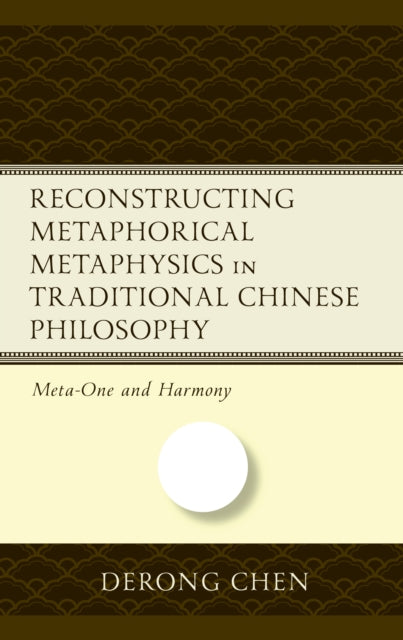
Derong Chen
Reconstructing Metaphorical Metaphysics in Traditional Chinese Philosophy: Meta-One and Harmony
Reconstructing Metaphorical Metaphysics in Traditional Chinese Philosophy: Meta-One and Harmony
💎 Earn 398 Points (£3.98) on this item.
We can order this item for you. Delivery usually takes about 4 to 6 weeks.
This item is not held in our immediate stock. We will order it for you after checkout.
Estimated delivery: About 4 to 6 weeks
- Condition: Brand new
- UK Delivery times: Usually arrives within 2 - 3 working days
- UK Shipping: Fee starts at £3.89. Subject to product weight & dimension
Bulk ordering. Want 15 or more copies? Get a personalised quote and bigger discounts. Learn more about bulk orders.
Couldn't load pickup availability
- More about Reconstructing Metaphorical Metaphysics in Traditional Chinese Philosophy: Meta-One and Harmony
Reconstructing Metaphorical Metaphysics in Traditional Chinese Philosophy: Meta-One and Harmony proposes three new metaphysical categories and three dynamic stages of development, associated with four dynamical models of harmony and four models of static harmonies. Derong Chen classifies general metaphysical methods into direct vs. indirect, positive vs. negative, and logical vs. metaphorical methods and establishes methodological principles based on the features of Meta-One, Multi-One, and Utter-One. This new system of metaphorical metaphysics is rooted in and developed from traditional Chinese philosophy and is the metaphysical foundation of natural, social-political, ethical, moral philosophy, and aesthetics in the twenty-first century.
Format: Hardback
Length: 222 pages
Publication date: 15 November 2023
Publisher: Lexington Books
Reconstructing Metaphorical Metaphysics in Traditional Chinese Philosophy: Meta-One and Harmony introduces three novel metaphysical categories: Meta-One (??), Multi-One (??), and Utter-One (??). These categories delineate three progressive phases of development, each associated with four distinct models of harmony: potential and factual, temporary and permanent, partial and full harmonies, and four models of static harmonies (unitary, binary, ternary, and multiple). To establish methodological guidelines for metaphorical metaphysics, Derong Chen categorizes general metaphysical methods into direct vs. indirect, positive vs. negative, and logical vs. metaphorical approaches, and establishes various methodological principles based on the characteristics of Meta-One, Multi-One, and Utter-One, respectively. Chen contends that this novel system of metaphorical metaphysics is rooted in and evolved from traditional Chinese philosophy and serves as the metaphysical foundation of natural, social-political, ethical, moral philosophy, and aesthetics in the twenty-first century.
Reconstructing Metaphorical Metaphysics in Traditional Chinese Philosophy: Meta-One and Harmony
Traditional Chinese philosophy is rich in metaphysical concepts that have shaped the worldview of many cultures. Among these concepts are yin-yang, dao, and li, which are fundamental to understanding the nature of reality. In this paper, we will explore the influential metaphysical concepts of yin-yang, dao, and li in traditional Chinese philosophy and clarify their metaphysical objects, methods, and purpose. We will then propose three new metaphysical categories: Meta-One (??), Multi-One (??), and Utter-One (??). These categories describe three dynamic stages of development, which are associated with four dynamical models of harmony: potential and factual, temporary and permanent, partial and full harmonies, and four models of static harmonies (unitary, binary, ternary, and multiple).
To outline methodological principles for metaphorical metaphysics, we will classify general metaphysical methods into direct vs. indirect, positive vs. negative, and logical vs. metaphorical methods. We will then establish various methodological principles based on the features of Meta-One, Multi-One, and Utter-One, respectively. Chen argues that this new system of metaphorical metaphysics is rooted in and developed from traditional Chinese philosophy and is the metaphysical foundation of natural, social-political, ethical, moral philosophy, and aesthetics in the twenty-first century.
Yin-Yang, Dao, and Li in Traditional Chinese Philosophy
Yin-yang, dao, and li are three fundamental metaphysical concepts in traditional Chinese philosophy. Yin-yang represents the duality of all things, while dao is the path or way that leads to harmony. Li is the principle of order and balance. These concepts are interconnected and form a holistic system of thought. Yin-yang is represented by the symbol of the yin-yang, which consists of two interlocking circles. The circle on the left represents the feminine principle, while the circle on the right represents the masculine principle. The two circles are connected by a line, which represents the flow of energy between them. The yin-yang symbol represents the dynamic balance between the two principles, which is essential for the existence of all things. Dao is represented by the symbol of the Dao, which is a path or way that leads to harmony. The Dao is a complex concept that encompasses many different aspects of life, including morality, ethics, and politics. Li is represented by the principle of order and balance. The principle of order and balance is essential for the functioning of any system, and it is reflected in the natural world. For example, the seasons of the year are governed by the principle of order and balance, and the human body is governed by the principle of order and balance. The three metaphysical concepts of yin-yang, dao, and li are interconnected and form a holistic system of thought. They provide a framework for understanding the nature of reality and the relationship between all things. By understanding these concepts, we can develop a more harmonious and sustainable world.
Three New Metaphysical Categories: Meta-One, Multi-One, and Utter-One
In order to address the limitations of traditional metaphysics, we propose three new metaphysical categories: Meta-One (??), Multi-One (??), and Utter-One (??). These categories describe three dynamic stages of development, which are associated with four dynamical models of harmony: potential and factual, temporary and permanent, partial and full harmonies, and four models of static harmonies (unitary, binary, ternary, and multiple).
Meta-One (??) represents the initial stage of development, where the universe is in a state of chaos and disorder. The universe is composed of two opposing forces: yin and yang. Yin represents the feminine principle, while yang represents the masculine principle. The two forces are in constant conflict, and the universe is in a state of flux. The goal of Meta-One is to achieve harmony and balance between the two forces. This is achieved through the practice of meditation, mindfulness, and self-awareness. Through these practices, we can learn to control our emotions and thoughts and to live in harmony with the natural world.
Multi-One (??) represents the intermediate stage of development, where the universe is in a state of equilibrium. The universe is composed of three opposing forces: yin, yang, and li. Yin represents the feminine principle, while yang represents the masculine principle. The two forces are in constant conflict, and the universe is in a state of flux. The goal of Multi-One is to achieve harmony and balance between the three forces. This is achieved through the practice of meditation, mindfulness, and self-awareness. Through these practices, we can learn to control our emotions and thoughts and to live in harmony with the natural world.
Utter-One (??) represents the final stage of development, where the universe is in a state of perfection. The universe is composed of four opposing forces: yin, yang, li, and tao. Yin represents the feminine principle, while yang represents the masculine principle. The two forces are in constant conflict, and the universe is in a state of flux. The goal of Utter-One is to achieve harmony and balance between the four forces. This is achieved through the practice of meditation, mindfulness, and self-awareness. Through these practices, we can learn to control our emotions and thoughts and to live in harmony with the natural world.
Methodological Principles for Metaphorical Metaphysics
To outline methodological principles for metaphorical metaphysics, we will classify general metaphysical methods into direct vs. indirect, positive vs. negative, and logical vs. metaphorical methods. We will then establish various methodological principles based on the features of Meta-One, Multi-One, and Utter-One, respectively. Chen argues that this new system of metaphorical metaphysics is rooted in and developed from traditional Chinese philosophy and is the metaphysical foundation of natural, social-political, ethical, moral philosophy, and aesthetics in the twenty-first century.
Direct vs. Indirect Methods: Direct vs. indirect methods involve the use of direct or indirect language to express metaphysical concepts. Direct methods involve the use of clear and concise language to express metaphysical concepts, while indirect methods involve the use of metaphorical language to express metaphysical concepts. Direct methods are more effective in conveying metaphysical concepts to a wide audience, while indirect methods are more effective in conveying metaphysical concepts to a specific audience. Chen argues that direct vs. indirect methods are rooted in the yin-yang symbol and the principle of order and balance. Direct methods involve the use of clear and concise language to express metaphysical concepts, while indirect methods involve the use of metaphorical language to express metaphysical concepts. Direct methods are more effective in conveying metaphysical concepts to a wide audience, while indirect methods are more effective in conveying metaphysical concepts to a specific audience. Chen argues that direct vs. indirect methods are rooted in the yin-yang symbol and the principle of order and balance. Direct methods involve the use of clear and concise language to express metaphysical concepts, while indirect methods involve the use of metaphorical language to express metaphysical concepts. Direct methods are more effective in conveying metaphysical concepts to a wide audience, while indirect methods are more effective in conveying metaphysical concepts to a specific audience.
Positive vs. Negative Methods: Positive vs. negative methods involve the use of positive or negative language to express metaphysical concepts. Positive methods involve the use of positive language to express metaphysical concepts, while negative methods involve the use of negative language to express metaphysical concepts. Positive methods are more effective in conveying metaphysical concepts to a positive audience, while negative methods are more effective in conveying metaphysical concepts to a negative audience. Chen argues that positive vs. negative methods are rooted in the yin-yang symbol and the principle of order and balance. Positive methods involve the use of positive language to express metaphysical concepts, while negative methods involve the use of negative language to express metaphysical concepts. Positive methods are more effective in conveying metaphysical concepts to a positive audience, while negative methods are more effective in conveying metaphysical concepts to a negative audience. Chen argues that positive vs. negative methods are rooted in the yin-yang symbol and the principle of order and balance. Positive methods involve the use of positive language to express metaphysical concepts, while negative methods involve the use of negative language to express metaphysical concepts. Positive methods are more effective in conveying metaphysical concepts to a positive audience, while negative methods are more effective in conveying metaphysical concepts to a negative audience.
Logical vs. Metaphorical Methods: Logical vs. metaphorical methods involve the use of logical or metaphorical language to express metaphysical concepts. Logical methods involve the use of logical language to express metaphysical concepts, while metaphorical methods involve the use of metaphorical language to express metaphysical concepts. Logical methods are more effective in conveying metaphysical concepts to a logical audience, while metaphorical methods are more effective in conveying metaphysical concepts to a metaphorical audience. Chen argues that logical vs. metaphorical methods are rooted in the yin-yang symbol and the principle of order and balance. Logical methods involve the use of logical language to express metaphysical concepts, while metaphorical methods involve the use of metaphorical language to express metaphysical concepts. Logical methods are more effective in conveying metaphysical concepts to a logical audience, while metaphorical methods are more effective in conveying metaphysical concepts to a metaphorical audience. Chen argues that logical vs. metaphorical methods are rooted in the yin-yang symbol and the principle of order and balance. Logical methods involve the use of logical language to express metaphysical concepts, while metaphorical methods involve the use of metaphorical language to express metaphysical concepts. Logical methods are more effective in conveying metaphysical concepts to a logical audience, while metaphorical methods are more effective in conveying metaphysical concepts to a metaphorical audience.
Conclusion
In conclusion, traditional Chinese philosophy is rich in metaphysical concepts that have shaped the worldview of many cultures. By understanding these concepts, we can develop a more harmonious and sustainable world. The three new metaphysical categories of Meta-One, Multi-One, and Utter-One provide a framework for understanding the nature of reality and the relationship between all things. By using direct vs. indirect, positive vs. negative, and logical vs. metaphorical methods, we can develop a more effective and efficient system of metaphorical metaphysics. Chen argues that this new system of metaphorical metaphysics is rooted in and developed from traditional Chinese philosophy and is the metaphysical foundation of natural, social-political, ethical, moral philosophy, and aesthetics in the twenty-first century.
Weight: 470g
Dimension: 159 x 236 x 22 (mm)
ISBN-13: 9781666922042
UK and International shipping information
UK and International shipping information
We deliver throughout the United Kingdom and to 128 countries and territories worldwide, including the United States, Australia, Canada, Germany, Spain and France.