ArmandoLara-Millan
Redistributing the Poor: Jails, Hospitals, and the Crisis of Law and Fiscal Austerity
Redistributing the Poor: Jails, Hospitals, and the Crisis of Law and Fiscal Austerity
💎 Earn 132 Points (£1.32) on this item.
We can order this item for you. Delivery usually takes about 4 to 6 weeks.
This item is not held in our immediate stock. We will order it for you after checkout.
Estimated delivery: About 4 to 6 weeks
YOU SAVE £1.57
- Condition: Brand new
- UK Delivery times: Usually arrives within 2 - 3 working days
- UK Shipping: Fee starts at £2.39. Subject to product weight & dimension
Bulk ordering. Want 15 or more copies? Get a personalised quote and bigger discounts. Learn more about bulk orders.
Couldn't load pickup availability
- More about Redistributing the Poor: Jails, Hospitals, and the Crisis of Law and Fiscal Austerity
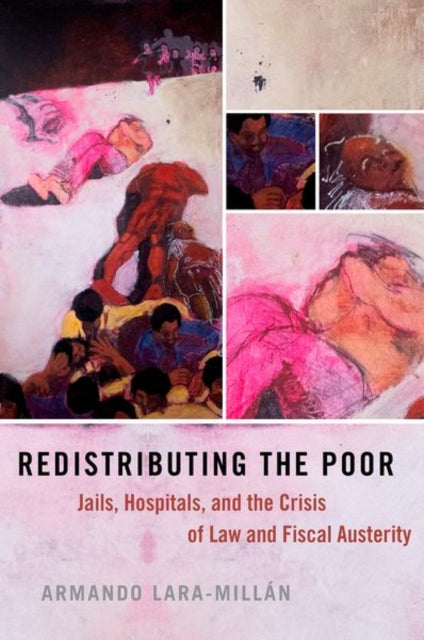
The largest hospital and jail system in the world are run by state agencies, which generate revenue, cut costs, and project illusions that services have been legally rendered. This idea of redistributing the poor draws attention to how state agencies circulate people between different institutional spaces, generating revenue for some agencies, cutting costs for others, and projecting illusions that services have been legally rendered.
\n Format: Paperback / softback
\n Length: 256 pages
\n Publication date: 26 August 2021
\n Publisher: Oxford University Press Inc
\n
Whenever the topic of large jails and public hospitals in urban America is raised, a single idea comes to mind. It is widely believed that because we as a society have dis-invested from public health, the sick and poor now find themselves within the purview of criminal justice institutions. In Redistributing the Poor, ethnographer and historical sociologist Armando Lara-Millán takes us into the day-to-day operations of running the largest hospital and jail system in the world and argues that such received wisdom is a drastic mischaracterization of the way that states govern urban poverty at the turn of the 21st century. Rather than focus on our underinvestment of health and overinvestment of criminal justice, his idea of redistributing the poor draws attention to how state agencies circulate people between different institutional spaces in such a way that generates revenue for some agencies, cuts costs for others, and projects illusions that services have been legally rendered. By centering the state's use of redistribution, Lara-Millán shows how certain forms of social suffering—the premature death of mainly poor, people of color—are not a result of the state's failure to act, but instead the necessary outcome of so-called successful policy.
Lara-Millán's approach is a valuable contribution to our understanding of the complex relationship between public health, criminal justice, and urban poverty. By challenging the conventional wisdom that states govern urban poverty through underinvestment in health and overinvestment in criminal justice, he offers a more nuanced and empirically grounded analysis of the ways in which state agencies interact with and respond to the needs of the poor.
One of the key insights of Lara-Millán's book is that state agencies use redistribution as a tool to manage and control the poor. Through the circulation of people between different institutional spaces, state agencies generate revenue for some agencies, cut costs for others, and project illusions that services have been legally rendered. For example, Lara-Millán describes how state agencies use Medicaid to generate revenue for hospitals and jails by enrolling eligible individuals in the program and then transferring them to these institutions. This practice not only generates revenue for the state but also helps to reduce the cost of providing healthcare and incarceration for the poor.
However, Lara-Millán argues that this practice of redistributing the poor is not without its consequences. By focusing on the state's use of redistribution, he shows how certain forms of social suffering—the premature death of mainly poor, people of color—are not a result of the state's failure to act, but instead the necessary outcome of so-called successful policy. For example, Lara-Millán describes how the criminal justice system disproportionately incarcerates poor, people of color, and how this incarceration leads to a range of social and economic problems, including job loss, family breakdown, and reduced access to healthcare.
In conclusion, Redistributing the Poor is a thought-provoking and important book that offers a new perspective on the relationship between public health, criminal justice, and urban poverty. By challenging the conventional wisdom that states govern urban poverty through underinvestment in health and overinvestment in criminal justice, Lara-Millán offers a more nuanced and empirically grounded analysis of the ways in which state agencies interact with and respond to the needs of the poor. His book is a valuable contribution to our understanding of the complex challenges facing urban communities and the urgent need for policymakers to address these challenges in a more effective and equitable manner.
\n Weight: 378g\n
Dimension: 155 x 234 x 19 (mm)\n
ISBN-13: 9780197507902\n \n
This item can be found in:
UK and International shipping information
UK and International shipping information
UK Delivery and returns information:
- Delivery within 2 - 3 days when ordering in the UK.
- Shipping fee for UK customers from £2.39. Fully tracked shipping service available.
- Returns policy: Return within 30 days of receipt for full refund.
International deliveries:
Shulph Ink now ships to Australia, Belgium, Canada, France, Germany, Ireland, Italy, India, Luxembourg Saudi Arabia, Singapore, Spain, Netherlands, New Zealand, United Arab Emirates, United States of America.
- Delivery times: within 5 - 10 days for international orders.
- Shipping fee: charges vary for overseas orders. Only tracked services are available for most international orders. Some countries have untracked shipping options.
- Customs charges: If ordering to addresses outside the United Kingdom, you may or may not incur additional customs and duties fees during local delivery.