Richard Jean So
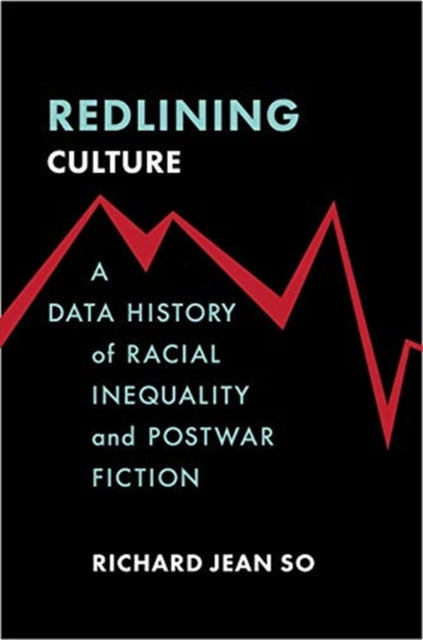
Redlining Culture: A Data History of Racial Inequality and Postwar Fiction
Redlining Culture: A Data History of Racial Inequality and Postwar Fiction
YOU SAVE £4.77
- Condition: Brand new
- UK Delivery times: Usually arrives within 2 - 3 working days
- UK Shipping: Fee starts at £2.39. Subject to product weight & dimension
Bulk ordering. Want 15 or more copies? Get a personalised quote and bigger discounts. Learn more about bulk orders.
Couldn't load pickup availability
- More about Redlining Culture: A Data History of Racial Inequality and Postwar Fiction
The canon of postwar American fiction has changed to include more writers of color, but Richard Jean So's analysis of racial inequality in American publishing reveals the persistence of an extreme bias toward white authors. He argues that the publishing industry is vast and whiteness has denied nonwhite authors the coveted resources of publishing, reviews, prizes, and sales, with profound effects on the language, form, and content of the postwar novel. So's critical race studies and digital humanities work, Redlining Culture, shows the importance of data and computational methods for understanding and challenging racial inequality.
Format: Paperback / softback
Length: 240 pages
Publication date: 15 December 2020
Publisher: Columbia University Press
Over the past few decades, the canon of postwar American fiction has undergone a significant transformation, welcoming a broader range of writers of color into its fold. This shift appears to signal a positive movement, as we seek to recover the voices of marginalized individuals and include those who have been long overlooked. However, it is crucial to examine whether this celebratory narrative is supported by the data.
In his groundbreaking work, "Redlining Culture: Literary History and the Digital Humanities," Richard Jean So delves into a comprehensive analysis of racial inequality in American publishing. Drawing on vast amounts of data, literary history, and close readings, So presents an unprecedented perspective on this issue. What emerges is a sobering reality: the publishing industry remains overwhelmingly white, perpetuating a severe bias against nonwhite authors, particularly black writers. This bias has had profound consequences on the language, form, and content of the postwar novel, shaping it in ways that hinder the recognition and success of nonwhite writers.
So challenges the prevailing narrative that the postwar period was a time of multiculturalism and instead presents it as the invention of a new form of racial inequality. He argues that the publishing industry's vast whiteness has denied nonwhite authors access to crucial resources such as publishing, reviews, prizes, and sales, which in turn has had a lasting impact on the artistic expression of the postwar era. This inequality continues to shape the arts and literature today, perpetuating a cycle of marginalization and underrepresentation.
To address this pressing issue, So employs a unique approach that combines data analysis of large-scale patterns with a consideration of Toni Morrison's career as an editor at Random House. By analyzing the patterns of publication and reception of individual works by authors such as Octavia Butler, Henry Dumas, Amy Tan, and others, So develops a form of criticism that bridges the gap between qualitative and quantitative approaches to the study of literature. This interdisciplinary approach allows him to shed light on the complex dynamics that contribute to racial inequality in the publishing industry and to offer insights into how we can challenge and dismantle these systems.
"Redlining Culture" is a vital and provocative work for American literary studies, critical race studies, and the digital humanities. It demonstrates the importance of data and computational methods in understanding and challenging racial inequality. By providing a comprehensive analysis of the publishing industry's history and present-day practices, So offers a roadmap for change. He calls for a more inclusive and diverse publishing industry that recognizes and values the contributions of writers of color and provides them with the resources and support they need to thrive.
In conclusion, the canon of postwar American fiction has indeed changed, but the data reveals a sobering truth: racial inequality persists in the publishing industry. Richard Jean So's "Redlining Culture" offers a powerful analysis of this issue, challenging the celebratory narrative and calling for a more equitable and inclusive future. By embracing data and computational methods, we can work towards the dismantling of the systems that perpetuate racial inequality and create a more inclusive and diverse literary landscape.
Weight: 334g
Dimension: 156 x 233 x 16 (mm)
ISBN-13: 9780231197731
This item can be found in:
UK and International shipping information
UK and International shipping information
UK Delivery and returns information:
- Delivery within 2 - 3 days when ordering in the UK.
- Shipping fee for UK customers from £2.39. Fully tracked shipping service available.
- Returns policy: Return within 30 days of receipt for full refund.
International deliveries:
Shulph Ink now ships to Australia, Belgium, Canada, France, Germany, Ireland, Italy, India, Luxembourg Saudi Arabia, Singapore, Spain, Netherlands, New Zealand, United Arab Emirates, United States of America.
- Delivery times: within 5 - 10 days for international orders.
- Shipping fee: charges vary for overseas orders. Only tracked services are available for most international orders. Some countries have untracked shipping options.
- Customs charges: If ordering to addresses outside the United Kingdom, you may or may not incur additional customs and duties fees during local delivery.