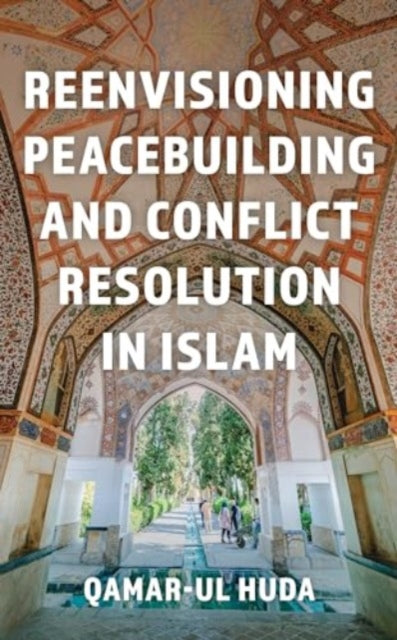
Qamar ul-Huda
Reenvisioning Peacebuilding and Conflict Resolution in Islam
Reenvisioning Peacebuilding and Conflict Resolution in Islam
💎 Earn 159 Points (£1.59) on this item.
We can order this item for you. Delivery usually takes about 4 to 6 weeks.
This item is not held in our immediate stock. We will order it for you after checkout.
Estimated delivery: About 4 to 6 weeks
YOU SAVE £4.14
- Condition: Brand new
- UK Delivery times: Usually arrives within 2 - 3 working days
- UK Shipping: Fee starts at £2.39. Subject to product weight & dimension
Bulk ordering. Want 15 or more copies? Get a personalised quote and bigger discounts. Learn more about bulk orders.
Couldn't load pickup availability
- More about Reenvisioning Peacebuilding and Conflict Resolution in Islam
Reenvisioning Peacebuilding and Conflict Resolution in Islam explores strategic peacebuilding and conflict resolution activities conducted by Muslim practitioners and nongovernmental organizations in Muslim-majority communities, highlighting the role of faith-based commitment in effective social, political, and intellectual action. It sheds light on the state's use of hard and soft power, civil society organizations' networks, the role of civil society in soft power politics, and the importance of local Muslim cultures and religious customs in peacebuilding.
Format: Paperback / softback
Length: 326 pages
Publication date: 16 April 2024
Publisher: Rowman & Littlefield
Reenvisioning Peacebuilding and Conflict Resolution in Islam is a comprehensive exploration of the diverse range of strategic peacebuilding and conflict resolution activities undertaken by Muslim practitioners and nongovernmental organizations in Muslim-majority communities. Author Qamar-ul Huda delves into the ways in which Muslim scholars, civil society members, and communities interpret violence and nonviolence, peacebuilding, and conflict resolution in the interconnected globalized age. Through his insightful analysis, Huda highlights the importance of a faith-based commitment in driving effective social, political, and intellectual action that leads to meaningful change. The book covers a wide range of essential topics, including the state's use of hard and soft power in global, religious diplomacy, the role of civil society organizations and NGOs in maximizing networks for peacebuilding and conflict resolution, the impact of civil society in soft power politics, and the challenges faced by some peacebuilding organizations in aligning with local Muslim cultures and religious customs. Huda also charts a vision of contemporary ethics of peacebuilding, pluralism, reconciliation, and dialogue.
One of the key themes explored in the book is the state's use of hard and soft power in global, religious diplomacy. Huda argues that the state's use of hard power, such as military force, can be effective in achieving short-term goals, but it can also have negative long-term consequences. On the other hand, soft power, which includes cultural, economic, and diplomatic means, can be more effective in achieving long-term goals and building sustainable peace. Huda highlights the importance of the state's ability to balance these two forms of power and to use them in a way that promotes peace and stability.
Another important topic explored in the book is the role of civil society organizations and NGOs in maximizing networks for peacebuilding and conflict resolution. Huda argues that civil society organizations and NGOs play a critical role in promoting peace and stability in Muslim-majority communities. They provide a platform for marginalized groups to voice their concerns and to advocate for change. They also work to build bridges between different communities and to promote understanding and tolerance. However, Huda also notes that some peacebuilding organizations are out of step with local Muslim cultures and religious customs, and this can have negative consequences.
To address this issue, Huda suggests that peacebuilding organizations should be more sensitive to local Muslim cultures and religious customs. They should work to build relationships with local communities and to understand their needs and concerns. They should also be willing to adapt their programs and strategies to meet the specific needs of each community.
In addition to these topics, the book also explores the role of civil society in soft power politics. Huda argues that civil society can play a significant role in promoting peace and stability in the world by using its influence and resources to promote positive values and behaviors. He highlights the importance of civil society's role in promoting human rights, democracy, and social justice.
However, Huda also notes that civil society can be vulnerable to manipulation and abuse by political and economic elites. He suggests that civil society organizations should be transparent and accountable and should work to build strong relationships with other civil society organizations and with the government.
Finally, the book explores the challenges faced by some peacebuilding organizations in aligning with local Muslim cultures and religious customs. Huda argues that these challenges can be significant and that they can lead to the failure of peacebuilding programs. He suggests that peacebuilding organizations should be more flexible and adaptable and should be willing to work with local communities to develop programs that are tailored to their specific needs.
In conclusion, Reenvisioning Peacebuilding and Conflict Resolution in Islam is a comprehensive and insightful exploration of the diverse range of strategic peacebuilding and conflict resolution activities undertaken by Muslim practitioners and nongovernmental organizations in Muslim-majority communities. Qamar-ul Huda's insightful analysis highlights the importance of a faith-based commitment in driving effective social, political, and intellectual action that leads to meaningful change. The book covers a wide range of essential topics, including the state's use of hard and soft power in global, religious diplomacy, the role of civil society organizations and NGOs in maximizing networks for peacebuilding and conflict resolution, the impact of civil society in soft power politics, and the challenges faced by some peacebuilding organizations in aligning with local Muslim cultures and religious customs. By providing a vision of contemporary ethics of peacebuilding, pluralism, reconciliation, and dialogue, the book offers valuable insights for policymakers, practitioners, and scholars alike.
Weight: 508g
Dimension: 227 x 151 x 21 (mm)
ISBN-13: 9781538192245
UK and International shipping information
UK and International shipping information
UK Delivery and returns information:
- Delivery within 2 - 3 days when ordering in the UK.
- Shipping fee for UK customers from £2.39. Fully tracked shipping service available.
- Returns policy: Return within 30 days of receipt for full refund.
International deliveries:
Shulph Ink now ships to Australia, Belgium, Canada, France, Germany, Ireland, Italy, India, Luxembourg Saudi Arabia, Singapore, Spain, Netherlands, New Zealand, United Arab Emirates, United States of America.
- Delivery times: within 5 - 10 days for international orders.
- Shipping fee: charges vary for overseas orders. Only tracked services are available for most international orders. Some countries have untracked shipping options.
- Customs charges: If ordering to addresses outside the United Kingdom, you may or may not incur additional customs and duties fees during local delivery.