Shulph Ink
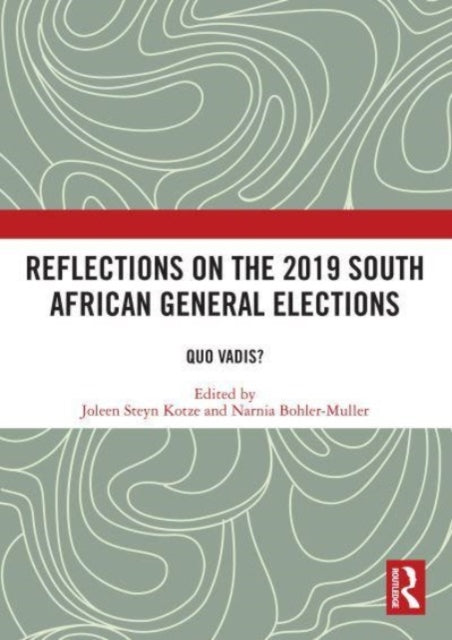
Reflections on the 2019 South African General Elections: Quo Vadis?
Reflections on the 2019 South African General Elections: Quo Vadis?
💎 Earn 221 Points (£2.21) on this item.
We can order this item for you. Delivery usually takes about 4 to 6 weeks.
This item is not held in our immediate stock. We will order it for you after checkout.
Estimated delivery: About 4 to 6 weeks
YOU SAVE £2.63
- Condition: Brand new
- UK Delivery times: Usually arrives within 2 - 3 working days
- UK Shipping: Fee starts at £2.39. Subject to product weight & dimension
Bulk ordering. Want 15 or more copies? Get a personalised quote and bigger discounts. Learn more about bulk orders.
Couldn't load pickup availability
- More about Reflections on the 2019 South African General Elections: Quo Vadis?
The 2019 South African General Elections were a watershed moment in the country's political landscape, with the ANC losing support for the first time in its democratic history. Opposition parties were unable to capitalize on this, due to factional battles and corruption scandals. This book examines the key lessons of the elections and their implications for the future of South Africa's electoral democracy.
Format: Paperback / softback
Length: 146 pages
Publication date: 25 September 2023
Publisher: Taylor & Francis Ltd
The 2019 South African General Elections were a pivotal moment in the country's political history, marking a significant shift in the political landscape. The ANC, which had enjoyed a dominant position in the country's electoral democracy for decades, saw its support decline below the 60% mark for the first time in South Africa's democratic history. This decline in electoral support can be interpreted as a degeneration of the ANC, characterized by the loss of its moral stature, erosion of its integrity, and disillusionment with its performance as a governing party.
While opposition political parties attempted to capitalize on this disillusionment with the ruling ANC, they were unable to successfully increase their share of the vote and capture the undecided and disillusioned voter. Caught in their own factional battles and plagued by corruption scandals, opposition parties were unable to present a united front and offer a compelling alternative to the ANC.
In light of the future of South Africas electoral democracy at 25 years of democracy, Reflections on the 2019 South African General Elections is a critical reflection on the key lessons learned from these elections. The book engages with a range of issues, including land, election campaigns, voter turnout, voter apathy, and the challenges faced by opposition parties in the context of declining electoral dominance.
The contributors to this volume raise important questions about the future of South Africa. They ask, "Quo Vadis South Africa?" and explore the challenges and opportunities that the country faces as it navigates a changing political landscape. The book provides valuable insights into the dynamics of South African politics, the role of political parties, and the role of voters in shaping the country's future.
Reflections on the 2019 South African General Elections will be of great interest to scholars of African Studies, South Africa, Governance, and Elections. The chapters in this book were originally published as a special issue of Politikon: South African Journal of Political Studies, and the editors have brought together a diverse range of perspectives and expertise to provide a comprehensive analysis of the elections and their implications.
The book is organized into five chapters, each exploring a different aspect of the elections and their consequences. In the first chapter, the authors examine the land issue, which has been a contentious issue in South Africa for many years. They argue that the land reform process, which aimed to redistribute land from white to black people, has been slow and incomplete, and that this has contributed to social and economic inequality in the country. The authors also explore the role of political parties in the land reform process and the challenges faced by opposition parties in advocating for land reform.
The second chapter focuses on election campaigns and the role of political parties in shaping public opinion. The authors argue that election campaigns are critical in shaping the outcome of elections and that political parties need to engage with voters in a meaningful and substantive way. They also explore the challenges faced by opposition parties in mounting effective campaigns and the role of social media in shaping public opinion.
The third chapter examines voter turnout and voter apathy, two key issues that have plagued South African elections in recent years. The authors argue that low voter turnout and voter apathy are a result of a range of factors, including a lack of trust in political parties, a lack of interest in politics, and a sense of disillusionment with the political process. The authors explore the strategies that political parties can use to increase voter turnout and engage with voters in a more meaningful way.
The fourth chapter explores the challenges faced by opposition parties in the context of declining electoral dominance. The authors argue that opposition parties need to work together and build a strong coalition to challenge the ANC's dominance in the political landscape. They also explore the role of civil society.
The fifth chapter examines the implications of the 2019 South African General Elections for the future of South Africa. The authors argue that the elections have marked a significant turning point in the country's political history and that the country needs to address a range of challenges, including social and economic inequality, corruption, and political instability. They also explore the role of the media in shaping public opinion and the challenges faced by journalists in reporting on political issues.
In conclusion, Reflections on the 2019 South African General Elections is a critical reflection on the key lessons learned from these elections and their implications for the future of South Africas electoral democracy. The book provides valuable insights into the dynamics of South African politics, the role of political parties, and the role of voters in shaping the country's future. The chapters in this book were originally published as a special issue of Politikon: South African Journal of Political Studies, and the editors have brought together a diverse range of perspectives and expertise to provide a comprehensive analysis of the elections and their implications.
Weight: 453g
Dimension: 246 x 174 (mm)
ISBN-13: 9780367672799
This item can be found in:
UK and International shipping information
UK and International shipping information
UK Delivery and returns information:
- Delivery within 2 - 3 days when ordering in the UK.
- Shipping fee for UK customers from £2.39. Fully tracked shipping service available.
- Returns policy: Return within 30 days of receipt for full refund.
International deliveries:
Shulph Ink now ships to Australia, Belgium, Canada, France, Germany, Ireland, Italy, India, Luxembourg Saudi Arabia, Singapore, Spain, Netherlands, New Zealand, United Arab Emirates, United States of America.
- Delivery times: within 5 - 10 days for international orders.
- Shipping fee: charges vary for overseas orders. Only tracked services are available for most international orders. Some countries have untracked shipping options.
- Customs charges: If ordering to addresses outside the United Kingdom, you may or may not incur additional customs and duties fees during local delivery.