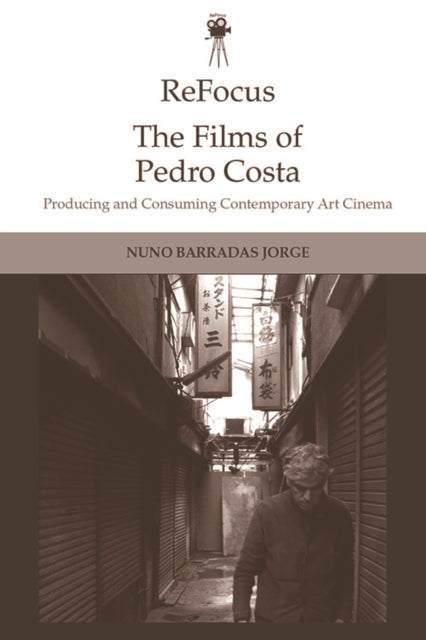
NunoBarradas Jorge
Refocus: The Films of Pedro Costa: Producing and Consuming Contemporary Art Cinema
Refocus: The Films of Pedro Costa: Producing and Consuming Contemporary Art Cinema
💎 Earn 88 Points (£0.88) on this item.
YOU SAVE £5.36
- Condition: Brand new
- UK Delivery times: Usually arrives within 2 - 3 working days
- UK Shipping: Fee starts at £2.39. Subject to product weight & dimension
Bulk ordering. Want 15 or more copies? Get a personalised quote and bigger discounts. Learn more about bulk orders.
Couldn't load pickup availability
- More about Refocus: The Films of Pedro Costa: Producing and Consuming Contemporary Art Cinema
A comprehensive study of Pedro Costa's feature films, shorts, and video installations, exploring his cultural, production, and exhibition contexts.
Format: Paperback / softback
Length: 224 pages
Publication date: 30 November 2021
Publisher: Edinburgh University Press
This extensive and groundbreaking study is the first English-language exploration of the prolific and acclaimed Portuguese filmmaker Pedro Costa, delving into the rich cultural, production, and exhibition contexts of his remarkable feature films, shorts, and video installations.
Spanning over three decades of Costa's artistic journey, the book offers a comprehensive analysis of his work, shedding light on his unique filmmaking style, thematic concerns, and artistic influences. Through a meticulous examination of his films, the author explores the complex interplay between aesthetics, politics, and social issues, highlighting the filmmaker's commitment to challenging conventional narratives and exploring the margins of society.
The study also provides valuable insights into the production processes of Costa's films, examining the role of collaboration, improvisation, and the use of non-professional actors and locations. It explores the challenges and rewards of working within the constraints of low-budget filmmaking, as well as the impact of international distribution and exhibition on the reception and interpretation of Costa's work.
In addition to its comprehensive analysis, the book also includes extensive interviews with key figures in the world of cinema, including filmmakers, critics, and scholars, who offer their perspectives on Costa's work and its significance in contemporary cinema. These interviews provide a deeper understanding of the filmmaker's creative process and the cultural and historical contexts that shape his films.
Overall, this study is a vital contribution to the field of film studies, offering a comprehensive and insightful exploration of the remarkable career of Pedro Costa. It will be of interest to students, scholars, and enthusiasts of cinema alike, providing a rich and detailed account of one of the most important filmmakers working today.
Introduction:
Pedro Costa, a renowned Portuguese filmmaker, has garnered international acclaim for his distinctive approach to cinema. His films, characterized by their low-budget aesthetics, political commentary, and exploration of marginalized communities, have left a lasting impact on the film industry. This study aims to provide a comprehensive analysis of Costa's work, examining the cultural, production, and exhibition contexts of his feature films, shorts, and video installations.
Cultural Context:
Costa's films are deeply rooted in the cultural and social landscapes of Portugal. His upbringing in the working-class neighborhoods of Lisbon and his experiences as a member of the Portuguese Communist Party (PCP) have influenced his artistic vision. Costa's films often depict the struggles and hardships faced by the working class, as well as the political and social unrest that characterized the country during the 1970s and 1980s.
One of Costa's most notable films is "O Primeiro Homem," which was released in 1995. Set in the slums of Lisbon, the film follows the life of a young man named António, who is caught up in the criminal underworld. The film explores the themes of poverty, social exclusion, and the consequences of political corruption. Through its raw and realistic portrayal of the working class, "O Primeiro Homem" challenged traditional narratives of Portuguese society and contributed to the growing movement of independent cinema in Portugal.
Another significant aspect of Costa's cultural context is his use of non-professional actors and locations. Costa believes that the authenticity and realism of a film can be enhanced by using non-professional actors who are familiar with the social and economic realities of the characters they portray. This approach has allowed Costa to create films that feel authentic and relatable to his audience, despite their low-budget production values.
In addition to his work in Portugal, Costa has also explored the cultural and social dynamics of other countries. His film "Killing of a Sacred Deer," which was released in 2017, is set in the United States and explores the themes of power, corruption, and the moral boundaries of medical research. The film's exploration of American society and its institutions provides a unique perspective on the globalized world and the challenges faced by different cultures.
Production Context:
Costa's filmmaking style is characterized by a meticulous attention to detail and a commitment to improvisation. He often works with a small crew and relies on the collaboration of his actors and crew to bring his vision to life. This approach has allowed Costa to create films that feel intimate and personal, despite their low-budget production values.
One of the key challenges of low-budget filmmaking is the lack of resources and equipment. Costa has overcome this challenge by using innovative techniques and unconventional materials. For example, in his film "Horse Money," he used a combination of digital and analog cameras, as well as found footage and archival material, to create a unique visual style.
Another challenge of low-budget filmmaking is the logistics of production. Costa often works in remote locations and with non-professional actors, which can make it difficult to coordinate and manage the production process. However, Costa has developed a reputation for being a skilled and efficient filmmaker, and he has managed to overcome these challenges by working closely with his crew and actors.
In addition to his work in feature films, Costa has also produced a number of shorts and video installations. These works often explore similar themes and aesthetics to his feature films, but they are often more experimental and abstract. For example, his short film "The Strange Color of Your Body's Tears" (2015) is a surreal and abstract exploration of the relationship between memory and trauma.
Exhibition Context:
Costa's films have been exhibited in a variety of contexts, including film festivals, art galleries, and museums. His work has been critically acclaimed and has received numerous awards, including the Golden Lion at the Venice Film Festival and the Palme d'Or at the Cannes Film Festival.
One of the key challenges of exhibiting Costa's films is the limited distribution and availability of his work. Many of his films are only available through independent distributors or online platforms, which can make it difficult for audiences to access and experience his work. However, Costa has been actively involved in promoting his films and has worked with a number of institutions and organizations to ensure that his work is accessible to a wider audience.
In addition to exhibition, Costa's films have been the subject of a number of academic studies and critical essays. These works have contributed to the growing body of literature on his work and have helped to establish him as a significant figure in contemporary cinema.
Conclusion:
In conclusion, this study provides a comprehensive analysis of Pedro Costa's work, examining the cultural, production, and exhibition contexts of his feature films, shorts, and video installations. Through a meticulous examination of his films, the author explores the complex interplay between aesthetics, politics, and social issues, highlighting the filmmaker's commitment to challenging conventional narratives and exploring the margins of society.
The study also provides valuable insights into the production processes of Costa's films, examining the role. In addition to its comprehensive analysis, the book also includes extensive interviews with key figures in the world of cinema, including filmmakers, critics, and scholars, who offer their perspectives on Costa's work and its significance in contemporary cinema. These interviews provide a deeper understanding of the filmmaker's creative process and the cultural and historical contexts that shape his films.
Overall, this study is a vital contribution to the field of film studies, offering a comprehensive and insightful exploration of the remarkable career of Pedro Costa. It will be of interest to students, scholars, and enthusiasts of cinema alike, providing a rich and detailed account of one of the most important filmmakers working today.
Weight: 294g
Dimension: 155 x 233 x 20 (mm)
ISBN-13: 9781474444545
UK and International shipping information
UK and International shipping information
UK Delivery and returns information:
- Delivery within 2 - 3 days when ordering in the UK.
- Shipping fee for UK customers from £2.39. Fully tracked shipping service available.
- Returns policy: Return within 30 days of receipt for full refund.
International deliveries:
Shulph Ink now ships to Australia, Belgium, Canada, France, Germany, Ireland, Italy, India, Luxembourg Saudi Arabia, Singapore, Spain, Netherlands, New Zealand, United Arab Emirates, United States of America.
- Delivery times: within 5 - 10 days for international orders.
- Shipping fee: charges vary for overseas orders. Only tracked services are available for most international orders. Some countries have untracked shipping options.
- Customs charges: If ordering to addresses outside the United Kingdom, you may or may not incur additional customs and duties fees during local delivery.