Nayan Shah
Refusal to Eat: A Century of Prison Hunger Strikes
Refusal to Eat: A Century of Prison Hunger Strikes
💎 Earn 101 Points (£1.01) on this item.
YOU SAVE £4.77
- Condition: Brand new
- UK Delivery times: Usually arrives within 2 - 3 working days
- UK Shipping: Fee starts at £2.39. Subject to product weight & dimension
Bulk ordering. Want 15 or more copies? Get a personalised quote and bigger discounts. Learn more about bulk orders.
Couldn't load pickup availability
- More about Refusal to Eat: A Century of Prison Hunger Strikes
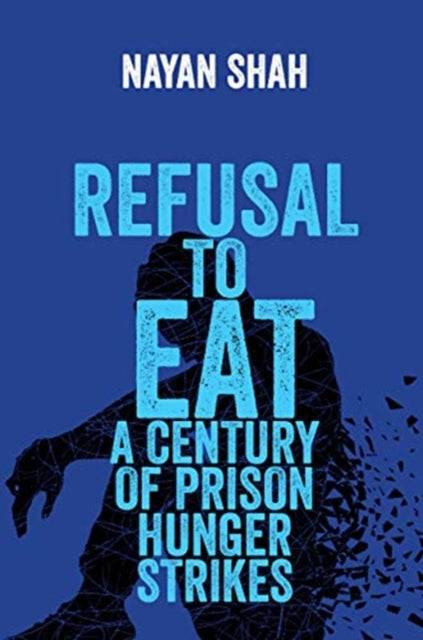
Refusal to Eat is the first global history of hunger strikes as a tactic in prisons, conflicts, and protest movements. It explores how hunger striking stretches and recasts to turn a personal agony into a collective social agony, laying out a number of case studies over the last century. The power of hunger striking is volatile, unmooring all previous resolves, uncertainties, and structures and forcing supporters and opponents alike to respond in new ways. It can upend prison regimens, medical ethics, power hierarchies, governments, and assumptions about gender, race, and the body's endurance.
Format: Hardback
Length: 384 pages
Publication date: 04 January 2022
Publisher: University of California Press
The power of the hunger strike lies in its utter simplicity. The ability to choose to forego eating is universally accessible, even to those living under conditions of maximal constraint, as in the prisons of apartheid South Africa, Israeli prisons for Palestinian prisoners, and the detention camp at Guantánamo Bay. It is a weapon of the weak, potentially open to all. By choosing to hunger strike, a prisoner wields a last-resort personal power that communicates viscerally, in a way that is undeniable—especially when broadcast over prison barricades through media and to movements outside.
Refusal to Eat is the first book to compile a global history of this vital form of modern protest, the hunger strike. In this enormously ambitious but concise book, Nayan Shah observes how hunger striking stretches and recasts to turn a personal agony into a collective social agony in conflicts and contexts all around the world, laying out a remarkable number of case studies over the last century and more. From suffragettes in Britain and the US in the early twentieth century to Irish political prisoners, Bengali prisoners, and detainees at post-9/11 Guantánamo Bay; from Japanese Americans in US internment camps to conscientious objectors in the 1960s; from South Africans fighting apartheid to asylum seekers in Australia and Papua New Guinea, Shah shows the importance of context for each case and the interventions the protesters faced. The power that hunger striking unleashes is volatile, unmooring all previous resolves, certainties, and structures and forcing supporters and opponents alike to respond in new ways. It can upend prison regimens, medical ethics, power hierarchies, and government policies.
The hunger strike has a long and complex history, with its roots in various social and political movements. One of the earliest recorded hunger strikes occurred in 1881, when Irish political prisoners in England refused to eat until they were granted political amnesty. This strike was a powerful tool for the prisoners to draw attention to their cause and to put pressure on the British government.
In the twentieth century, hunger strikes became increasingly common in conflicts around the world. During World War I, both sides used hunger strikes as a form of protest, with prisoners on both sides refusing to eat until they were released or treated better. In the 1960s, the civil rights movement in the United States saw the use of hunger strikes as a way to draw attention to racial inequality and to demand civil rights.
In recent years, hunger strikes have been used by prisoners and political activists around the world to protest a wide range of issues, including human rights abuses, political imprisonment, and environmental degradation. One of the most notable recent hunger strikes was by hunger striker Mahmoud Abbas, the leader of the Palestinian Liberation Organization, who began a hunger strike in 2015 to protest Israel's settlement policies in the West Bank.
Despite the power of the hunger strike, it is not without its risks. Hunger strikes can lead to severe physical and mental health problems, including dehydration, malnutrition, and organ failure. In some cases, hunger strikes have even resulted in death.
In conclusion, the hunger strike is a powerful tool for social and political protest, with a long and complex history. It has been used by prisoners and political activists around the world to draw attention to a wide range of issues and to put pressure on governments and institutions. While the power of the hunger strike is undeniable, it is not without its risks, and it is essential to consider the potential consequences of this form of protest before engaging in it.
Weight: 688g
Dimension: 160 x 237 x 34 (mm)
ISBN-13: 9780520302693
This item can be found in:
UK and International shipping information
UK and International shipping information
UK Delivery and returns information:
- Delivery within 2 - 3 days when ordering in the UK.
- Shipping fee for UK customers from £2.39. Fully tracked shipping service available.
- Returns policy: Return within 30 days of receipt for full refund.
International deliveries:
Shulph Ink now ships to Australia, Belgium, Canada, France, Germany, Ireland, Italy, India, Luxembourg Saudi Arabia, Singapore, Spain, Netherlands, New Zealand, United Arab Emirates, United States of America.
- Delivery times: within 5 - 10 days for international orders.
- Shipping fee: charges vary for overseas orders. Only tracked services are available for most international orders. Some countries have untracked shipping options.
- Customs charges: If ordering to addresses outside the United Kingdom, you may or may not incur additional customs and duties fees during local delivery.