Prof Donatella (Founding Dean of the Faculty of Political and Social Sciences
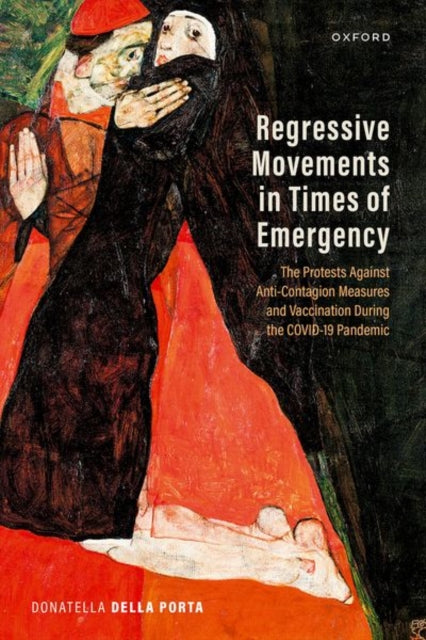
Regressive Movements in Times of Emergency: The Protests Against Anti-Contagion Measures and Vaccination During the Covid-19 Pandemic
Regressive Movements in Times of Emergency: The Protests Against Anti-Contagion Measures and Vaccination During the Covid-19 Pandemic
💎 Earn 414 Points (£4.14) on this item.
We can order this item for you. Delivery usually takes about 4 to 6 weeks.
This item is not held in our immediate stock. We will order it for you after checkout.
Estimated delivery: About 4 to 6 weeks
- Condition: Brand new
- UK Delivery times: Usually arrives within 2 - 3 working days
- UK Shipping: Fee starts at £2.39. Subject to product weight & dimension
Bulk ordering. Want 15 or more copies? Get a personalised quote and bigger discounts. Learn more about bulk orders.
Couldn't load pickup availability
- More about Regressive Movements in Times of Emergency: The Protests Against Anti-Contagion Measures and Vaccination During the Covid-19 Pandemic
Anti-vax protests have received sustained attention since the beginning of the COVID-19 pandemic, with participants from different milieus expressing conspiracy beliefs. These protests developed as a regressive response to the health crisis, but quickly subsided as the virus became endemic. This volume builds upon social movement studies to analyze the dynamics of these protests in their emergency, growth, and decline, considering the opportunities and challenges for different actors in moments of intense mobilization.
Format: Unspecified
Length: 208 pages
Publication date: 14 November 2023
Publisher: Oxford University Press
Since the onset of the COVID-19 pandemic, anti-vax protests have garnered significant attention, with mass media and social media playing pivotal roles. The initial comments often highlighted the heterogeneity of the events, with participants belonging to diverse milieus, ranging from the far right to exoteric groups that opposed mainstream medicine, advocating alternative remedies. However, in reality, these protests emerged as a regressive response to the health crisis. Conspiracist beliefs, ranging from politicized QAnon and Great Replacement conspiracies to Chemic Trails and 5G theories prevalent in the exoteric milieu promoting alternative health practices, were explicitly expressed in the slogans and symbols used by the protestors. The contestation of anti-COVID-19 measures fluctuated, following the waves of contagion and the corresponding increase in policy measures to curb them. These protests, particularly during vaccination campaigns, appeared to wane but quickly subsided as the COVID-19 virus became endemic, with vaccination reducing its lethality.
This volume extends social movement studies to shed light on the dynamics of these protests at different stages of their emergency, growth, and decline. Drawing upon recent developments in the field, it particularly contributes to the analysis of contentious politics in emergency times, characterized by profound disruptions in everyday life and rapid structural transformations in society. By examining the opportunities and challenges faced by various actors in moments of intense mobilization, the volume seeks to understand how specific strains are transformed into actions.
The COVID-19 pandemic has brought about a global health crisis that has impacted societies in unprecedented ways. The emergence of anti-vax protests has been a notable aspect of this crisis, reflecting a range of concerns and beliefs among individuals and groups. These protests have taken various forms, from large-scale rallies to smaller gatherings, and have been driven by a mix of conspiracy theories, misinformation, and political agendas.
One of the key features of anti-vax protests has been their heterogeneity. Participants in these protests come from diverse backgrounds, including political ideologies, religious beliefs, and health concerns. Some protesters are motivated by fears of vaccine safety, while others believe that vaccines are part of a government conspiracy to control the population. There are also those who oppose vaccines on ideological grounds, such as libertarians who view them as a violation of individual rights.
Another aspect of anti-vax protests has been their use of social media and mass media to spread their message. Platforms like Twitter, Facebook, and Instagram have been instrumental in organizing and promoting these protests, allowing participants to connect with others who share their beliefs and to amplify their voices. Mass media outlets, including television and radio, have also played a role in covering these protests, often providing a platform for anti-vax activists to express their views and promote their agenda.
Despite the attention that anti-vax protests have received, it is important to recognize that they have developed as a regressive response to the health crisis. Conspiracist beliefs, ranging from the politicized QAnon and Great Replacement conspiracies to the Chemic Trails and 5G theories, have been central to the protestors' rhetoric and symbolism. These beliefs often undermine trust in scientific institutions and public health measures, and can lead to misinformation and misinformation.
The contestation of anti-COVID-19 measures has also been a feature of these protests. In different countries, protesters have challenged policies such as vaccine mandates, lockdowns, and mask-wearing requirements. These challenges have often led to clashes between protesters and law enforcement authorities, and have raised concerns about the potential for violence and public health risks.
However, it is worth noting that the dynamics of anti-vax protests have evolved over time. As the pandemic has progressed, and the effectiveness of vaccines has become more evident, many protesters have shifted their stance. This has been particularly evident during vaccination campaigns, where high vaccination rates have led to a decline in COVID-19 cases and deaths. Many protesters who initially opposed vaccines have now changed their minds, recognizing the importance of vaccination in ending the pandemic.
In conclusion, anti-vax protests have been a significant feature of the COVID-19 pandemic, reflecting a range of concerns and beliefs among individuals and groups. These protests have been driven by conspiracy theories, misinformation, and political agendas, and have taken various forms, from large-scale rallies to smaller gatherings. While these protests have garnered attention and raised concerns about public health, it is important to recognize that they have developed as a regressive response to the health crisis. As the pandemic continues to evolve, it will be important to address the underlying beliefs and misinformation that drive these protests and to promote vaccination as a critical tool in ending the pandemic.
Weight: 476g
Dimension: 240 x 162 x 15 (mm)
ISBN-13: 9780198884309
UK and International shipping information
UK and International shipping information
UK Delivery and returns information:
- Delivery within 2 - 3 days when ordering in the UK.
- Shipping fee for UK customers from £2.39. Fully tracked shipping service available.
- Returns policy: Return within 30 days of receipt for full refund.
International deliveries:
Shulph Ink now ships to Australia, Belgium, Canada, France, Germany, Ireland, Italy, India, Luxembourg Saudi Arabia, Singapore, Spain, Netherlands, New Zealand, United Arab Emirates, United States of America.
- Delivery times: within 5 - 10 days for international orders.
- Shipping fee: charges vary for overseas orders. Only tracked services are available for most international orders. Some countries have untracked shipping options.
- Customs charges: If ordering to addresses outside the United Kingdom, you may or may not incur additional customs and duties fees during local delivery.