Shulph Ink
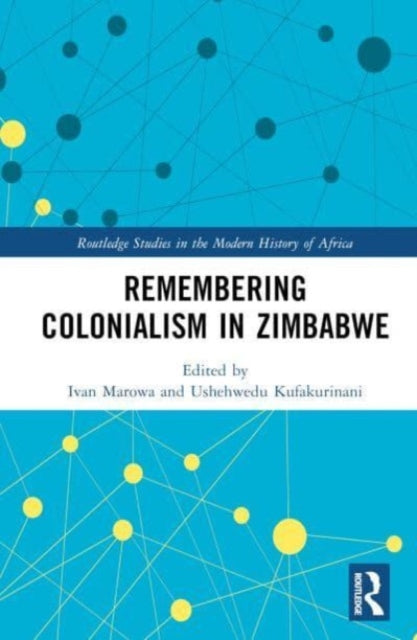
Remembering Colonialism in Zimbabwe
Remembering Colonialism in Zimbabwe
💎 Earn 811 Points (£8.11) on this item.
We can order this item for you. Delivery usually takes about 4 to 6 weeks.
This item is not held in our immediate stock. We will order it for you after checkout.
Estimated delivery: About 4 to 6 weeks
YOU SAVE £9.63
- Condition: Brand new
- UK Delivery times: Usually arrives within 2 - 3 working days
- UK Shipping: Fee starts at £2.39. Subject to product weight & dimension
Bulk ordering. Want 15 or more copies? Get a personalised quote and bigger discounts. Learn more about bulk orders.
Couldn't load pickup availability
- More about Remembering Colonialism in Zimbabwe
This book explores how colonialism is remembered and rewritten in Zimbabwe, challenging the legacies of colonialism across various aspects of society. It draws on the expertise of Zimbabwean scholars and is relevant to researchers of decolonisation and African history and memory.
Format: Hardback
Length: 178 pages
Publication date: 14 December 2023
Publisher: Taylor & Francis Ltd
This book delves into the intricate ways in which Zimbabwe's colonial past is remembered, exploring the diverse approaches individuals employ to analyze, perceive, and interpret historical events. It also examines how these interpretations are rewritten, giving prominence to certain individuals and their historical agency. Drawing inspiration from the ongoing movement of decoloniality, the book investigates how generations of today engage in questioning and challenging the legacies of colonization and their role in shaping Zimbabwe's collective memories and history.
The book begins by examining the memorialization of both President Robert Mugabe and his successor Emmerson Mnangagwa in their speeches and during the political transition period. It then traces the enduring impact of colonialism across various domains, including dress code, place-naming, agriculture, religion, gender, and marginalized communities such as the BaKalanga. By drawing on the expertise of Zimbabwean scholars, this book offers valuable insights for researchers interested in decolonization, African history, and memory studies.
The legacy of colonialism in Zimbabwe is multifaceted and far-reaching, leaving a lasting imprint on various aspects of society. One notable aspect is the memorialization of historical figures and events. Both Mugabe and Mnangagwa, during their respective reigns, sought to shape the narrative of Zimbabwe's colonial past to align with their political agendas. Mugabe, in particular, emphasized the struggle against colonialism and the heroic role of the Zimbabwean people in achieving independence. However, this narrative often excluded critical perspectives and marginalized the experiences of marginalized communities.
Similarly, during the political transition, both Mugabe and Mnangagwa attempted to rewrite the history of colonialism to suit their political interests. Mnangagwa, for instance, portrayed himself as a champion of democracy and reform, while Mugabe sought to maintain his hold on power by perpetuating the narrative of colonial oppression. This selective rewriting of history has had significant consequences, as it has shaped public perceptions and influenced political decisions.
Beyond the memorialization of historical figures and events, colonialism has also left a lasting impact on Zimbabwe's cultural and social practices. For example, the dress code, place-naming, and agricultural practices inherited from colonialism continue to shape the country's identity and culture. The introduction of English as the dominant language during colonization has also contributed to the marginalization of indigenous languages and cultures.
Colonialism has also had profound effects on gender relations and social hierarch. The patriarchal structures that were imposed during colonization have persisted in Zimbabwean society, perpetuating gender inequality and discrimination. Women, particularly in rural areas, continue to face challenges in accessing education, healthcare, and economic opportunities, largely due to the legacy of colonialism.
Furthermore, colonialism has had a detrimental impact on marginalized communities, such as the BaKalanga. The BaKalanga, a minority ethnic group in Zimbabwe, have faced historical marginalization and discrimination, including land dispossession, forced labor, and cultural erasure. The legacy of colonialism has continued to shape their lives, with many BaKalanga communities struggling to access basic services and resources.
In response to the ongoing challenges of colonialism, there has been a growing movement in Zimbabwe to decolonize the country's history and memory. This movement seeks to challenge the dominant narratives of colonialism and promote a more inclusive and accurate representation of the country's past. It involves a range of stakeholders, including academics, activists, and community organizations, who are working to reclaim and preserve the cultural heritage of marginalized communities and promote gender equality and social justice.
One of the key strategies employed by this movement is the documentation and preservation of historical archives and oral histories. This involves collecting and archiving documents and artifacts that provide evidence of colonialism's impact on Zimbabwe's history and culture, as well as recording the experiences of individuals and communities affected by colonialism. This documentation not only serves as a tool for historical research but also for education and awareness-raising purposes, helping to promote a more nuanced and inclusive understanding of Zimbabwe's past.
Another strategy employed by the decolonization movement is the promotion of indigenous languages and cultures. This involves the recognition and promotion of indigenous languages as legitimate languages of Zimbabwe, as well as the preservation and revitalization of indigenous cultural practices and traditions. This is important not only for the preservation of cultural heritage but also for promoting social cohesion and identity among marginalized communities.
Furthermore, the decolonization movement in Zimbabwe is also working to address the ongoing impacts of colonialism in marginalized communities. This involves advocating for the rights and rights of these communities, including access to education, healthcare, and economic opportunities. It also involves challenging the patriarchal structures that perpetuate gender inequality and discrimination and promoting gender equality and social justice.
In conclusion, this book examines the various ways in which colonialism in Zimbabwe is remembered, looking both at how people analyze, perceive, and interpret the past, and how they rewrite that past, elevating some players and their historical agency. Inspired by the ongoing movement on decoloniality, this book examines the ways in which generations of today question and challenge colonialisms legacies and their role in Zimbabwes collective memories and history. The book analyses the memorialising of both Mugabe and Mnangagwa in their speeches and during the political transition, before going on to trace the continuing impact of colonialism across areas as diverse as dress code, place-naming, agriculture, religion, gender, and in marginalised communities such as the BaKalanga. Drawing on the expertise of Zimbabwean scholars, this book will appeal to researchers of decolonisation, and of African history and memory.
Weight: 510g
Dimension: 234 x 156 (mm)
ISBN-13: 9781032598635
This item can be found in:
UK and International shipping information
UK and International shipping information
UK Delivery and returns information:
- Delivery within 2 - 3 days when ordering in the UK.
- Shipping fee for UK customers from £2.39. Fully tracked shipping service available.
- Returns policy: Return within 30 days of receipt for full refund.
International deliveries:
Shulph Ink now ships to Australia, Belgium, Canada, France, Germany, Ireland, Italy, India, Luxembourg Saudi Arabia, Singapore, Spain, Netherlands, New Zealand, United Arab Emirates, United States of America.
- Delivery times: within 5 - 10 days for international orders.
- Shipping fee: charges vary for overseas orders. Only tracked services are available for most international orders. Some countries have untracked shipping options.
- Customs charges: If ordering to addresses outside the United Kingdom, you may or may not incur additional customs and duties fees during local delivery.