Shulph Ink
Reproduction Reborn: How Science, Ethics, and Law Shape Mitochondrial Replacement Therapies
Reproduction Reborn: How Science, Ethics, and Law Shape Mitochondrial Replacement Therapies
💎 Earn 185 Points (£1.85) on this item.
We can order this item for you. Delivery usually takes about 4 to 6 weeks.
This item is not held in our immediate stock. We will order it for you after checkout.
Estimated delivery: About 4 to 6 weeks
- Condition: Brand new
- UK Delivery times: Usually arrives within 2 - 3 working days
- UK Shipping: Fee starts at £2.39. Subject to product weight & dimension
Bulk ordering. Want 15 or more copies? Get a personalised quote and bigger discounts. Learn more about bulk orders.
Couldn't load pickup availability
- More about Reproduction Reborn: How Science, Ethics, and Law Shape Mitochondrial Replacement Therapies
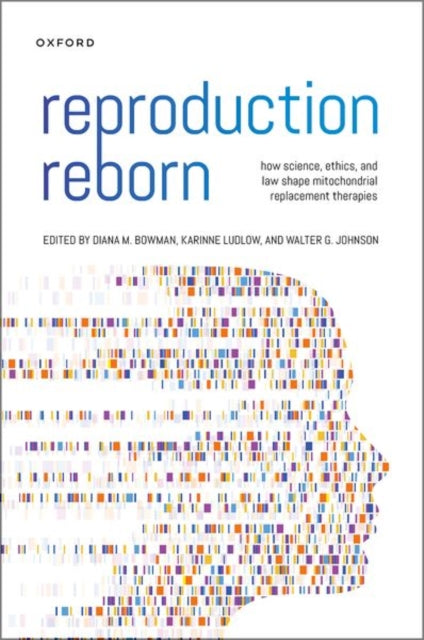
The book "Reproduction Reborn" explores the global issues surrounding modern reproductive technologies, such as mitochondrial replacement therapies, which allow some women with mitochondrial diseases to birth babies without those diseases. It highlights the history and science of these therapies, the various attempts to control them, and the ethical, legal, and societal norms that need to be addressed by policymakers and communities.
Format: Paperback / softback
Length: 304 pages
Publication date: 28 March 2023
Publisher: Oxford University Press Inc
Advances in assisted reproductive technologies have sparked global policy debates since the birth of the first so-called "test tube baby" in 1978. Today, mitochondrial replacement therapies represent the most recent advancement in assisted reproductive technologies, allowing some women with mitochondrial diseases to birth babies without those diseases. In the past decade, mitochondrial replacement therapies have captured public sentiment, reigniting debates around social views of reproductive rights and the appropriate legal and political response. Reproduction Reborn guides readers through the history and science of mitochondrial replacement therapies and the various attempts to control them. Leading experts from medicine, genetics, ethics, law, and policy explore the influence of public debate on the evolving shape of these technologies and their subsequent regulation. They highlight case studies from both developed and developing countries across the globe, including recent legislation in Australia and China. They further identify the ethical, legal, and societal norms that need to be addressed by policymakers and communities as more and more people seek to gain access to these treatments. Given the importance of reproduction in family life and cultural identity, clinicians and policymakers must understand how regulatory regimes around mitochondrial replacement therapies have evolved to illuminate the processes and challenges of governing reproduction in a fast-moving world. Informative and global in scope, Reproduction Reborn explores how advancements in assisted reproductive technologies challenge core values surrounding the rights and responsibilities of modern-day family units.
Introduction:
Advances in assisted reproductive technologies (ARTs) have brought about significant changes in the field of reproduction, raising important global policy debates. Since the birth of the first "test tube baby" in 1978, these technologies have continued to evolve, leading to the development of mitochondrial replacement therapies (MRTs). MRTs offer the potential for women with mitochondrial diseases to birth healthy babies without inheriting those diseases. This breakthrough has sparked widespread interest and debate, particularly regarding social views of reproductive rights and the appropriate legal and political response.
Mitochondrial Replacement Therapies:
MRTs involve replacing the damaged mitochondria in a woman's egg with healthy mitochondria from a donor egg. This procedure allows some women with mitochondrial diseases to conceive and give birth to healthy babies. MRTs have been used successfully in several countries, including the United States, the United Kingdom, and Australia. However, they have also been the subject of intense scrutiny and regulation due to ethical, legal, and societal concerns.
Global Policy Debates:
The development of MRTs has sparked global policy debates, with policymakers and communities grappling with the ethical, legal, and societal implications of these technologies. One of the key debates is around reproductive rights and the appropriate legal and political response. Some argue that MRTs should be fully legalized and accessible to all women who need them, while others advocate for stricter regulations to ensure the safety and well-being of both the mother and the baby.
Public Sentiment:
Public sentiment towards MRTs has been mixed, with some supporting the technology as a way to improve the lives of women with mitochondrial diseases and others expressing concerns about the potential risks and ethical implications. This public debate has influenced the evolution of regulatory regimes around MRTs, with some countries implementing stricter regulations to ensure the safety and well-being of both the mother and the baby.
Leading Experts:
Reproduction Reborn features leading experts from various fields, including medicine, genetics, ethics, law, and policy, who explore the influence of public debate on the evolving shape of MRTs and their subsequent regulation. These experts provide insights into the history and science of MRTs, as well as the various attempts to control them. They highlight case studies from both developed and developing countries across the globe, including recent legislation in Australia and China.
Ethical, Legal, and Societal Norms:
Policymakers and communities must address ethical, legal, and societal norms that need to be considered when regulating MRTs. One of the key concerns is the potential for genetic discrimination and the need to ensure that women with mitochondrial diseases have access to these therapies without facing discrimination. Additionally, there are concerns about the potential impact of MRTs on the gene pool and the long-term effects on the health of both the mother and the baby.
Conclusion:
In conclusion, advances in assisted reproductive technologies, particularly mitochondrial replacement therapies, have sparked global policy debates. These therapies offer the potential for women with mitochondrial diseases to birth healthy babies, but they also raise ethical, legal, and societal concerns. Policymakers and communities must work together to address these concerns and ensure that MRTs are used responsibly and ethically. Reproduction Reborn provides valuable insights into the history and science of MRTs, as well as the various attempts to control them, and highlights case studies from both developed and developing countries. By understanding the influence of public debate on the evolving shape of these technologies, policymakers and communities can work towards developing regulatory regimes that balance the rights and responsibilities of modern-day family units.
Weight: 442g
Dimension: 156 x 236 x 21 (mm)
ISBN-13: 9780197616208
This item can be found in:
UK and International shipping information
UK and International shipping information
UK Delivery and returns information:
- Delivery within 2 - 3 days when ordering in the UK.
- Shipping fee for UK customers from £2.39. Fully tracked shipping service available.
- Returns policy: Return within 30 days of receipt for full refund.
International deliveries:
Shulph Ink now ships to Australia, Belgium, Canada, France, Germany, Ireland, Italy, India, Luxembourg Saudi Arabia, Singapore, Spain, Netherlands, New Zealand, United Arab Emirates, United States of America.
- Delivery times: within 5 - 10 days for international orders.
- Shipping fee: charges vary for overseas orders. Only tracked services are available for most international orders. Some countries have untracked shipping options.
- Customs charges: If ordering to addresses outside the United Kingdom, you may or may not incur additional customs and duties fees during local delivery.