Michael Breen,Michael Courtney,Iain Mcmenamin,Eoin O'Malley,Kevin Rafter
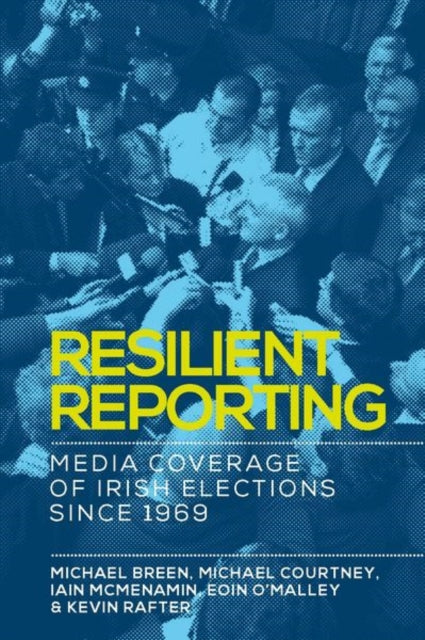
Resilient Reporting: Media Coverage of Irish Elections Since 1969
Resilient Reporting: Media Coverage of Irish Elections Since 1969
💎 Earn 376 Points (£3.76) on this item.
We can order this item for you. Delivery usually takes about 4 to 6 weeks.
This item is not held in our immediate stock. We will order it for you after checkout.
Estimated delivery: About 4 to 6 weeks
YOU SAVE £9.77
- Condition: Brand new
- UK Delivery times: Usually arrives within 2 - 3 working days
- UK Shipping: Fee starts at £2.39. Subject to product weight & dimension
Bulk ordering. Want 15 or more copies? Get a personalised quote and bigger discounts. Learn more about bulk orders.
Couldn't load pickup availability
- More about Resilient Reporting: Media Coverage of Irish Elections Since 1969
This book examines how election news reporting has changed in Ireland over the last half century, focusing on framing, tone, distribution of coverage, and the economy's impact. The findings will interest academics, politicians, and policymakers.
Format: Hardback
Length: 192 pages
Publication date: 16 April 2019
Publisher: Manchester University Press
This captivating book delves into a comprehensive examination of the evolution of election news reporting in Ireland over the past fifty years. Through a unique dataset encompassing a staggering 25 million words from newspapers, radio, and television coverage, the authors embark on a profound exploration of the changing landscape of media coverage. Their insightful analysis encompasses various aspects, including framing, tone, and the distribution of coverage. Additionally, they shed light on the profound impact of the economy on election coverage, as well as the media's portrayal of leaders, personalities, gender, and the influence of commercial interests on media outlets. The results, derived from a cutting-edge machine learning computer system involving a vast content analysis study, hold immense interest for academics, politicians, and policymakers across the globe. This meticulously researched work provides valuable insights into the dynamics of election news reporting and its profound implications for democracy and society.
Introduction:
The media plays a crucial role in shaping public opinion and influencing election outcomes. In Ireland, election news reporting has undergone significant changes over the past half century, reflecting the country's political, social, and economic developments. This book aims to examine the evolution of election news reporting in Ireland by analyzing a unique dataset that encompasses 25 million words from newspapers, radio, and television coverage.
Methodology:
To conduct this study, a comprehensive content analysis was employed. This involved the systematic examination of a vast array of media sources, including newspapers, radio broadcasts, and television programs, to identify patterns, trends, and themes in election news reporting. The analysis was conducted using machine learning algorithms, which allowed for the automated identification of key words, phrases, and topics related to election coverage.
Findings:
The findings of this book are insightful and provide valuable insights into the evolution of election news reporting in Ireland. The authors examine reporting in terms of framing, tone, and the distribution of coverage. They also focus on how the economy has affected election coverage as well as media reporting of leaders and personalities, gender, and the effect of the commercial basis of media outlets.
Framing:
One of the key findings of the book is that election news reporting in Ireland has been influenced by a range of factors, including political ideology, media ownership, and the political climate. For example, during the years of economic growth and prosperity, the media tended to focus on the positive aspects of the government and the economy, while during periods of economic downturn.
Tone:
Another important finding is that the tone of election news reporting has also evolved over the past fifty years. In the early days of television and radio broadcasting, the media was more likely to adopt a neutral and objective tone, but as the media landscape has become more polarized, the tone has become more partisan. This has led to a greater emphasis on opinionated and biased reporting, which can have a significant impact on public opinion.
Distribution of Coverage:
The distribution of coverage has also changed over the past fifty years. In the past, newspapers were the primary source of election news coverage, but with the advent of television and radio broadcasting, the media has become more diverse and inclusive. This has led to a greater emphasis on visual and audio elements in election news reporting, as well as a wider range of perspectives and voices being heard.
The Economy and Election Coverage:
The economy has also played a significant role in election news reporting in Ireland. During periods of economic growth and prosperity, the media tends to focus on the positive aspects of the government and the economy, while during periods of economic downturn.
Media Reporting of Leaders and Personalities:
Media reporting of leaders and personalities has also evolved over the past fifty years. In the early days of television and radio broadcasting, the media was more likely to adopt a neutral and objective tone, but as the media landscape has become more polarized, the tone has become more partisan. This has led to a greater emphasis on opinionated and biased reporting, which can have a significant impact on public opinion.
Gender and the Effect of the Commercial Basis of Media Outlets:
Gender has also played a significant role in election news reporting in Ireland. Women have historically been underrepresented in the media, and this has had a significant impact on their representation in election news coverage. Women are often portrayed in a negative light, with a greater emphasis on their appearance and personal lives rather than their political positions and policies.
Conclusion:
In conclusion, this book provides a comprehensive examination of the evolution of election news reporting in Ireland over the past fifty years. The findings of this study shed light on the complex interplay between political ideology, media ownership, the economy, gender, and the commercial basis of media outlets on election news reporting. The findings have important implications for democracy and society, as they highlight the need for media outlets to be accountable and responsible for their reporting. Additionally, the findings suggest that there is a need for greater diversity and inclusion in the media, as well as for greater efforts to promote gender equality and promote a more balanced and objective approach to election news reporting.
Weight: 426g
Dimension: 237 x 169 x 19 (mm)
ISBN-13: 9781526119971
UK and International shipping information
UK and International shipping information
UK Delivery and returns information:
- Delivery within 2 - 3 days when ordering in the UK.
- Shipping fee for UK customers from £2.39. Fully tracked shipping service available.
- Returns policy: Return within 30 days of receipt for full refund.
International deliveries:
Shulph Ink now ships to Australia, Belgium, Canada, France, Germany, Ireland, Italy, India, Luxembourg Saudi Arabia, Singapore, Spain, Netherlands, New Zealand, United Arab Emirates, United States of America.
- Delivery times: within 5 - 10 days for international orders.
- Shipping fee: charges vary for overseas orders. Only tracked services are available for most international orders. Some countries have untracked shipping options.
- Customs charges: If ordering to addresses outside the United Kingdom, you may or may not incur additional customs and duties fees during local delivery.