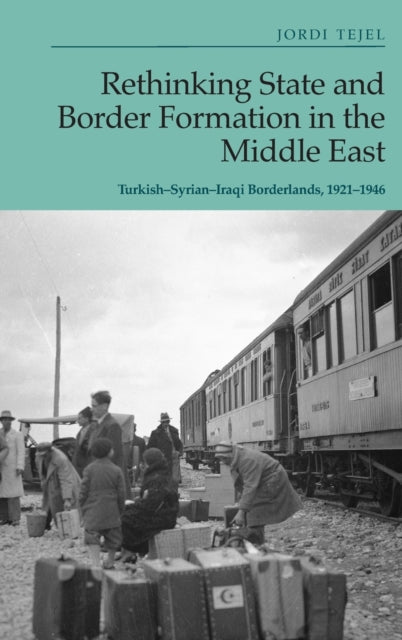
Jordi Tejel
Rethinking State and Border Formation in the Middle East: Turkish-Syrian-Iraqi Borderlands, 1921-46
Rethinking State and Border Formation in the Middle East: Turkish-Syrian-Iraqi Borderlands, 1921-46
💎 Earn 364 Points (£3.64) on this item.
We can order this item for you. Delivery usually takes about 4 to 6 weeks.
This item is not held in our immediate stock. We will order it for you after checkout.
Estimated delivery: About 4 to 6 weeks
YOU SAVE £22.13
- Condition: Brand new
- UK Delivery times: Usually arrives within 2 - 3 working days
- UK Shipping: Fee starts at £2.39. Subject to product weight & dimension
Bulk ordering. Want 15 or more copies? Get a personalised quote and bigger discounts. Learn more about bulk orders.
Couldn't load pickup availability
- More about Rethinking State and Border Formation in the Middle East: Turkish-Syrian-Iraqi Borderlands, 1921-46
The book Rethinking State and Border Formation in the Middle East offers a decentred and connected perspective on the making of the Turkish-Syrian-Iraqi borderlands, analyzing the violence and forced displacement in the region. It explores the contribution of border populations to the history of the borderlands, nation-states, and the Middle East as a whole. The book utilizes theoretical and methodological debates in borderlands and mobility studies, social, environmental, and transnational history, and covers the borderlands stretching between Turkey, Syria, and Iraq. The goal is to provide a holistic understanding of the formation of the territorial state in the interwar Middle East.
Format: Hardback
Length: 376 pages
Publication date: 31 May 2023
Publisher: Edinburgh University Press
The making of the Turkish-Syrian-Iraqi borderlands is a complex and multifaceted process that has been shaped by a range of historical, social, and political factors. This region has been the site of intense violence and forced displacement, as well as the contribution of border populations to the history of the borderlands, nation-states, and the region as a whole. In this essay, we will explore the borderlands stretching between Turkey, Syria, and Iraq, while paying attention to border variations such as Turkey-Syria/Turkey-Iraq/Syria-Iraq.
The theoretical and methodological debates in borderlands and mobility studies, as well as social, environmental, and transnational history, will be utilized to analyze the violence and forced displacement in the borderlands of the post-Ottoman Middle East. While the wars in Iraq, Syria, Libya, and Yemen, alongside the establishment of the so-called Islamic Caliphate, have brought the debate about the crisis of the territorial nation-state in the Middle East once again to the fore, this issue cannot be simply understood as the logical consequence of either an imported political construction or the purported artificiality of Middle Eastern borders.
Instead, the process of state formation in the region has been a complicated course that involved different institutional traditions, managing societies. societies marked by varying degrees of political loyalty to central power, and dealing with colonial interference. Rethinking State and Border Formation in the Middle East seeks to disentangle some of these complexities by proposing both a decentred and dialectic approach. Taking its cue from the bourgeoning field of borderland studies and a variety of historical sub-disciplines, this monograph pays attention to the circulation of people, goods, diseases, and ideas as well as to the everyday encounters between a wide range of state and non-state actors in the borderlands laying between Turkey, Syria, and Iraq.
The goal is to provide a comprehensive understanding of the complex processes that have shaped the borderlands in the Middle East, and to explore the ways in which border populations have contributed to the history, politics, and culture of the region. By reinterpreting the making of the Turkish-Syrian-Iraqi borderlands from a decentred and connected perspective, we can better understand the challenges and opportunities that arise in this region.
The borderlands between Turkey, Syria, and Iraq have been the site of intense violence and forced displacement, as well as the contribution of border populations to the history of the borderlands, nation-states, and the region as a whole. In this essay, we will explore the borderlands stretching between Turkey, Syria, and Iraq, while paying attention to border variations such as Turkey-Syria/Turkey-Iraq/Syria-Iraq.
The theoretical and methodological debates in borderlands and mobility studies, as well as social, environmental, and transnational history, will be utilized to analyze the violence and forced displacement in the borderlands of the post-Ottoman Middle East. While the wars in Iraq, Syria, Libya, and Yemen, alongside the establishment of the so-called Islamic Caliphate, have brought the debate about the crisis of the territorial nation-state in the Middle East once again to the fore, this issue cannot be simply understood as the logical consequence of either an imported political construction or the purported artificiality of Middle Eastern borders.
Instead, the process of state formation in the region has been a complicated course that involved different institutional traditions, managing societies
societies marked by varying degrees of political loyalty to central power, and dealing with colonial interference. Rethinking State and Border Formation in the Middle East seeks to disentangle some of these complexities by proposing both a decentred and dialectic approach. Taking its cue from the bourgeoning field of borderland studies and a variety of historical sub-disciplines, this monograph pays attention to the circulation of people, goods, diseases, and ideas as well as to the everyday encounters between a wide range of state and non-state actors in the borderlands laying between Turkey, Syria, and Iraq.
The goal is to provide a comprehensive understanding of the complex processes that have shaped the borderlands in the Middle East, and to explore the ways in which border populations have contributed to the history, politics, and culture of the region. By reinterpreting the making of the Turkish-Syrian-Iraqi borderlands from a decentred and connected perspective, we can better understand the challenges and opportunities that arise in this region.
The borderlands between Turkey, Syria, and Iraq have been the site of intense violence and forced displacement, as well as the contribution of border populations to the history of the borderlands, nation-states, and the region as a whole. In this essay, we will explore the borderlands stretching between Turkey, Syria, and Iraq, while paying attention to border variations such as Turkey-Syria/Turkey-Iraq/Syria-Iraq.
The theoretical and methodological debates in borderlands and mobility studies, as well as social, environmental, and transnational history, will be utilized to analyze the violence and forced displacement in the borderlands of the post-Ottoman Middle East. While the wars in Iraq, Syria, Libya, and Yemen, alongside the establishment of the so-called Islamic Caliphate, have brought the debate about the crisis of the territorial nation-state in the Middle East once again to the fore, this issue cannot be simply understood as the logical consequence of either an imported political construction or the purported artificiality of Middle Eastern borders.
Instead, the process of state formation in the region has been a complicated course that involved different institutional traditions, managing societies
societies marked by varying degrees of political loyalty to central power, and dealing with colonial interference. Rethinking State and Border Formation in the Middle East seeks to disentangle some of these complexities by proposing both a decentred and dialectic approach. Taking its cue from the bourgeoning field of borderland studies and a variety of historical sub-disciplines, this monograph pays attention to the circulation of people, goods, diseases, and ideas as well as to the everyday encounters between a wide range of state and non-state actors in the borderlands laying between Turkey, Syria, and Iraq.
The goal is to provide a comprehensive understanding of the complex processes that have shaped the borderlands in the Middle East, and to explore the ways in which border populations have contributed to the history, politics, and culture of the region. By reinterpreting the making of the Turkish-Syrian-Iraqi borderlands from a decentred and connected perspective, we can better understand the challenges and opportunities that arise in this region.
The borderlands between Turkey, Syria, and Iraq have been the site of intense violence and forced displacement, as well as the contribution of border populations to the history of the borderlands, nation-states, and the region as a whole. In this essay, we will explore the borderlands stretching between Turkey, Syria, and Iraq, while paying attention to border variations such as Turkey-Syria/Turkey-Iraq/Syria-Iraq.
The theoretical and methodological debates in borderlands and mobility studies, as well as social, environmental, and transnational history, will be utilized to analyze the violence and forced displacement in the borderlands of the post-Ottoman Middle East. While the wars in Iraq, Syria, Libya, and Yemen, alongside the establishment of the so-called Islamic Caliphate, have brought the debate about the crisis of the territorial nation-state in the Middle East once again to the fore, this issue cannot be simply understood as the logical consequence of either an imported political construction or the purported artificiality of Middle Eastern borders.
Instead, the process of state formation in the region has been a complicated course that involved different institutional traditions, managing societies
societies marked by varying degrees of political loyalty to central power, and dealing with colonial interference. Rethinking State and Border Formation in the Middle East seeks to disentangle some of these complexities by proposing both a decentred and dialectic approach. Taking its cue from the bourgeoning field of borderland studies and a variety of historical sub-disciplines, this monograph pays attention to the circulation of people, goods, diseases, and ideas as well as to the everyday encounters between a wide range of state and non-state actors in the borderlands laying between Turkey, Syria, and Iraq.
The goal is to provide a comprehensive understanding of the complex processes that have shaped the borderlands in the Middle East, and to explore the ways in which border populations have contributed to the history, politics, and culture of the region. By reinterpreting the making of the Turkish-Syrian-Iraqi borderlands from a decentred and connected perspective, we can better understand the challenges and opportunities that arise in this region.
The borderlands between Turkey, Syria, and Iraq have been the site of intense violence and forced displacement, as well as the contribution of border populations to the history of the borderlands, nation-states, and the region as a whole. In this essay, we will explore the borderlands stretching between Turkey, Syria, and Iraq, while paying attention to border variations such as Turkey-Syria/Turkey-Iraq/Syria-Iraq.
The theoretical and methodological debates in borderlands and mobility studies, as well as social, environmental, and transnational history, will be utilized to analyze the violence and forced displacement in the borderlands of the post-Ottoman Middle East. While the wars in Iraq, Syria, Libya, and Yemen, alongside the establishment of the so-called Islamic Caliphate, have brought the debate about the crisis of the territorial nation-state in the Middle East once again to the fore, this issue cannot be simply understood as the logical consequence of either an imported political construction or the purported artificiality of Middle Eastern borders.
Instead, the process of state formation in the region has been a complicated course that involved different institutional traditions, managing
societies marked by varying degrees of political loyalty to central power, and dealing with colonial interference. Rethinking State and Border Formation in the Middle East seeks to disentangle some of these complexities by proposing both a decentred and dialectic approach. Taking its cue from the bourgeoning field of borderland studies and a variety of historical sub-disciplines, this monograph pays attention to the circulation of people, goods, diseases, and ideas as well as to the everyday encounters between a wide range of state and non-state actors in the borderlands laying between Turkey, Syria, and Iraq.
The goal is to provide a comprehensive understanding of the complex processes that have shaped the borderlands in the Middle East, and to explore the ways in which border populations have contributed to the history, politics, and culture of the region. By reinterpreting the making of the Turkish-Syrian-Iraqi borderlands from a decentred and connected perspective, we can better understand the challenges and opportunities that arise in this region.
The borderlands between Turkey, Syria, and Iraq have been the site of intense violence and forced displacement, as well as the contribution of border populations to the history of the borderlands, nation-states, and the region as a whole. In this essay, we will explore the borderlands stretching between Turkey, Syria, and Iraq, while paying attention to border variations such as Turkey-Syria/Turkey-Iraq/Syria-Iraq.
The theoretical and methodological debates in borderlands and mobility studies, as well as social, environmental, and transnational history, will be utilized to analyze the violence and forced displacement in the borderlands of the post-Ottoman Middle East. While the wars in Iraq, Syria, Libya, and Yemen, alongside the establishment of the so-called Islamic Caliphate, have brought the debate about the crisis of the territorial nation-state in the Middle East once again to the fore, this issue cannot be simply understood as the logical consequence of either an imported political construction or the purported artificiality of Middle Eastern borders.
Instead, the process of state formation in the region has been a complicated course that involved different institutional traditions, managing
societies marked by varying degrees of political loyalty to central power, and dealing with colonial interference. Rethinking State and Border Formation in the Middle East seeks to disentangle some of these complexities by proposing both a decentred and dialectic approach. Taking its cue from the bourgeoning field of borderland studies and a variety of historical sub-disciplines, this monograph pays attention to the circulation of people, goods, diseases, and ideas as well as to the everyday encounters between a wide range of state and non-state actors in the borderlands laying between Turkey, Syria, and Iraq.
The goal is to provide a comprehensive understanding of the complex processes that have shaped the borderlands in the Middle East, and to explore the ways in which border populations have contributed to the history, politics, and culture of the region. By reinterpreting the making of the Turkish-Syrian-Iraqi borderlands from a decentred and connected perspective, we can better understand the challenges and opportunities that arise in this region.
The borderlands between Turkey, Syria, and Iraq have been the site of intense violence and forced displacement, as well as the contribution of border populations to the history of the borderlands, nation-states, and the region as a whole. In this essay, we will explore the borderlands stretching between Turkey, Syria, and Iraq, while paying attention to border variations such as Turkey-Syria/Turkey-Iraq/Syria-Iraq.
The theoretical and methodological debates in borderlands and mobility studies, as well as social, environmental, and transnational history, will be utilized to analyze the violence and forced displacement in the borderlands of the post-Ottoman Middle East. While the wars in Iraq, Syria, Libya, and Yemen, alongside the establishment of the so-called Islamic Caliphate, have brought the debate about the crisis of the territorial nation-state in the Middle East once again to the fore, this issue cannot be simply understood as the logical consequence of either an imported political construction or the purported artificiality of Middle Eastern borders.
Instead, the process of state formation in the region has been a complicated course that involved different institutional traditions, managing
societies marked by varying degrees of political loyalty to central power, and dealing with colonial interference. Rethinking State and Border Formation in the Middle East seeks to disentangle some of these complexities by proposing both a decentred and dialectic approach. Taking its cue from the bourgeoning field of borderland studies and a variety of historical sub-disciplines, this monograph pays attention to the circulation of people, goods, diseases, and ideas as well as to the everyday encounters between a wide range of state and non-state actors in the borderlands laying between Turkey, Syria, and Iraq.
The goal is to provide a comprehensive understanding of the complex processes that have shaped the borderlands in the Middle East, and to explore the ways in which border populations have contributed to the history, politics, and culture of the region. By reinterpreting the making of the Turkish-Syrian-Iraqi borderlands from a decentred and connected perspective, we can better understand the challenges and opportunities that arise in this region.
Dimension: 234 x 156 (mm)
ISBN-13: 9781399503655
UK and International shipping information
UK and International shipping information
UK Delivery and returns information:
- Delivery within 2 - 3 days when ordering in the UK.
- Shipping fee for UK customers from £2.39. Fully tracked shipping service available.
- Returns policy: Return within 30 days of receipt for full refund.
International deliveries:
Shulph Ink now ships to Australia, Belgium, Canada, France, Germany, Ireland, Italy, India, Luxembourg Saudi Arabia, Singapore, Spain, Netherlands, New Zealand, United Arab Emirates, United States of America.
- Delivery times: within 5 - 10 days for international orders.
- Shipping fee: charges vary for overseas orders. Only tracked services are available for most international orders. Some countries have untracked shipping options.
- Customs charges: If ordering to addresses outside the United Kingdom, you may or may not incur additional customs and duties fees during local delivery.