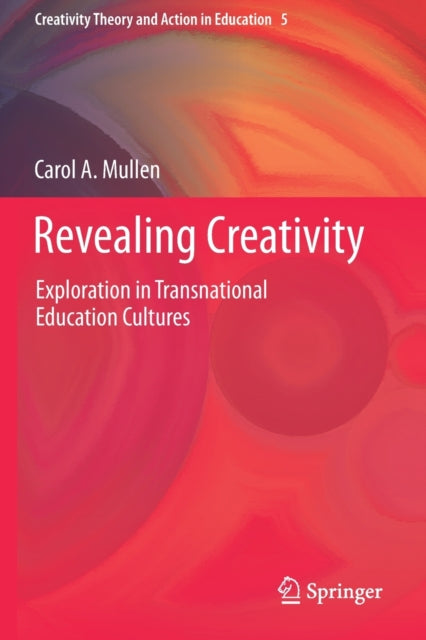
Carol A. Mullen
Revealing Creativity: Exploration in Transnational Education Cultures
Revealing Creativity: Exploration in Transnational Education Cultures
💎 Earn 185 Points (£1.85) on this item.
We can order this item for you. Delivery usually takes about 4 to 6 weeks.
This item is not held in our immediate stock. We will order it for you after checkout.
Estimated delivery: About 4 to 6 weeks
YOU SAVE £7.83
- Condition: Brand new
- UK Delivery times: Usually arrives within 2 - 3 working days
- UK Shipping: Fee starts at £2.39. Subject to product weight & dimension
Bulk ordering. Want 15 or more copies? Get a personalised quote and bigger discounts. Learn more about bulk orders.
Couldn't load pickup availability
- More about Revealing Creativity: Exploration in Transnational Education Cultures
Revealing Creativity: Exploration in Transnational Education Cultures explores the recovery and fostering of creativity under educational constraint through the 4-C Creativity Model, offering an innovative method, process, and tool for addressing obstacles to creativity.
Format: Paperback / softback
Length: 235 pages
Publication date: 22 July 2021
Publisher: Springer Nature Switzerland AG
Revealing Creativity: Exploration in Transnational Education Cultures delves into the revival and cultivation of creativity within educational constraints. This comprehensive longitudinal global study, spanning China, Canada, and Australia, employs the 4-C Creativity Model through immersive experiential activities and exploratory interviews within classrooms and various learning spaces. With a transnational perspective, this book presents an original and innovative approach to overcoming barriers to creativity in educational settings and within individuals, posing a significant challenge to practice. By immersing diverse cultural groups in a validated creativity model, the book facilitates their interpretation of the 4-C classification system, unveiling their untapped creative potential. Readers are encouraged to adapt the dynamic model-as-method process for unleashing and revealing creativity within accountability-bound competitive cultures.
Introduction:
Education plays a pivotal role in nurturing and developing creativity, as it provides a platform for individuals to explore, innovate, and think outside the box. However, the constraints imposed by educational systems can often hinder the full expression of creativity. This study aims to explore the recovery and fostering of creativity under educational constraints in three different countries: China, Canada, and Australia.
Methodology:
The study employed a longitudinal global approach, collecting data from diverse education populations in each country over an extended period. Participants included students, teachers, and educational administrators. Data collection methods included classroom observations, interviews, and surveys. The 4-C Creativity Model, developed by Dr. Paul Torrance, was used as a framework for analyzing the data.
Findings:
The study revealed significant differences in the cultural contexts and educational systems of the three countries, which impacted the recovery and fostering of creativity. In China, the emphasis was on rote learning and standardized testing, which limited opportunities for creative expression. However, there were some initiatives underway to promote creativity, such as incorporating art and music education into the curriculum. In Canada, the education system placed a strong emphasis on critical thinking and problem-solving, which fostered creativity. Teachers were encouraged to provide students with autonomy and choice in their learning, allowing them to explore and develop their creativity. In Australia, the education system was characterized by a blend of traditional and innovative teaching practices, which encouraged students to think creatively and develop their own learning styles.
Conclusion:
The findings of this study suggest that the recovery and fostering of creativity under educational constraints require a multi-faceted approach. Educational systems need to provide a supportive environment that encourages and values creativity, while also promoting a culture of risk-taking and innovation. Teachers should be trained to recognize and nurture creativity in their students, and parents and communities should be involved in promoting creativity. Additionally, policymakers and educators should consider incorporating creativity into the curriculum and assessment systems to ensure that it is recognized and valued as an essential component of education.
Recommendations:
Based on the findings of this study, several recommendations are made. First, educational systems should prioritize the integration of art and music education into the curriculum to promote creative expression. Second, teachers should be provided with training and support to develop their creativity and encourage their students to do the same. Third, parents and communities should be actively involved in promoting creativity, such as through organizing art exhibitions and music festivals. Finally, policymakers and educators should consider incorporating creativity into the curriculum and assessment systems to ensure that it is recognized and valued as an essential component of education.
Future Research:
There are several areas for future research in this field. One area of interest could be to explore the impact of different teaching methods, such as project-based learning and inquiry-based learning, on creativity. Another area of interest could be to investigate the role of cultural differences in shaping creativity and how educators can adapt their teaching practices to promote creativity across different cultural contexts. Finally, it would be valuable to explore the long-term effects of promoting creativity on individuals and society as a whole, such as its impact on innovation, economic growth, and social well-being.
In conclusion, this study has shed light on the recovery and fostering of creativity under educational constraints in three different countries. The findings suggest that a multi-faceted approach is necessary to promote creativity, including the integration of art and music education, training for teachers, active involvement of parents and communities, and incorporation of creativity into the curriculum and assessment systems. Future research in this field can help to further understand the role of creativity in education and its potential benefits for individuals and society as a whole.
Weight: 403g
Dimension: 235 x 155 (mm)
ISBN-13: 9783030481674
Edition number: 1st ed. 2020
This item can be found in:
UK and International shipping information
UK and International shipping information
UK Delivery and returns information:
- Delivery within 2 - 3 days when ordering in the UK.
- Shipping fee for UK customers from £2.39. Fully tracked shipping service available.
- Returns policy: Return within 30 days of receipt for full refund.
International deliveries:
Shulph Ink now ships to Australia, Belgium, Canada, France, Germany, Ireland, Italy, India, Luxembourg Saudi Arabia, Singapore, Spain, Netherlands, New Zealand, United Arab Emirates, United States of America.
- Delivery times: within 5 - 10 days for international orders.
- Shipping fee: charges vary for overseas orders. Only tracked services are available for most international orders. Some countries have untracked shipping options.
- Customs charges: If ordering to addresses outside the United Kingdom, you may or may not incur additional customs and duties fees during local delivery.