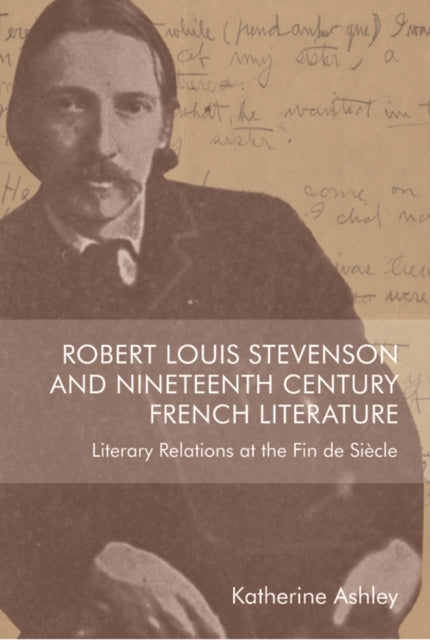
Katherine Ashley
Robert Louis Stevenson and Nineteenth-Century French Literature: Literary Relations at the Fin De Siecle
Robert Louis Stevenson and Nineteenth-Century French Literature: Literary Relations at the Fin De Siecle
💎 Earn 383 Points (£3.83) on this item.
We can order this item for you. Delivery usually takes about 4 to 6 weeks.
This item is not held in our immediate stock. We will order it for you after checkout.
Estimated delivery: About 4 to 6 weeks
YOU SAVE £23.30
- Condition: Brand new
- UK Delivery times: Usually arrives within 2 - 3 working days
- UK Shipping: Fee starts at £2.39. Subject to product weight & dimension
Bulk ordering. Want 15 or more copies? Get a personalised quote and bigger discounts. Learn more about bulk orders.
Couldn't load pickup availability
- More about Robert Louis Stevenson and Nineteenth-Century French Literature: Literary Relations at the Fin De Siecle
This study explores the influence of French literature on Robert Louis Stevenson's writing, highlighting his distinctive style and the reception of his works by French critics. It also examines how French artistic debates influenced his art and how he became a model for French authors seeking to renew the French novel.
Format: Hardback
Length: 232 pages
Publication date: 31 May 2022
Publisher: Edinburgh University Press
French literature has been greatly influenced by Scottish author Robert Louis Stevenson, who wrote in both English and French. This study examines Stevenson's use of French in his writing and how it contributed to his distinctive style. It also explores how and why the earliest French critics translated, disseminated, and interpreted his books, placing them in the context of the debates surrounding the development of the novel at the end of the 19th century. Through this analysis, readers gain insight into how the artistic debates taking place in France influenced Stevenson's art and how he became a model of literary innovation for French authors and critics who were seeking to renew the French novel.
Stevenson's use of French in his writing was significant and multifaceted. He began writing in French at a young age and continued to do so throughout his career. His early works, such as "Treasure Island" and "Kidnapped," were written in French and were later translated into English. Stevenson's use of French was not just a matter of language but also of culture and identity. He was deeply influenced by French literature and culture, and his works often reflected these influences.
One of the key ways in which Stevenson's use of French contributed to his distinctive style was through his use of language. He was a master of the French language, and his writing was characterized by its elegance, precision, and clarity. He used a wide range of literary techniques, including metaphor, simile, and alliteration, to create vivid and memorable images. His use of French also allowed him to explore complex themes and ideas in a way that was not possible in English.
Stevenson's use of French also contributed to his popularity in France. His books were widely translated and disseminated in France, and he became a household name there. French critics were particularly impressed by his writing, and they translated his works into French with great care and attention to detail. They also interpreted his works in a way that was consistent with French literary traditions and values.
Stevenson's influence on French literature was significant. He was a model of literary innovation for French authors and critics who were seeking to renew the French novel. His use of French in his writing inspired many French authors to experiment with different literary techniques and to explore new themes and ideas. His works also helped to establish French literature as a major force in the world of literature.
In conclusion, French literature has been greatly influenced by Scottish author Robert Louis Stevenson, who wrote in both English and French. This study examines Stevenson's use of French in his writing and how it contributed to his distinctive style. It also explores how and why the earliest French critics translated, disseminated, and interpreted his books, placing them in the context of the debates surrounding the development of the novel at the end of the 19th century. Through this analysis, readers gain insight into how the artistic debates taking place in France influenced Stevenson's art and how he became a model of literary innovation for French authors and critics who were seeking to renew the French novel.
Dimension: 234 x 156 (mm)
ISBN-13: 9781474493239
This item can be found in:
UK and International shipping information
UK and International shipping information
UK Delivery and returns information:
- Delivery within 2 - 3 days when ordering in the UK.
- Shipping fee for UK customers from £2.39. Fully tracked shipping service available.
- Returns policy: Return within 30 days of receipt for full refund.
International deliveries:
Shulph Ink now ships to Australia, Belgium, Canada, France, Germany, Ireland, Italy, India, Luxembourg Saudi Arabia, Singapore, Spain, Netherlands, New Zealand, United Arab Emirates, United States of America.
- Delivery times: within 5 - 10 days for international orders.
- Shipping fee: charges vary for overseas orders. Only tracked services are available for most international orders. Some countries have untracked shipping options.
- Customs charges: If ordering to addresses outside the United Kingdom, you may or may not incur additional customs and duties fees during local delivery.