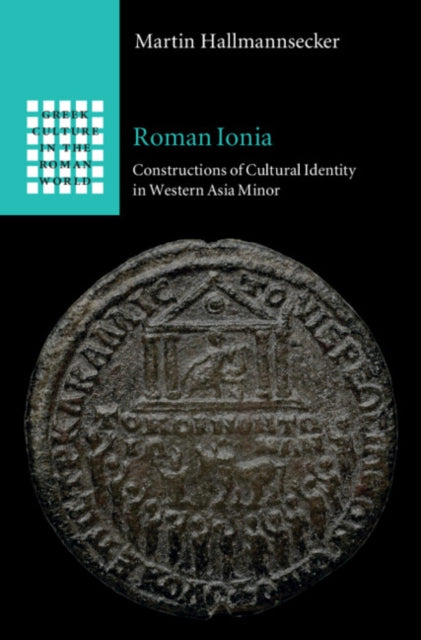
MartinHallmannsecker
Roman Ionia: Constructions of Cultural Identity in Western Asia Minor
Roman Ionia: Constructions of Cultural Identity in Western Asia Minor
💎 Earn 387 Points (£3.87) on this item.
We can order this item for you. Delivery usually takes about 4 to 6 weeks.
This item is not held in our immediate stock. We will order it for you after checkout.
Estimated delivery: About 4 to 6 weeks
YOU SAVE £4.59
- Condition: Brand new
- UK Delivery times: Usually arrives within 2 - 3 working days
- UK Shipping: Fee starts at £2.39. Subject to product weight & dimension
Bulk ordering. Want 15 or more copies? Get a personalised quote and bigger discounts. Learn more about bulk orders.
Couldn't load pickup availability
- More about Roman Ionia: Constructions of Cultural Identity in Western Asia Minor
The Ionian cities, as old Greek poleis, constructed and expressed a distinct sense of Ionian identity under Roman rule, drawing on a glorious tradition of great antiquity. Martin Hallmannsecker's studies of literary sources, epigraphic and numismatic material provide a holistic and nuanced picture of the region, furthering understanding of Greek culture under the Roman Empire.
Format: Hardback
Length: 348 pages
Publication date: 19 May 2022
Publisher: Cambridge University Press
The cities of Ionia, situated within the Roman province of Asia, faced a unique challenge as they sought to construct and express a distinct sense of Ionian identity under Roman rule. As the Greeks were increasingly incorporated into the Roman Empire, issues of identity became increasingly important and urgent for the Greek provincials. The Ionian cities, unlike many other cities in Asia Minor, were all ancient Greek poleis, with a rich tradition of great antiquity. Martin Hallmannsecker, in his comprehensive study, provides valuable insights into how the Ionian cities achieved this task.
Hallmannsecker utilizes a combination of studies of extant literary sources, complemented by detailed analyses of the rich epigraphic and numismatic material from these cities. By doing so, he paints a more holistic and nuanced picture of the region, shedding light on the complex interplay of cultural influences and the development of Ionian identity under Roman rule.
One of the key aspects of Hallmannsecker's study is his examination of the literary sources, including ancient texts, inscriptions, and literary works. These sources provide valuable insights into the social, political, and cultural dynamics of the Ionian cities. They reveal the ways in which the Ionian Greeks sought to maintain their distinct identity while also adapting to Roman rule.
For example, Hallmannsecker discusses the role of the city of Ephesus in the development of Ionian identity. Ephesus was a major center of Greek culture and commerce, and it played a significant role in the spread of Greek culture throughout the Roman Empire. The city's literary sources, such as the Ephesian epigrams, provide a window into the daily lives of the Ionian Greeks and their interactions with the Roman authorities.
In addition to literary sources, Hallmannsecker also analyzes the rich epigraphic and numismatic material from the Ionian cities. Epigraphs, such as inscriptions and tombstones, provide valuable information about the social and political structures of the cities, as well as their religious practices and beliefs. Numismatic evidence, such as coins and medallions, sheds light on the economic and commercial activities of the cities and their interactions with other regions of the Roman Empire.
By combining these diverse sources, Hallmannsecker offers a comprehensive understanding of the Ionian cities and their place within the Roman Empire. He demonstrates how the Ionian Greeks sought to maintain their distinct identity while also adapting to Roman rule. The study highlights the complex interplay of cultural influences, political structures, and social dynamics that shaped the Ionian identity and contributed to the development of Greek culture under the Roman Empire.
In conclusion, Martin Hallmannsecker's study on the cities of Ionia provides a valuable contribution to our understanding of Greek culture under the Roman Empire. By utilizing a combination of literary sources, epigraphic and numismatic material, and detailed analysis, he paints a holistic and nuanced picture of the region and furthers our understanding of the complex interplay of cultural influences and the development of Ionian identity. The study sheds light on the ways in which the Ionian Greeks sought to maintain their distinct identity while also adapting to Roman rule, and it contributes to our broader understanding of the cultural and historical significance of the Ionian region within the Roman Empire.
Weight: 616g
Dimension: 159 x 235 x 25 (mm)
ISBN-13: 9781009150187
This item can be found in:
UK and International shipping information
UK and International shipping information
UK Delivery and returns information:
- Delivery within 2 - 3 days when ordering in the UK.
- Shipping fee for UK customers from £2.39. Fully tracked shipping service available.
- Returns policy: Return within 30 days of receipt for full refund.
International deliveries:
Shulph Ink now ships to Australia, Belgium, Canada, France, Germany, Ireland, Italy, India, Luxembourg Saudi Arabia, Singapore, Spain, Netherlands, New Zealand, United Arab Emirates, United States of America.
- Delivery times: within 5 - 10 days for international orders.
- Shipping fee: charges vary for overseas orders. Only tracked services are available for most international orders. Some countries have untracked shipping options.
- Customs charges: If ordering to addresses outside the United Kingdom, you may or may not incur additional customs and duties fees during local delivery.