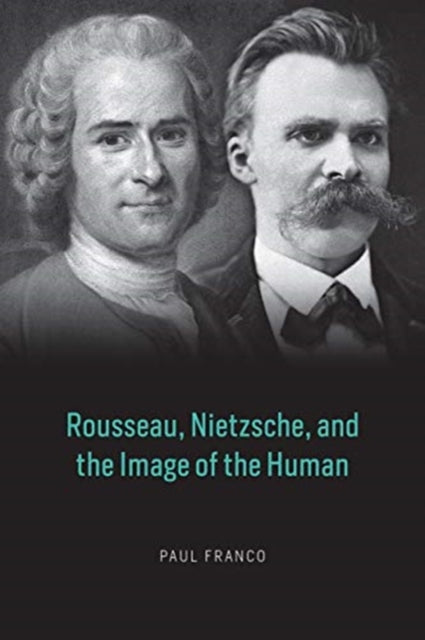
Paul Franco
Rousseau, Nietzsche, and the Image of the Human
Rousseau, Nietzsche, and the Image of the Human
💎 Earn 137 Points (£1.37) on this item.
YOU SAVE £3.56
- Condition: Brand new
- UK Delivery times: Usually arrives within 2 - 3 working days
- UK Shipping: Fee starts at £3.89. Subject to product weight & dimension
Bulk ordering. Want 15 or more copies? Get a personalised quote and bigger discounts. Learn more about bulk orders.
Couldn't load pickup availability
- More about Rousseau, Nietzsche, and the Image of the Human
Paul Franco examines the relationship between Jean-Jacques Rousseau and Friedrich Nietzsche, highlighting their differences and similarities in their visions of the self, women, and politics. He argues that we can learn most from their differences.
Format: Hardback
Length: 200 pages
Publication date: 30 September 2021
Publisher: The University of Chicago Press
In his book "In Rousseau, Nietzsche, and the Image of the Human," Paul Franco delves into the intricate relationship between Jean-Jacques Rousseau and Friedrich Nietzsche, two of the most influential shapers and explorers of the moral and cultural imagination of late modernity. Both thinkers offered profound critiques of modern life, but their critiques diverged in significant ways. Rousseau, for instance, focused on the growing inequality in modern society, the hypocrisy, self-division, and loss of civic virtue it engendered. He criticized the democratic equality that Nietzsche associated with Rousseau and the decline in individual and cultural greatness that it entailed.
However, Franco argues that Rousseau and Nietzsche are more than mere critics; they both present powerful alternative visions of how we ought to live. Franco's book is particularly focused on their views of the self and its realization, their understandings of women and the relationship between the sexes, and their speculative conceptions of politics. While there are many similarities in their positive visions, Franco contends that it is the differences between them that hold the greatest lessons for us.
Rousseau and Nietzsche shared a common concern for the individual and the importance of self-realization. Both thinkers believed that the self is not a fixed entity but rather a dynamic and evolving process. Rousseau emphasized the importance of social contracts and the collective will to create a just and harmonious society. He believed that individuals should be guided by their conscience and moral values, rather than by external forces or societal norms.
Nietzsche, on the other hand, rejected the notion of a universal moral code and instead advocated for the individual's pursuit of self-interest and personal greatness. He believed that the self is shaped by the forces of history and culture, and that individuals should embrace their uniqueness and individuality. Nietzsche also criticized the dominance of the collective will and the idea of social contracts, arguing that they limit individual freedom and creativity.
In their views on women and the relationship between the sexes, Rousseau and Nietzsche also exhibited significant differences. Rousseau, a champion of women's rights and equality, believed that women should be treated as equals to men and have the same opportunities to pursue their interests and aspirations. He criticized the patriarchal structures of society and advocated for a more egalitarian and democratic approach to gender relations.
Nietzsche, on the other hand, was critical of women's role in society and believed that they were inherently inferior to men. He argued that women were confined to the domestic sphere. Nietzsche also criticized the idea of gender equality, arguing that it was a false and harmful illusion that sought to undermine the natural differences between the sexes.
Despite these differences, Franco argues that Rousseau and Nietzsche both put forward powerful alternative visions of how we ought to live. Rousseau's emphasis on social contracts and collective will provides a framework for creating a just and harmonious society, while Nietzsche's emphasis on individualism and self-interest offers a path to personal fulfillment and cultural greatness. By exploring the similarities and differences between these two thinkers, Franco encourages us to reevaluate our own beliefs and values and to consider new ways of living in the modern world.
In conclusion, "In Rousseau, Nietzsche, and the Image of the Human" is a thought-provoking book that delves into the complex relationship between Jean-Jacques Rousseau and Friedrich Nietzsche. Paul Franco's analysis highlights the similarities and differences between these two influential thinkers and encourages us to reevaluate our own beliefs and values in the modern world. By exploring the self, women, and politics, Franco provides a valuable contribution to the study of these two thinkers and their impact on contemporary thought.
Weight: 424g
Dimension: 161 x 236 x 24 (mm)
ISBN-13: 9780226800301
UK and International shipping information
UK and International shipping information
We deliver throughout the United Kingdom and to 128 countries and territories worldwide, including the United States, Australia, Canada, Germany, Spain and France.