Olukunle P.Owolabi
Ruling Emancipated Slaves and Indigenous Subjects: The Divergent Legacies of Forced Settlement and Colonial Occupation in the Global South
Ruling Emancipated Slaves and Indigenous Subjects: The Divergent Legacies of Forced Settlement and Colonial Occupation in the Global South
💎 Earn 122 Points (£1.22) on this item.
YOU SAVE £1.46
- Condition: Brand new
- UK Delivery times: Usually arrives within 2 - 3 working days
- UK Shipping: Fee starts at £2.39. Subject to product weight & dimension
Bulk ordering. Want 15 or more copies? Get a personalised quote and bigger discounts. Learn more about bulk orders.
Couldn't load pickup availability
- More about Ruling Emancipated Slaves and Indigenous Subjects: The Divergent Legacies of Forced Settlement and Colonial Occupation in the Global South
Olukunle P. Owolabi's book explores the divergent developmental legacies of forced settlement and colonial occupation in the Black Atlantic world, highlighting the impact of legal-administrative institutions and liberal reforms on state-building.
Format: Paperback / softback
Length: 376 pages
Publication date: 11 June 2023
Publisher: Oxford University Press Inc
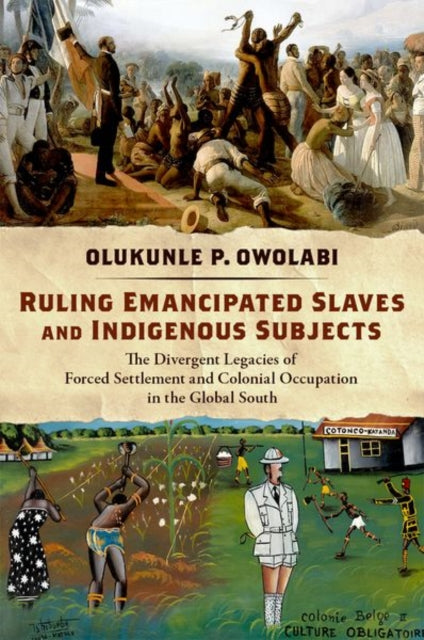
The European powers that colonized vast regions of the world over the last few hundred years established a diverse range of social systems in their various colonies. In his book, Ruling Emancipated Slaves and Indigenous Subjects, Olukunle P. Owolabi delves into the divergent developmental paths of Global South nations that were shaped by forced settlement, where European colonists imported African slaves to establish large-scale agricultural plantations, or by colonial occupation, which resulted in the exploitation of indigenous non-white populations. Owolabi demonstrates that most forced settlement colonies emerged from European dominance with higher levels of education attainment, greater postcolonial democratization, and favorable human development outcomes compared to Global South countries that emerged from colonial occupation after 1945. To explain this paradox, he examines the distinctive legal-administrative institutions used to control indigenous colonial subjects and highlights the impact of liberal reforms that expanded the legal rights and political agency of former slaves following abolition. Spanning three centuries of colonial history and postcolonial development, this is the first book to systematically examine the unique patterns of state-building that resulted from forced settlement and colonial occupation in the Black Atlantic world.
The European powers that colonized vast regions of the world over the last few hundred years established a diverse range of social systems in their various colonies. In his book, Ruling Emancipated Slaves and Indigenous Subjects, Olukunle P. Owolabi delves into the divergent developmental paths of Global South nations that were shaped by forced settlement, where European colonists imported African slaves to establish large-scale agricultural plantations, or by colonial occupation, which resulted in the exploitation of indigenous non-white populations. Owolabi demonstrates that most forced settlement colonies emerged from European dominance with higher levels of education attainment, greater postcolonial democratization, and favorable human development outcomes compared to Global South countries that emerged from colonial occupation after 1945. To explain this paradox, he examines the distinctive legal-administrative institutions used to control indigenous colonial subjects and highlights the impact of liberal reforms that expanded the legal rights and political agency of former slaves following abolition. Spanning three centuries of colonial history and postcolonial development, this is the first book to systematically examine the unique patterns of state-building that resulted from forced settlement and colonial occupation in the Black Atlantic world.
The European powers that colonized vast regions of the world over the last few hundred years established a diverse range of social systems in their various colonies. In his book, Ruling Emancipated Slaves and Indigenous Subjects, Olukunle P. Owolabi delves into the divergent developmental paths of Global South nations that were shaped by forced settlement, where European colonists imported African slaves to establish large-scale agricultural plantations, or by colonial occupation, which resulted in the exploitation of indigenous non-white populations. Owolabi demonstrates that most forced settlement colonies emerged from European dominance with higher levels of education attainment, greater postcolonial democratization, and favorable human development outcomes compared to Global South countries that emerged from colonial occupation after 1945. To explain this paradox, he examines the distinctive legal-administrative institutions used to control indigenous colonial subjects and highlights the impact of liberal reforms that expanded the legal rights and political agency of former slaves following abolition. Spanning three centuries of colonial history and postcolonial development, this is the first book to systematically examine the unique patterns of state-building that resulted from forced settlement and colonial occupation in the Black Atlantic world.
Weight: 544g
Dimension: 156 x 236 x 24 (mm)
ISBN-13: 9780197673034
UK and International shipping information
UK and International shipping information
UK Delivery and returns information:
- Delivery within 2 - 3 days when ordering in the UK.
- Shipping fee for UK customers from £2.39. Fully tracked shipping service available.
- Returns policy: Return within 30 days of receipt for full refund.
International deliveries:
Shulph Ink now ships to Australia, Belgium, Canada, France, Germany, Ireland, Italy, India, Luxembourg Saudi Arabia, Singapore, Spain, Netherlands, New Zealand, United Arab Emirates, United States of America.
- Delivery times: within 5 - 10 days for international orders.
- Shipping fee: charges vary for overseas orders. Only tracked services are available for most international orders. Some countries have untracked shipping options.
- Customs charges: If ordering to addresses outside the United Kingdom, you may or may not incur additional customs and duties fees during local delivery.