RogerCrisp
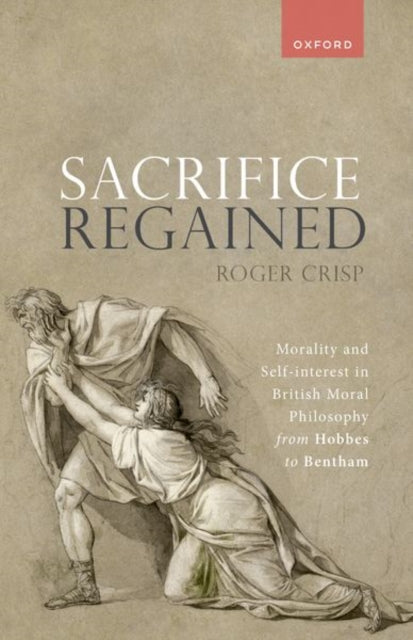
Sacrifice Regained: Morality and Self-Interest in British Moral Philosophy from Hobbes to Bentham
Sacrifice Regained: Morality and Self-Interest in British Moral Philosophy from Hobbes to Bentham
💎 Earn 140 Points (£1.40) on this item.
- Condition: Brand new
- UK Delivery times: Usually arrives within 2 - 3 working days
- UK Shipping: Fee starts at £2.39. Subject to product weight & dimension
Bulk ordering. Want 15 or more copies? Get a personalised quote and bigger discounts. Learn more about bulk orders.
Couldn't load pickup availability
- More about Sacrifice Regained: Morality and Self-Interest in British Moral Philosophy from Hobbes to Bentham
Being virtuous does not necessarily lead to happiness, as British Moralists from Hobbes to Bentham explored. While some writers accepted self-sacrifice for moral reasons, this conflicts with the common-sense idea of sacrificing one's own good. David Hume was the first major British moralist to recommend such self-sacrifice, highlighting the enduring relevance of morality and well-being in modern ethics.
Format: Paperback / softback
Length: 256 pages
Publication date: 18 October 2023
Publisher: Oxford University Press
The pursuit of virtue has long been a central theme in philosophical discourse, with scholars seeking to understand the relationship between morality and happiness. In his book, "Does Being Virtuous Make You Happy?," Roger Crisp delves into the answers provided by British Moralists over the course of two centuries, from Thomas Hobbes in the 17th century to Jeremy Bentham in the 19th.
The British Moralists, including Hobbes, were interested in understanding the nature of happiness and virtue. Hobbes, for instance, believed that happiness was primarily derived from self-interest, while Bentham advocated for evaluative hedonism, which focused on maximizing pleasure and minimizing pain. However, these writers did not adhere to a single philosophical school of thought, and their views on happiness and virtue varied widely.
One theme that ran through many of these writers was psychological egoism, which posited that individuals are primarily motivated by their own self-interest. This view was challenged by evaluative hedonism, which argued that individuals should seek happiness by maximizing the well-being of others. Another theme was the acceptance of self-standing moral reasons, which suggested that moral principles are inherent and independent of any external rewards or punishments.
Despite these differences, there were exceptions to the standard views. Some writers, even those who took the standard views, adopted them for very different reasons and expressed them in various ways. For example, David Hume, a hedonist whose ethics made no appeal to the afterlife, was the first major British moralist to allow for, indeed to recommend, such self-sacrifice.
Morality and well-being continue to be central to modern ethics, and Crisp demonstrates how much there is to learn from the remarkable group of philosophers discussed in his book. By examining their views on happiness and virtue, Crisp sheds light on the complex relationship between these two concepts and provides insights into the ethical challenges that we face modern society.
In conclusion, "Does Being Virtuous Make You Happy?" is a thought-provoking book that explores the enduring question of whether pursuing virtue leads to happiness. By examining the views of British Moralists over centuries, Crisp provides a comprehensive analysis of the relationship between morality and well-being and offers valuable insights into the ethical challenges that we face in our modern world. This book is a must-read for anyone interested in philosophy, ethics, or the pursuit of a meaningful life.
Weight: 386g
Dimension: 153 x 234 x 25 (mm)
ISBN-13: 9780198896562
This item can be found in:
UK and International shipping information
UK and International shipping information
UK Delivery and returns information:
- Delivery within 2 - 3 days when ordering in the UK.
- Shipping fee for UK customers from £2.39. Fully tracked shipping service available.
- Returns policy: Return within 30 days of receipt for full refund.
International deliveries:
Shulph Ink now ships to Australia, Belgium, Canada, France, Germany, Ireland, Italy, India, Luxembourg Saudi Arabia, Singapore, Spain, Netherlands, New Zealand, United Arab Emirates, United States of America.
- Delivery times: within 5 - 10 days for international orders.
- Shipping fee: charges vary for overseas orders. Only tracked services are available for most international orders. Some countries have untracked shipping options.
- Customs charges: If ordering to addresses outside the United Kingdom, you may or may not incur additional customs and duties fees during local delivery.