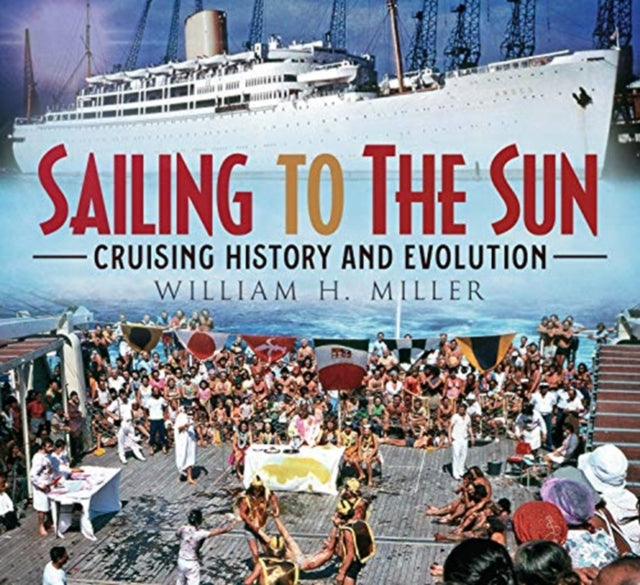
William H. Miller
Sailing to the Sun: Cruising History and Evolution
Sailing to the Sun: Cruising History and Evolution
💎 Earn 77 Points (£0.77) on this item.
YOU SAVE £6.42
- Condition: Brand new
- UK Delivery times: Usually arrives within 2 - 3 working days
- UK Shipping: Fee starts at £2.39. Subject to product weight & dimension
Bulk ordering. Want 15 or more copies? Get a personalised quote and bigger discounts. Learn more about bulk orders.
Couldn't load pickup availability
- More about Sailing to the Sun: Cruising History and Evolution
The book explores the history of cruising, from its mid-nineteenth-century origins to its growth as a form of escape in the Twenties and Depression-era Thirties, and the development of purpose-built cruise ships in the late Sixties.
\n Format: Paperback / softback
\n Length: 128 pages
\n Publication date: 16 May 2019
\n Publisher: Fonthill Media
\n
The global cruise industry is experiencing a remarkable boom, with an astounding 56 new cruise ships currently being built or planned for 2018 alone. These magnificent vessels, known as floating resorts, embark on voyages to ports across the globe, offering an array of luxurious amenities and services. However, it's intriguing to delve into the origins of cruising and trace its evolution over the years. This book takes readers on a captivating journey, exploring the origins of cruising from the mid-nineteenth century. It chronicles the rise of long-luxury cruising in the Roaring Twenties and the subsequent expansion of cruising to the general public during the Depression-era Thirties. By the late Sixties, the construction of purpose-built cruise ships began, laying the foundation for the modern fleet, which includes some of the largest passenger ships ever built.
The mid-nineteenth century marked the beginning of cruising as a leisure activity. Initially, it was primarily enjoyed by the wealthy and privileged, who sailed on luxurious ships equipped with all the modern comforts and amenities. These early cruises were often referred to as "pleasure voyages" and were designed to provide a respite from the hustle and bustle of everyday life.
The Roaring Twenties saw a significant surge in the popularity of cruising. The rise of the automobile and the development of the railroad made it easier for people to travel to distant destinations, and the allure of the sea became increasingly attractive. Luxury cruise lines such as Cunard, White Star, and Royal Mail began offering opulent voyages to exotic locations, including the Mediterranean, the Caribbean, and Asia. These cruises were characterized by grandiose accommodations, fine dining, and entertainment, and they attracted a wealthy and cosmopolitan clientele.
However, the Great Depression of the 1930s brought a temporary setback to the cruise industry. Many people were unable to afford the luxury of cruising, and the number of passengers declined significantly. However, in the aftermath of the Depression, cruising began to gain popularity again as a form of affordable escapism. Cruise lines introduced more affordable pricing options, such as "budget cruises," and they targeted the middle-class market.
The 1950s and 1960s saw the emergence of purpose-built cruise ships. These ships were designed specifically for cruising and were equipped with a range of amenities and facilities that were not available on traditional passenger ships. The first purpose-built cruise ship, the SS United States, was launched in 1952 and was a technological marvel, featuring state-of-the-art accommodations, dining facilities, and entertainment.
The 1970s and 1980s were a period of rapid growth for the cruise industry. The introduction of new technologies, such as the satellite phone and the internet, made it easier for passengers to stay connected with the world while on board. Cruise lines also began to offer more diverse itineraries, including voyages to remote destinations such as the South Pacific, the Arctic, and Antarctica.
In the 1990s and 2000s, the cruise industry continued to evolve and expand. The introduction of mega-cruises, which are larger than traditional cruise ships, and the development of themed cruises, such as Disney cruises and Star Wars cruises, attracted a new generation of passengers. Cruise lines also began to focus on environmental sustainability, with many implementing measures to reduce their carbon footprint and promote responsible tourism.
Today, the cruise industry is thriving, with an estimated 25 million passengers traveling on cruise ships each year. The industry has come a long way since its humble beginnings in the mid-nineteenth century, and it continues to evolve and innovate to meet the changing needs and preferences of its passengers. From luxury cruises to budget cruises, from themed cruises to eco-friendly cruises, the cruise industry offers something for everyone.
In conclusion, the evolution of cruising has been a fascinating journey, from its early days as a luxury activity for the wealthy to its expansion to the general public during the Depression-era Thirties. Today, the cruise industry is a thriving global industry, offering a range of luxurious amenities and services to passengers from all walks of life. As the industry continues to evolve and innovate, it is likely to remain a popular choice for travelers seeking an unforgettable vacation experience.
\n Weight: 574g\n
Dimension: 246 x 224 x 9 (mm)\n
ISBN-13: 9781781557037\n \n
UK and International shipping information
UK and International shipping information
UK Delivery and returns information:
- Delivery within 2 - 3 days when ordering in the UK.
- Shipping fee for UK customers from £2.39. Fully tracked shipping service available.
- Returns policy: Return within 30 days of receipt for full refund.
International deliveries:
Shulph Ink now ships to Australia, Belgium, Canada, France, Germany, Ireland, Italy, India, Luxembourg Saudi Arabia, Singapore, Spain, Netherlands, New Zealand, United Arab Emirates, United States of America.
- Delivery times: within 5 - 10 days for international orders.
- Shipping fee: charges vary for overseas orders. Only tracked services are available for most international orders. Some countries have untracked shipping options.
- Customs charges: If ordering to addresses outside the United Kingdom, you may or may not incur additional customs and duties fees during local delivery.