Shulph Ink
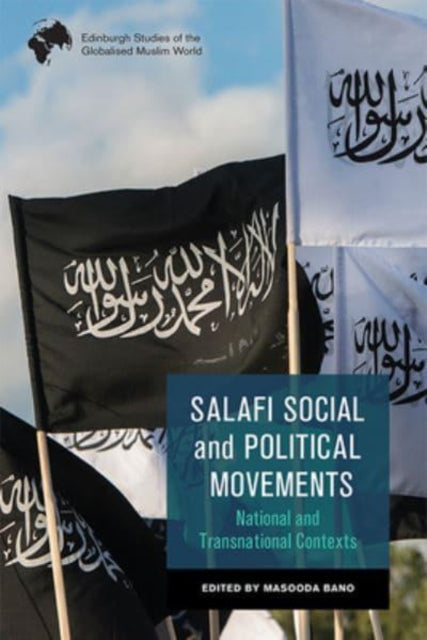
Salafi Social and Political Movements: National and Transnational Contexts
Salafi Social and Political Movements: National and Transnational Contexts
💎 Earn 88 Points (£0.88) on this item.
We can order this item for you. Delivery usually takes about 4 to 6 weeks.
This item is not held in our immediate stock. We will order it for you after checkout.
Estimated delivery: About 4 to 6 weeks
YOU SAVE £5.36
- Condition: Brand new
- UK Delivery times: Usually arrives within 2 - 3 working days
- UK Shipping: Fee starts at £2.39. Subject to product weight & dimension
Bulk ordering. Want 15 or more copies? Get a personalised quote and bigger discounts. Learn more about bulk orders.
Couldn't load pickup availability
- More about Salafi Social and Political Movements: National and Transnational Contexts
This book explores the impact of reforms within Saudi Arabia on Salafi intellectual thought, dawa movements, and Jihadi groups. It examines the factors shaping social liberalisation within Saudi Arabia and presents examples of reforms within Salafi intellectual thought. It also shows the dynamism and adaptability of Salafi da wa movements in different country contexts and addresses the critical question of growing infighting within Salafi jihadi groups.
Format: Paperback / softback
Length: 312 pages
Publication date: 19 May 2023
Publisher: Edinburgh University Press
This book delves into the profound impact of reforms within Saudi Arabia on the realm of Salafi intellectual thought, daawa movements, and jihadi groups. It explores the multifaceted factors shaping the social liberalization process within the country, shedding light on the transformative forces driving change. Through a comprehensive examination of reforms within Salafi intellectual thought, the book showcases the dynamism and adaptability of Salafi daawa movements across different country contexts. It also addresses the critical issue of growing infighting within Salafi jihadi groups, raising important questions about the future direction and stability of this conservative Islamic scholarly tradition.
The rise and spread of Salafism during the 20th century represent a significant global Islamic reform movement. This book offers a comprehensive exploration of Salafi tools of methodological reasoning, traditionally employed to justify highly conservative positions. However, it reveals that these tools have evolved to become equally effective in defending more liberal life choices. The collection aims to enhance readers' understanding of the diverse spectrum of Salafi movements and the profound significance of the ongoing socio-economic and political changes within Saudi Arabia and the broader Muslim world.
In late 2017, Saudi Arabia embarked on a series of reforms that reversed many socially restrictive policies long associated with Salafism. These developments have sparked intense debates and raised critical questions about the future of Salafism. One of the central concerns is whether this represents the end of the most influential puritanical Islamic reform movement of the 20th century.
The reforms in Saudi Arabia have encompassed various aspects of society, including education, women's rights, and social welfare. The kingdom has introduced reforms to promote gender equality, allowing women to drive and participate in public life. It has also implemented programs to provide social assistance to marginalized communities, including the poor and disabled.
These developments have had a significant impact on Salafi intellectual thought and daawa movements within the country. Many Salafi scholars and activists have welcomed these reforms, recognizing them as a step towards greater social justice and inclusivity. They argue that Salafism can be compatible with modern social norms and values, as long as it is guided by the principles of the Quran and Sunnah.
However, there are also those who oppose these reforms, viewing them as a threat to the traditional Salafi ideology. They argue that the reforms undermine the fundamental principles of Salafism, such as the strict adherence to the Shariah law and the rejection of Western influence. They fear that the social liberalization process could lead to the erosion of the Salafi identity and the spread of liberalism within the Muslim community.
The debate over the future of Salafism in Saudi Arabia is complex and multifaceted. It involves a range of factors, including the historical context of Salafism, the political dynamics within the country, and the broader regional and global trends shaping Islamic scholarship and practice.
One of the critical factors shaping the future of Salafism is the role of the Saudi government. The kingdom has long been a stronghold of Salafism, and the government has played a significant role in shaping the movement's ideology and practices. However, with the reforms, the government has demonstrated a willingness to engage with other Islamic traditions and to promote greater social inclusivity.
This engagement has led to a growing dialogue between Salafis and other Islamic scholars and activists, fostering a sense of unity and cooperation within the Muslim community. It has also opened up opportunities for Salafis to participate in the broader political and social discourse, contributing to the development of a more inclusive and democratic society.
Another factor shaping the future of Salafism is the influence of the global Muslim community. Salafism has gained popularity in many parts of the world, particularly in the Middle East and North Africa. The reforms in Saudi Arabia have attracted attention and admiration from other Muslim countries, leading to a sense of inspiration and emulation.
However, the global Muslim community is also diverse and complex, with different interpretations and practices of Islam. This diversity has led to tensions and conflicts within the Muslim world, particularly between different branches of Islam and between Muslims and non-Muslims.
To navigate these challenges, Salafis need to engage with other Islamic traditions and seek to find common ground. They need to be open to dialogue and compromise, recognizing that the future of Islam is not solely determined by the actions of any one country or group.
In conclusion, the impact of reforms within Saudi Arabia on Salafi intellectual thought, daawa movements, and jihadi groups is profound and multifaceted. The reforms have triggered critical questions about the future of Salafism, but they have also opened up opportunities for the movement to adapt and evolve in response to the changing social and political landscape.
As Salafis navigate these challenges, they need to prioritize dialogue, cooperation, and inclusivity. They need to be open to engaging with other Islamic traditions and to seek common ground on issues that are important to the Muslim community as a whole. By doing so, they can contribute to the development of a more inclusive and democratic society that is grounded in the principles of Islam.
Dimension: 234 x 156 (mm)
ISBN-13: 9781474479134
UK and International shipping information
UK and International shipping information
UK Delivery and returns information:
- Delivery within 2 - 3 days when ordering in the UK.
- Shipping fee for UK customers from £2.39. Fully tracked shipping service available.
- Returns policy: Return within 30 days of receipt for full refund.
International deliveries:
Shulph Ink now ships to Australia, Belgium, Canada, France, Germany, Ireland, Italy, India, Luxembourg Saudi Arabia, Singapore, Spain, Netherlands, New Zealand, United Arab Emirates, United States of America.
- Delivery times: within 5 - 10 days for international orders.
- Shipping fee: charges vary for overseas orders. Only tracked services are available for most international orders. Some countries have untracked shipping options.
- Customs charges: If ordering to addresses outside the United Kingdom, you may or may not incur additional customs and duties fees during local delivery.