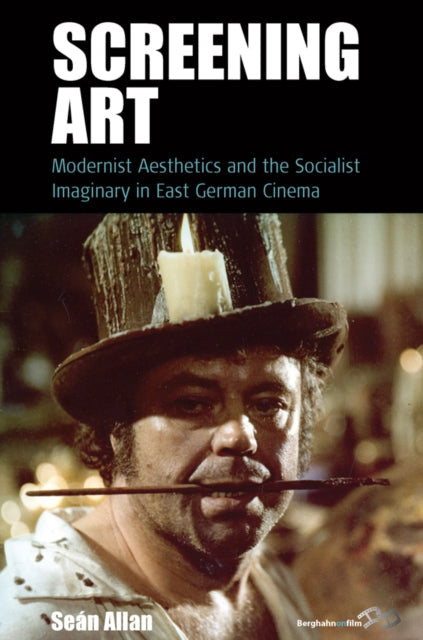
Sean Allan
Screening Art: Modernist Aesthetics and the Socialist Imaginary in East German Cinema
Screening Art: Modernist Aesthetics and the Socialist Imaginary in East German Cinema
💎 Earn 119 Points (£1.19) on this item.
We can order this item for you. Delivery usually takes about 4 to 6 weeks.
This item is not held in our immediate stock. We will order it for you after checkout.
Estimated delivery: About 4 to 6 weeks
YOU SAVE £4.04
- Condition: Brand new
- UK Delivery times: Usually arrives within 2 - 3 working days
- UK Shipping: Fee starts at £3.89. Subject to product weight & dimension
Bulk ordering. Want 15 or more copies? Get a personalised quote and bigger discounts. Learn more about bulk orders.
Couldn't load pickup availability
- More about Screening Art: Modernist Aesthetics and the Socialist Imaginary in East German Cinema
East German films about artists and their work became contested spaces for filmmakers to debate the impact of contemporary cultural policy on the reception of their pre-war cultural heritage. Screening Art is the first full-length investigation into this genre, which played an essential role in developing new paradigms of socialist art in postwar Europe.
Format: Paperback / softback
Length: 302 pages
Publication date: 11 February 2022
Publisher: Berghahn Books
East German films about artists and their work emerged as highly contentious arenas, offering filmmakers a unique opportunity to explore beyond the boundaries of the GDR and engage in critical discussions about the impact of contemporary cultural policy on the reception of their pre-war cultural heritage. Spanning a diverse range of formats, including newsreels, documentaries, and feature films, Screening Art is a groundbreaking exploration into a genre that has largely been overlooked in studies of DEFA, the state-owned Eastern German film studio.
Through meticulous research and analysis, the book reveals that "artist-films" played a pivotal role in shaping new paradigms of socialist art in postwar Europe. These films not only showcased the creative talents of artists within the GDR but also served as a platform for them to express their political and social concerns. By examining the themes, aesthetics, and production techniques of these films, Screening Art offers a comprehensive understanding of their significance in the broader context of East German cinema and cultural history.
One of the key findings of the book is that "artist-films" were often seen as a means of promoting socialist ideals and values. Filmmakers used these films to showcase the achievements of the GDR's socialist system, highlighting its commitment to social justice, equality, and the advancement of the arts. At the same time, they also critiqued the limitations and contradictions of this system, raising important questions about the role of art in society and the potential for artistic expression to challenge dominant ideologies.
Another notable aspect of "artist-films" is their engagement with the legacy of World War II and the Holocaust. Many of these films addressed the trauma and displacement experienced by artists and their communities, exploring themes of resilience, survival, and the search for meaning in the aftermath of such devastating events. Through their visual storytelling and emotional resonance, these films provided a powerful means of healing and reconciliation for those affected by the war.
Furthermore, "artist-films" played a crucial role in shaping the cultural identity of the GDR. They helped to establish a distinct East German aesthetic and style, characterized by a focus on realism, social commentary, and a commitment to documentary-style filmmaking. These films not only showcased the talents of individual artists but also contributed to the development of a collective cultural identity that was distinct from that of their Western counterparts.
In conclusion, Screening Art is a groundbreaking contribution to the study of East German cinema and cultural history. By exploring the genre of "artist-films" in depth, the book offers a fresh perspective on the complex relationship between art, politics, and society in the GDR. Through its meticulous research, insightful analysis, and engaging storytelling, Screening Art provides valuable insights into the role of art in shaping postwar Europe and the enduring legacy of East German cinema.
Weight: 450g
Dimension: 151 x 229 x 20 (mm)
ISBN-13: 9781800732049
UK and International shipping information
UK and International shipping information
We deliver throughout the United Kingdom and to 128 countries and territories worldwide, including the United States, Australia, Canada, Germany, Spain and France.